
New Museums Across the Land
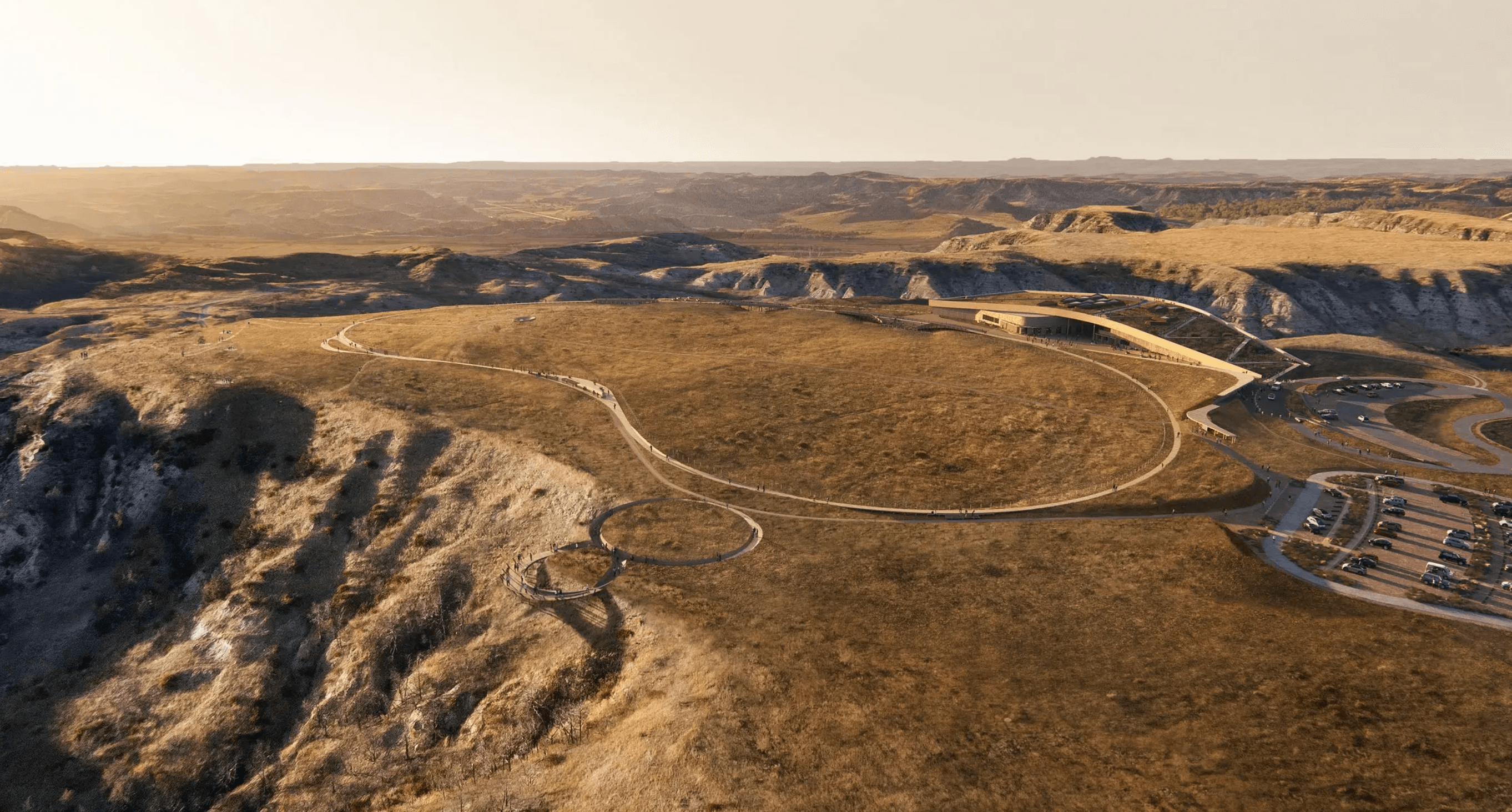
Outside the Theodore Roosevelt Presidential Library and Museum
Wildsam Road Trip Awards 2026
Stand-out stops for culture and history
As we scanned the map for this year’s Road Trip Awards, we looked for projects and organizations that nurture expression, revitalize tradition and create compelling pilgrimages. A singular museum—one of those troves of surprising wisdom that could only exist in one place—does all this like few other institutions.
This year, a host of new institutions with real focus and vision are opening their doors to travelers and cultural explorers. Many tell a particular story about their place in the world. From a self-taught painter who transformed her home into a floor-to-ceiling work of art to a library that resembles a butte rising from the badlands, there’s plenty to explore at these new finds across the land—our prize-winning picks for 2026.
Theodore Roosevelt Presidential Library
North Dakota’s badlands played a crucial role in the 26th President’s early life—immersing him in frontier life and providing comfort during a time of mourning—so it’s no surprise that the Theodore Roosevelt Presidential Library and Museum encompasses 90-plus acres adjacent to his eponymous national park. Architecturally, the museum has a design that the “conservationist president” would admire: the building appears to rise from the earth rather than sit on top of it, thanks to its mass-timber construction and a walkable, garden-like roof, home to 51 species. Inside the 95,000-square-foot structure, a permanent exhibit walks visitors through Roosevelt’s life, with immersive settings primed for a Netflix–level production.
Florida Highwaymen Museum
During the Jim Crow era, a loose group of 26 Black landscape painters, many self-taught, were barred from local galleries and oftentimes had to sell their vivid, imaginative paintings of the Atlantic coast out of the trunks of their cars. (Picture fiery red swamp maples amid dense greenery, or beaches with blue-purple waves crashing under a pale pink sky.) Today, these artists—nicknamed the Florida Highwaymen, despite having one woman among them—are honored with a new 3,200-square-foot, two-story museum that celebrates their prolific output and enduring legacy. “The Highwaymen Museum may not be large, but it’s powerful,” says Doretha Hair Truesdell, wife of late Highwayman Alfred Hair and the driving force behind the new institution. “I hope it inspires people—showing that if you persevere and believe in yourself, no matter what, you will succeed.”
Salt Lake Art Museum
Founder Dr. Micah Christensen sees the new Salt Lake Art Museum (SLAM) as an “art sanctuary,” a reflective space to honor Utah artists past and present and the state's impact on American art. Housed in the former B’Nai Israel Temple—a 14,000-square-foot, Romanesque Revival gem, the oldest synagogue in the state, and his great-grandfather’s former house of worship—the museum’s building perfectly aligns with this vision. With strong community ties and degrees from Sotheby’s and University College London, Christensen brings an international perspective to the local scene. Inaugural exhibitions will showcase 19th-century German-American painter Albert Bierstadt's masterworks from his statewide expeditions and honor Pilar Pobil, a stalwart of the Salt Lake scene whose colorful, multilayered paintings haven't had an institutional retrospective.
Center for Black History
At 329 years old, the Wanton-Lyman-Hazard House in downtown Newport has witnessed generations of change, and this Juneteenth, it will become home to a new landmark: the Edward W. Kane & Martha J. Wallace Center for Black History. Developed by the Newport Historical Society in close collaboration with various Black-led community organizations, the center will feature exhibits, programs, and events that provide a more accurate picture of the city’s role in the transatlantic slave trade and celebrate the contributions of Black Newporters throughout time. Building on the Society’s expansive Voices from the NHS Archives project, which digitized thousands of 17th- to 19th-century documents—including church records and ship logs—the new center will promote a more complete understanding of the harbor town’s shared history.
L.V. Hull Legacy Center
For over 30 years, Mississippi’s L.V. Hull (1942–2008) used paint, glue, and everyday knick-knacks from Walmart to turn her home into an eccentric, floor-to-ceiling artist’s environment: living among polka-dot-covered toys, found-object assemblages, and aphorisms painted on old tube TVs, inviting others to come and take a look. Hull’s Kosciusko home, added to the National Register of Historic Places in 2024—the first home of a Black female visual artist to be recognized—is the centerpiece of the new L.V. Hull Legacy Center, a multifaceted campus opening in phases that will also feature an exhibition space, residency program, family activities, and more. “L.V. lived a very singular life that was completely dedicated to creativity,” said curator Annalise Flynn, who’s involved with the Center and its restoration efforts. “Her story points to the incredible ways that we can be creative in our own lives.”