
“Our whole ecosystem evolved according to the natural cycle of night and day.”
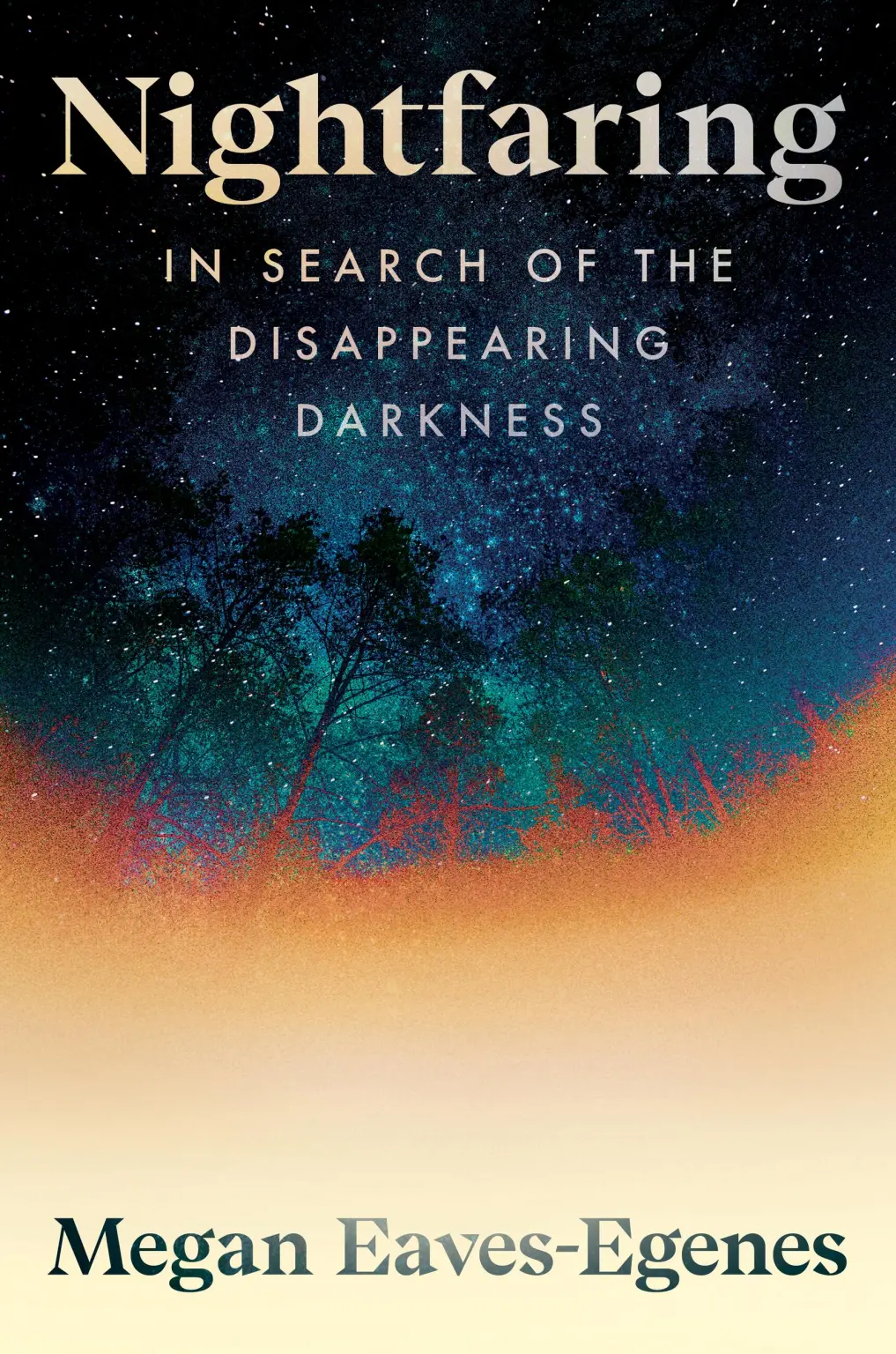
Megan Eaves-Egenes hopes her new memoir, Nightfaring: In Search of the Disappearing Darkness, inspires readers to get out at night and connect with the dark in new ways. “A lot of people simply don't think about the dark,” she says. “We can’t protect what we don’t understand or know.” The Wildsam contributor and London-based writer takes readers to starry skies across the globe to explore darkness and its essential role in our lives, physiological and creative.
We spoke with Megan about her project ahead of her return to New Mexico for a North American book tour.
Wildsam: How did you get into this work? What drew you to it?
Megan Eaves-Egenes: It was essentially a personal missing of the night sky. I’d grown up in a rural part of New Mexico out in the desert. I had memories of my dad with the telescope in the driveway looking at Haley's comet. I started to miss that.
I've now been in London for 15 years and started to think about the night sky again. Other aspects of personal life started to make me feel like I wanted to spend time under the sky—a kind of meditative perspective, or a sense of understanding my purpose here. It drove me out to the garden to look up at the stars when I hadn't thought about it for many decades.
Here in London, we have so much light pollution that you can see maybe five to eight of the brightest stars on a good night. I was starting to crave that night sky, properly seeing the Milky Way. I started planning trips where I could see night skies. That search as a journalist, as a travel writer, introduced me to the work of Dark Sky International. I learned about the certified dark sky parks and reserves they were doing at the time, which was probably around 2015, 2014. They were growing and the dark-sky movement was growing, but it was not nearly as well-known as it is now. I started learning more about the problem of light pollution and all the advocates who are doing amazing work. I wanted to be involved in that.
What do you like to tell people when they ask about your book’s topic?
ME: There's a lot of philosophy in it, a lot of history. But I usually tell people it's an international travel memoir about my search to try to understand darkness and the night sky in different places around the world. I went to 11 countries, including the UK and the U.S., and every continent except for Antarctica. I tried to make it as global as possible to get as many perspectives as possible. But I came to the topic through conversations with other dark-sky advocates over time.
We know we're putting too much light into the world. We know we're using light wastefully, but why are we doing that? The first thing people start to say is, “Well, we're afraid of the dark and people are worried about safety and we need lights for safety.” But do we? Is that true? I started thinking about all the ways we refer to darkness in a bad way, especially in English or European, Judeo-Christian cultures. We associate darkness with a bad thing. I wanted to investigate that a bit more and understand how other cultures differ from my own thinking about it. I wanted to give it as global a scale as I could just to try to capture diversity on this topic and how people think about it in different places.
Can you give us a snapshot of a few of your favorite dark-sky moments?
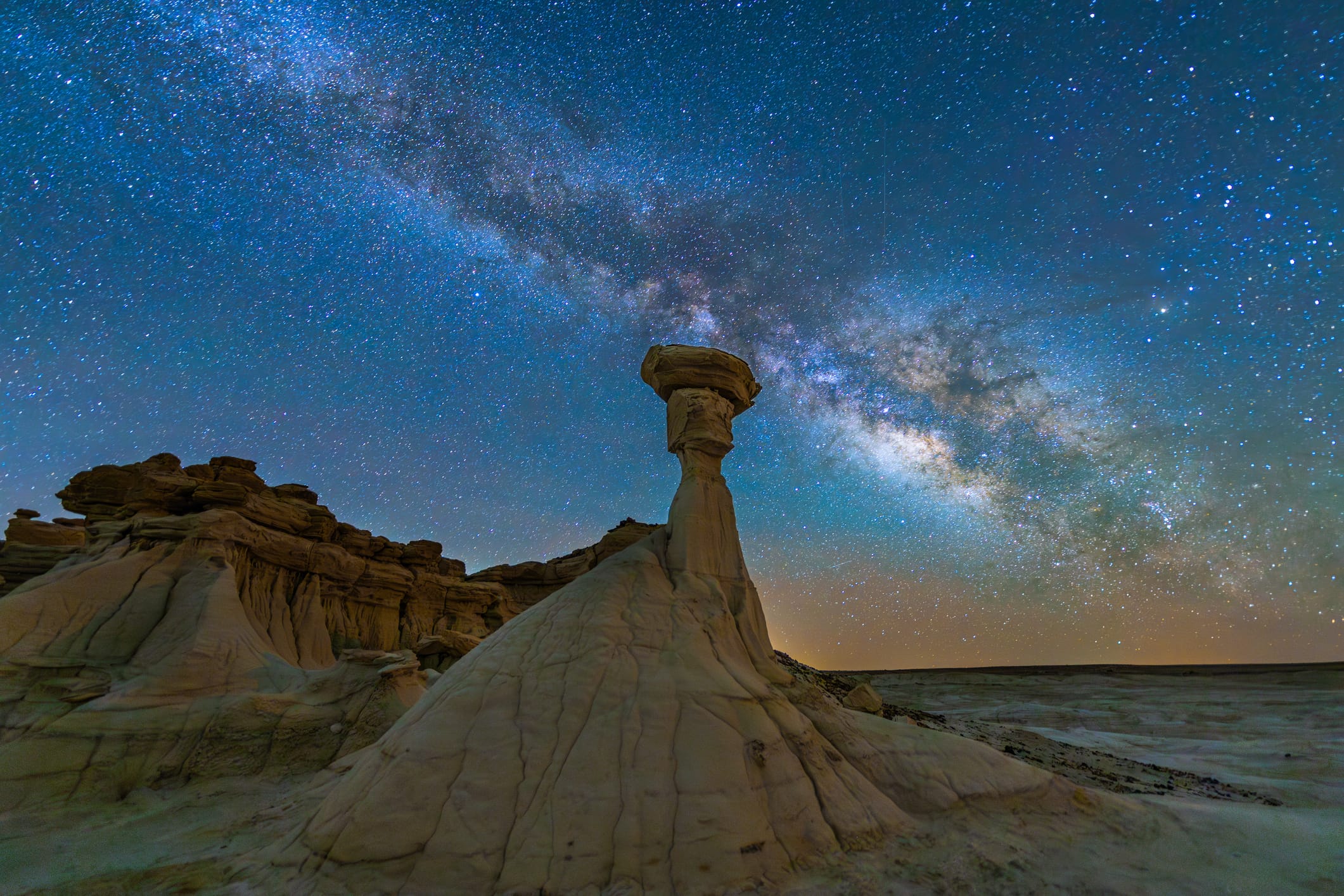
ME: All of the nights I've spent out in the dark under the New Mexico sky are first and foremost my favorite sky. It's my home sky. It's part of the texture of who I am and my soul. You'd think it's kind of the same everywhere, because you're looking at the same stars and constellations. But it really isn't. Everywhere you go is informed by the climate, the landscape, the smell of the air, the people that you're with and the food you've had for dinner. My sister lives in the part of New Mexico where we grew up and just sitting out in her hot tub in the evening together and putting the world to rights—that's a really important one for me.
I had some amazing experiences with astronomers in Uzbekistan. I was learning about the history of Persian and Islamic astronomy and the study of the sciences in the medieval period. I was able to go to a modern astronomical observatory, which is on a mountaintop in Uzbekistan. I met some astronomers there. I was with a guide and her daughter who also live in a city with light pollution. They both saw their first meteor showers together, which was so wonderful.
I went traveling with my dad who lives in New Zealand now in one of the early chapters. It was a nice kind of way to reconnect all these years later. The New Zealand sky is also a different sky, because it's upside down, kind of theoretically, or you see a slightly different portion of the sky, and you see it in a different way in the southern hemisphere.
I spent time at a beautiful resort in a dark sky park on an island in Japan. We did a kind of a mix between yoga and qigong and breathing and meditation on the beach after dark. I feel really fortunate, because the things I managed to do for this were just life altering and wonderful. I feel very grateful for that.
Read More: These A-Frame Cabins Are Built Specifically for Stargazing
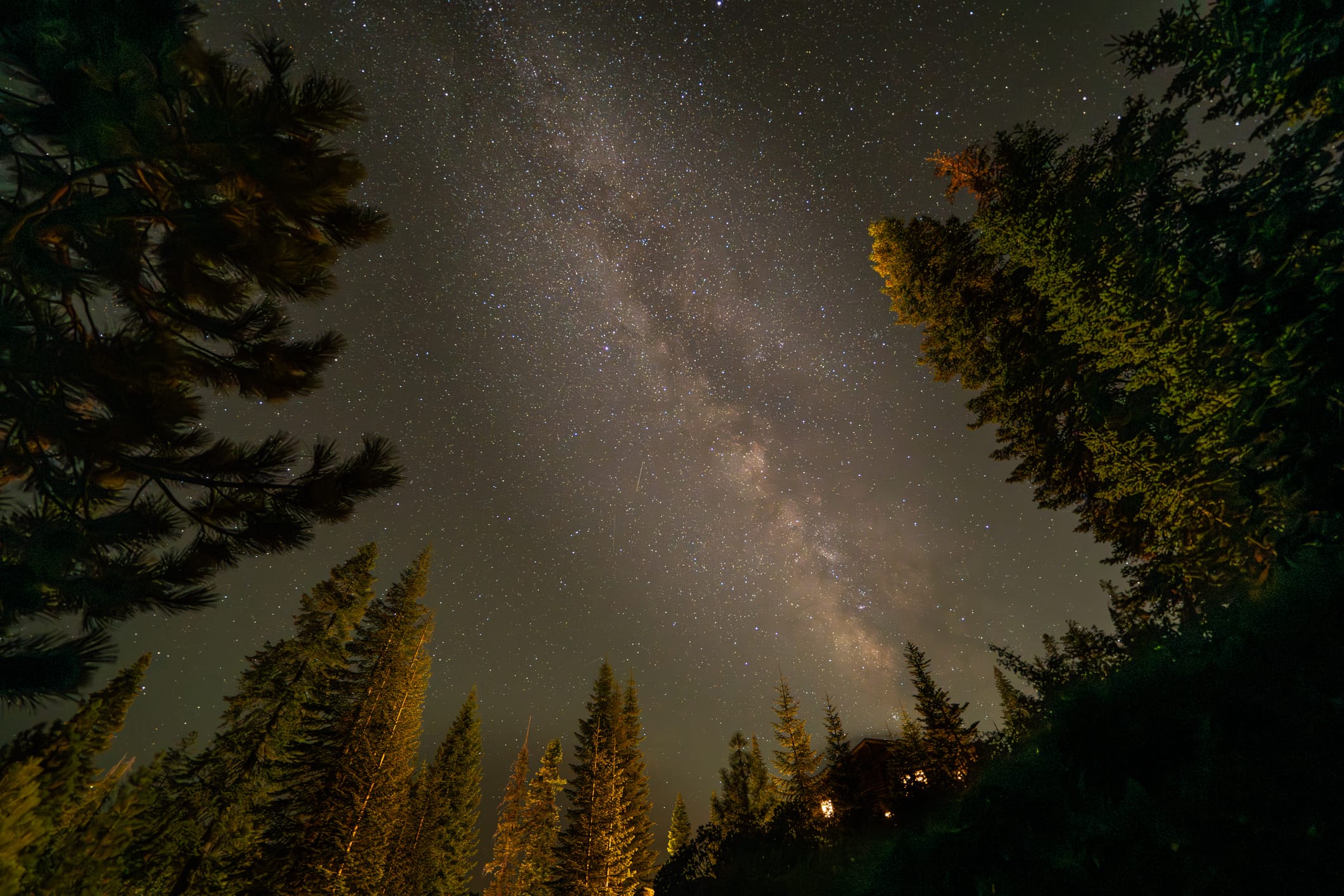
Could you talk a bit about our connection—or maybe disconnection—to the dark skies? What do you wish people understood about the importance of dark skies?
ME: I did try quite hard to trace this history in the book, because it's important to understand how we got here. From the Industrial Revolution to now, that's when we started having the light pollution problem. Lights were installed in factories early in the Industrial Revolution to make sure people could work at night when we were supposed to be, as humans, asleep and resting. Prior to that, we lived and worked and hunted and built our homes by daylight, and in the evening we had firelight, and that's where we connected with each other. We told stories, we laughed, and we carried our histories on by the fire, and then we rested.
We've become very disconnected from not just the night sky, but the whole concept of the dark and how we need it. We need darkness physically to be able to go to sleep and regenerate overnight. Without the dark, we also can't see the sky, which has helped us learn to exist on this planet. We all have different stories culturally, but they often serve very similar purposes. They'll help us with basic agriculture, understanding the calendar and the cyclical nature of how the Earth exists. The night sky has informed so much of our art, poetry, songs. Even in the modern day, Taylor Swift has a whole album named Midnights. It's a time of day when our creativity is higher, that's been proven through psychological studies. We feel more open. We're more romantically connected to each other. We procreate mostly at night. And that's just humans. It doesn’t account for other living creatures and plants also needing day-night cycles.
Our entire planet, our whole ecosystem, has evolved according to that natural cycle of night and day. Lighting it up at night is doing untold amounts of change and disruption to cycles that have existed for billions of years. We don't fully understand the impact of that yet, because in the long history of time, this is a blip of 200 to 300 years that we've had artificial light at night.
Read More: Where to go Stargazing in the U.S
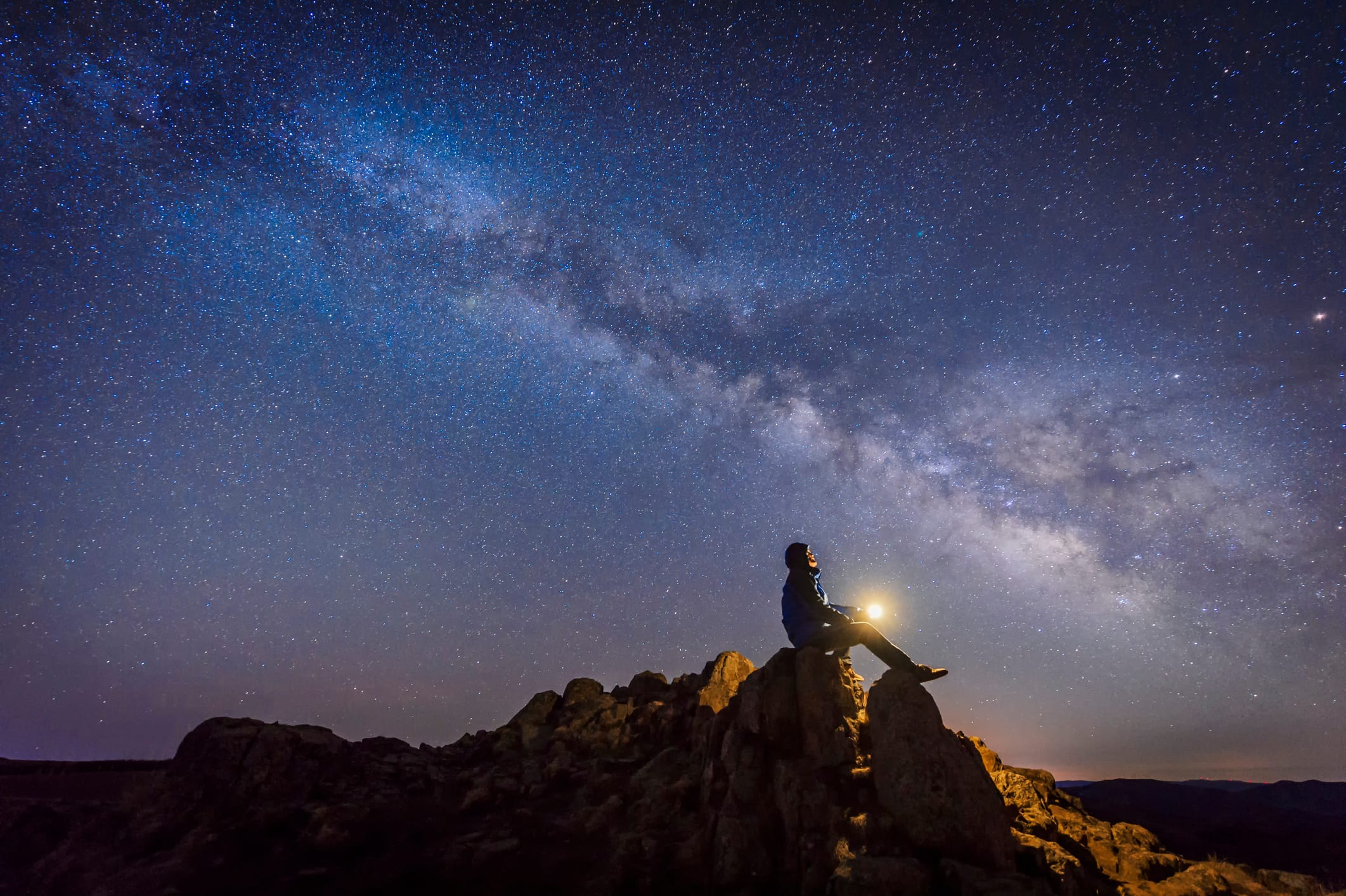
And it sounds like it's about to get worse?
ME: There are some really gnarly proposals coming out, with SpaceX and Elon Musk saying he wants to put a million satellites into orbit. Another proposal from a company called Reflect Orbital wants to essentially use mirrors to reflect sunlight down onto dark parts of the earth at night so that you can light up whole city blocks or solar farms. Basically so that more money can be made at night, which is wild. That company recently put in a proposal to the FCC at the end of last year or last fall. It's pretty much unregulated. There's no international treaty. We have an international space treaty, which basically agrees to no arms there. But other than that, there's no regulation. The UN and these private space companies have been trying to come to agreements about what the boundaries are around this. I've gone to a few of these United Nations conferences. I was at one in Vienna in December, but an agreement or resolution hasn’t yet been reached.
Does that feel hopeless to you given your work? How do you grapple with that?
ME: I know it's hard not to feel hopeless, but I am inherently a hopeful person. I kind of live by the creed that my mindset determines my life. I spent four days in a dark retreat room at a monastery in Germany, which really forces you to reckon with all of your internal shadows. I've learned we can choose how we show up every day. It's not always easy, and you're always going to need days where you have rest. But you can choose to focus on what you focus on. There's a lot of noise in the world now. We have 24-7 media and social media. We don't need that kind of information. Even 40 years ago, when I was young, we didn't have that kind of access to information. We're not built for that. So I just try to curate my world. Not to be naive about what's happening, but also not to mainline the doom all the time and connect with people.
That’s what this book is about in the end. All of the people that I met all over the world, different languages, different cultures, different backgrounds, different religious beliefs. We were all united by this love of the night sky. And that to me felt so powerful and so hopeful. That we can build communities. If we focus on that and focus on each other, that's what gets us through.
This interview has been edited for length and clarity. Find Nightfaring at bookshop.org or your favorite local bookseller.
Like What You See?
Get the latest stories, plus details (and discounts!) on Wildsam field guides, sent right to your inbox.
Read more like this