

Where to Go Stargazing This Season
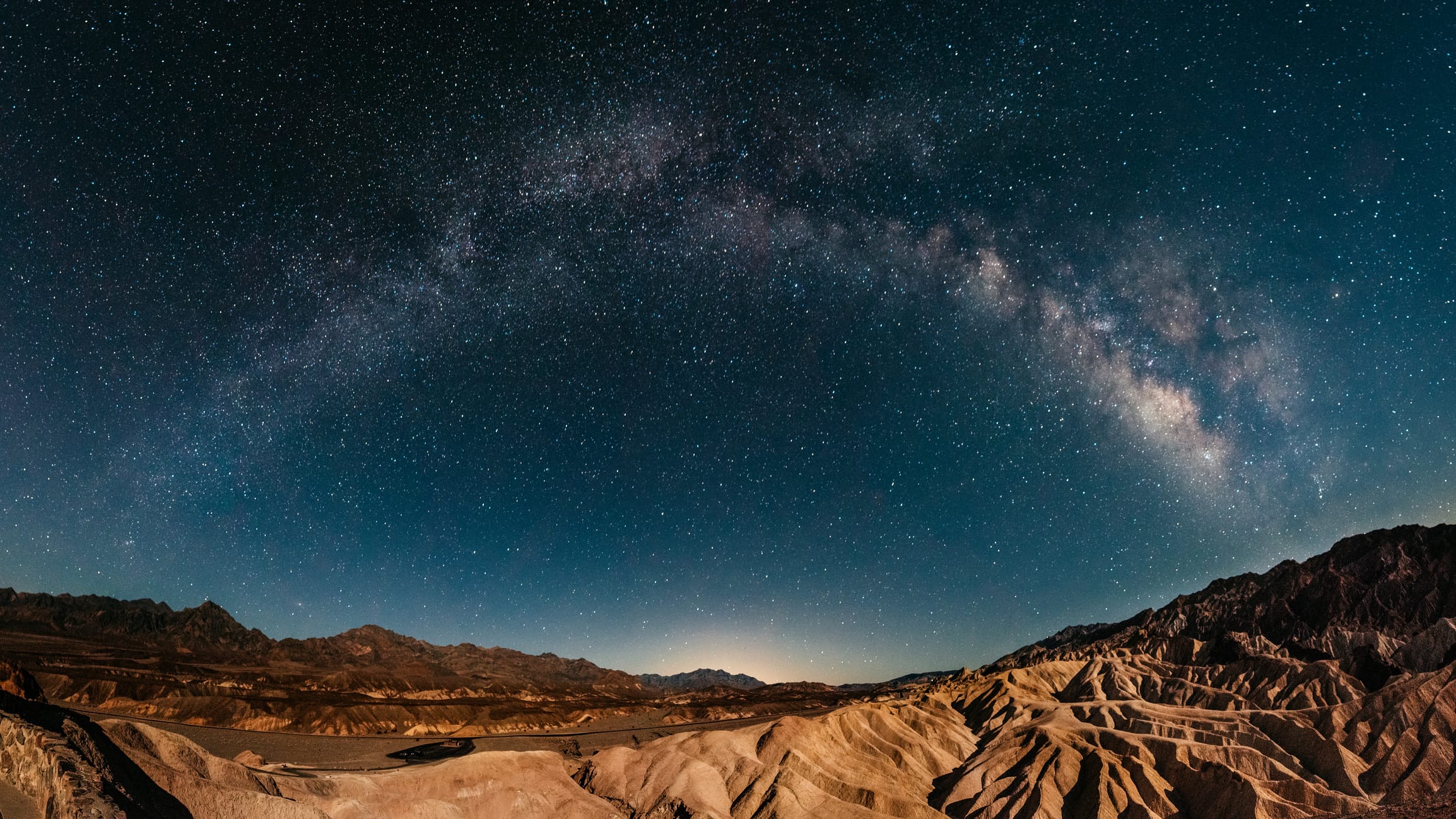
In much of the country, the stars have faded beneath the glow of city lights. But in remote deserts, quiet coastlines and protected landscapes, darkness still holds. These places offer some of the clearest views of the cosmos in North America—where the Milky Way arches overhead, meteor showers streak across open skies and constellations appear with startling clarity.
The Classics
Many of the country’s most famous stargazing destinations cluster in the American West and Southwest, where high elevation, dry air and wide-open desert landscapes create ideal viewing conditions.
Death Valley National Park
The largest national park in the Lower 48 is also one of the darkest. Death Valley’s vast basins and stark mountain ranges create huge horizons with almost no artificial light, making it one of the best places in North America to see the Milky Way stretching clearly across the sky.
Big Bend National Park
Remote even by desert standards, Big Bend sits hundreds of miles from major cities along the Rio Grande. Its famously dark skies—among the darkest measured in the Lower 48—make the desert feel like a natural planetarium on clear nights.
Great Basin National Park
Tucked against the Utah border, Great Basin combines high elevation with remarkable isolation. The park is known for its astronomy programs and dedicated stargazing amphitheater, where visitors can watch the night sky unfold above ancient bristlecone pines and the slopes of Wheeler Peak.
Mauna Kea
Rising nearly 14,000 feet above sea level, Mauna Kea sits above much of the atmosphere’s haze and moisture. The summit hosts some of the world’s most powerful observatories—and offers some of the clearest views of the cosmos anywhere on Earth.
Joshua Tree National Park
Few landscapes feel as cinematic under the stars as Joshua Tree. The park’s namesake trees and giant granite boulders create striking silhouettes against the night sky, making it a favorite destination for astrophotographers and desert campers alike.
Hidden Gems
Beyond the famous parks, a handful of lesser-known destinations offer equally spectacular stargazing—often with fewer crowds and unexpected landscapes.
Cherry Springs State Park
Deep within Pennsylvania’s Susquehannock State Forest, Cherry Springs is famous among astronomers for its exceptionally dark skies. The park even features dedicated astronomy fields designed for telescopes, making it one of the best places in the eastern United States to see the Milky Way with the naked eye.
Voyageurs National Park
Along the Canadian border, this lake-filled wilderness offers a rare combination of dark skies and reflective water. Stargazers often watch the Milky Way ripple across the still lakes from remote island campsites—and occasionally catch the northern lights dancing overhead.
Snow Canyon State Park
Designated an International Dark Sky Place in 2025, Snow Canyon’s lava flows, red sandstone cliffs and desert valleys create dramatic silhouettes beneath the stars. Its location near St. George also shows how dark skies can still exist close to growing cities.
Dry Tortugas National Park
Seventy miles west of Key West, this remote island park is surrounded by open ocean in every direction. With almost no nearby development, the horizon feels enormous—and the stars shine above the massive brick walls of historic Fort Jefferson.
Like What You See?
Get the latest stories, plus details (and discounts!) on Wildsam field guides, sent right to your inbox.