

The Soccer Bus
Ride with the converted schoolie taking an endless soccer road trip across America.
Somewhere in these United States, come rain or shine, dawn or dusk, first match of preseason or the dying embers of a playoff run, the Soccer Bus is dutifully chugging toward its next destination.
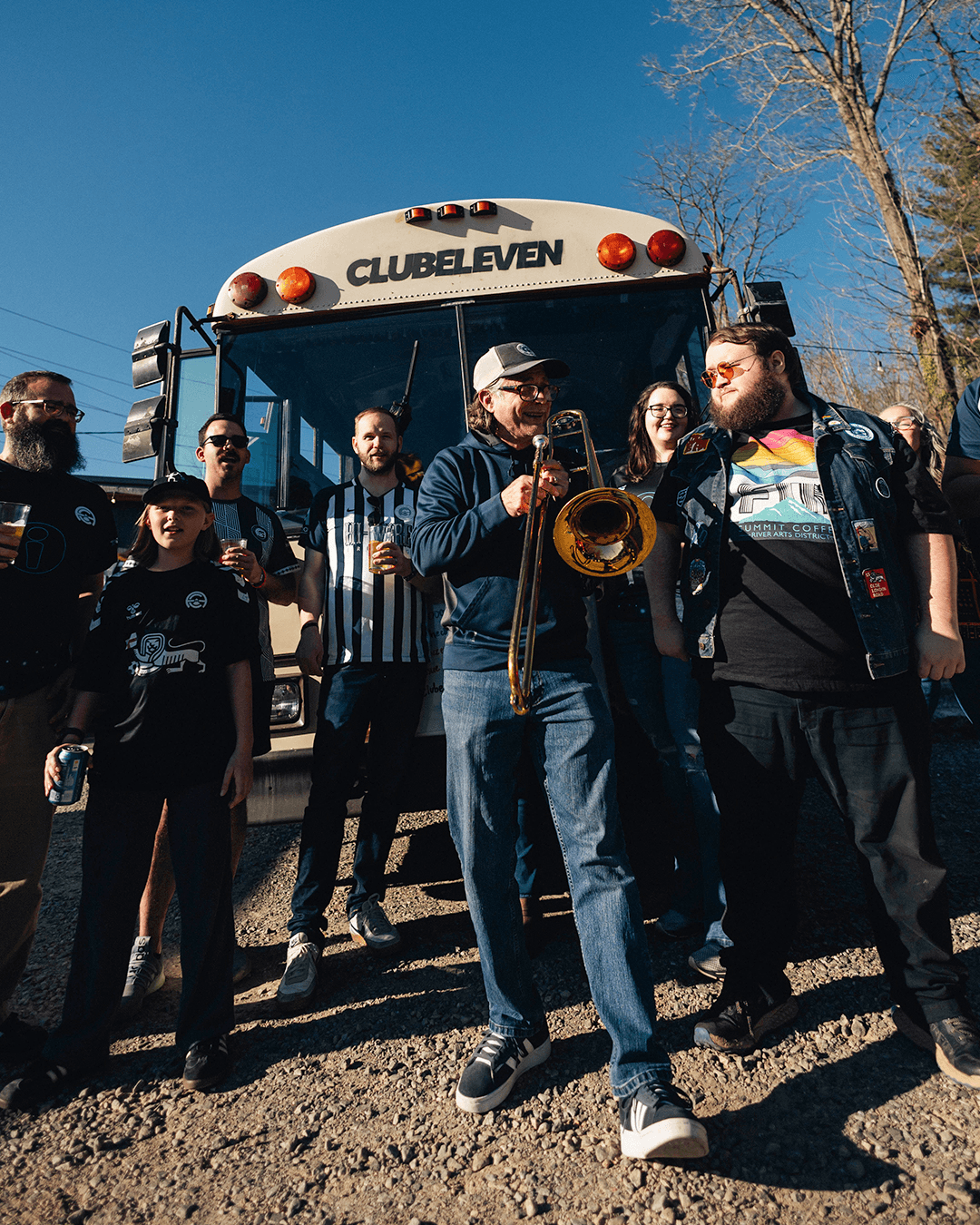
Maybe it’s on that postcard stretch of North Carolina’s Blue Ridge Parkway that runs from Boone to Asheville, to catch the next round of the US Open Cup. Maybe it’s crawling north on I-95 toward New York to check in on a pub where fans of European clubs gather to watch matches at ungodly hours every Saturday morning. Maybe it’s broken down outside of a nightclub in Miami, two skinny legs and a pair of huaraches poking out from underneath the front bumper. Or maybe it’s out front of Justin Amatucci’s uncle’s house in suburban Orlando, “resting.”
Amatucci—he of the legs and huaraches—leads video production for Clubeleven, an indie publisher and creative agency that covers all things American soccer. He is also the pilot and lead mechanic for Clubeleven’s most ambitious project to date: the Soccer Bus.
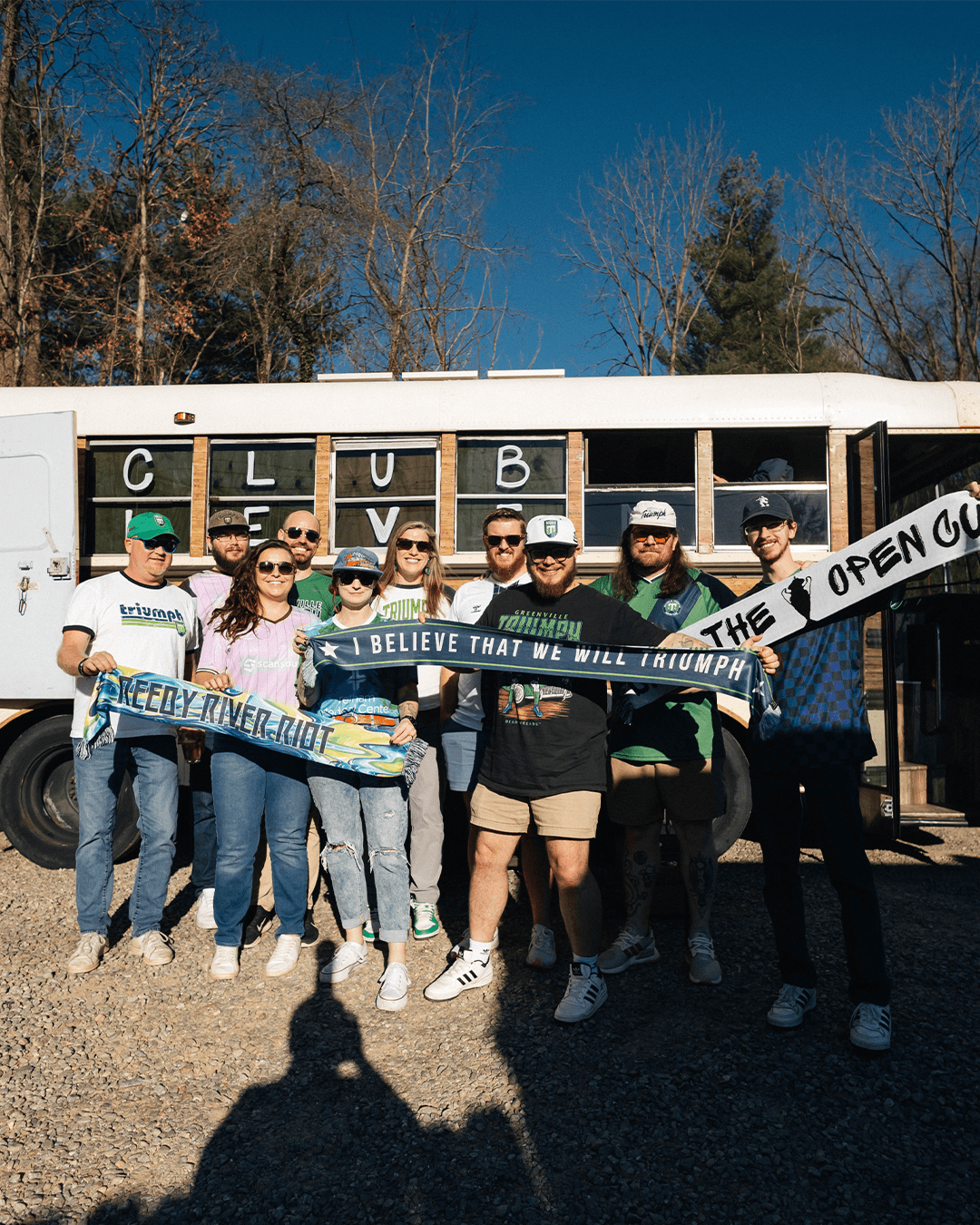
In practice, the Soccer Bus is a 1998 Thomas Saf-T-Liner school bus that’s been gutted and repurposed into what Amatucci and his cohorts call “a mobile American soccer museum,” replete with flags, scarves, pins, jerseys, bobbleheads and assorted other bits of football esoterica. In theory, the Soccer Bus is something more radical: A vessel for building community and celebrating the American soccer underground at a moment when the sport’s stateside commercial appeal has never been greater. (Look no further than the incoming 2026 World Cup, which is expected to earn FIFA, the sport’s international governing body, an eye-watering $13 billion.)
The bus expresses its sports-punk ethos via a simple remit: Find a soccer club with fans whose allegiance borders on aberrance. Embed with them for a game. Then get back on the road and find another, and another, and another, ad infinitum.
Amatucci has a name for these people: “We call people who are like us soccer sickos. The people who come on the bus are all soccer sickos. The longer you stay in the game, the sicker in the head you get about soccer.”
The genesis of the Soccer Bus dates back to the release of Clubeleven’s second most ambitious project to date. In late 2024, the crew (Amatucci, along with production czar Tyler Dolph and co-founding brothers Gabe and Pablo Bayona Sapag) scrapped together the funds to create The Soccer Odyssey, a 140-page zine featuring original art, photography and intimate profiles of colorful American soccer personalities.
They then had to figure out how to promote it.
“In a sense, we were imagining ourselves as musical artists,” Amatucci says. “The magazine was our album. The launch video was the music video for our lead single. And [last summer’s] tour was, well, the tour.”
But in order to go on tour, one must first acquire a bus. Unfamiliar with the general protocol for buying a lightly used Type D road yacht, Amatucci punched a search into Facebook Marketplace.
“Immediately we saw two buses. One was in Satellite Beach, Florida, which is an hour and a half away from me. We turned the corner and saw the wood-paneled wrap on it. I remember Gabe was like, ‘That's the one. It's perfect.’”
Over the next few months, Amatucci binged YouTube crash courses on carpentry and bus mechanics as the Bayona brothers steered The Soccer Odyssey toward its publication deadline. They planned their maiden tour around the 2025 US Open Cup — the country’s longest-running soccer tournament, dating back to 1913, and also its most egalitarian, giving semi-pro and amateur clubs the chance to face off against Major League Soccer franchises with hundred-million-dollar stadia.
Their first stop took them to see Asheville SC, who compete in the fourth tier of the American soccer pyramid. “It was their first professional game since the hurricane, and it felt like the entire city was out to watch the team,” says Amatucci. “Their field just has one little stand. The rest of the seating is all people bringing their own chairs, kids playing on the hills, everyone watching from the dorms.”
He recalls running into a fan he’d met at a tailgate earlier in the day.
“He said that for 90 minutes, it felt like things were back to normal. And I got chills. In fact I just said that and it gave me chills again.”
Clubeleven and their bus spent the next six months recreating this scene. In South Florida, they were regaled with an Argentine banderazo (ceremonial flag-waving) from fans of third-tier Naples FC. In Indianapolis, they hosted an impromptu concert after catching a late winner from second-tier Indy Eleven. And in Austin, they helped the Los Verdes faithful of Austin FC handpaint a sprawling tifo the night before the Open Cup final (in a battle of MLS heavyweights, Nashville beat Austin 2-1).
Their greatest night, though, was surely the one in early August they spent in Burlington, among the rabid supporters of fourth-tier Vermont Green. With the Soccer Bus parked on a hill overlooking the stadium, the Green won their first-ever USL 2 Championship via a miraculous last-minute goal. After the final whistle, the players stormed the bus, trophy aloft.
“One of the players [Owen O’Malley] took off his jersey and gave it to us,” says Amatucci. “It had flare burns all over it from marching through the stands. The club was like, ‘Hey, this guy's kind of a club legend to us, and he scored in the semifinal … We wanted that jersey, but since Owen gave it to you, just cherish it.” (The shirt, now framed, is part of the Bus’s permanent collection.)
This summer, Clubeleven has slightly different plans. Unsurprisingly, they’ll be covering the 2026 World Cup as it alights on North America. But you won’t necessarily find the Soccer Bus in one of the 11 US host cities.
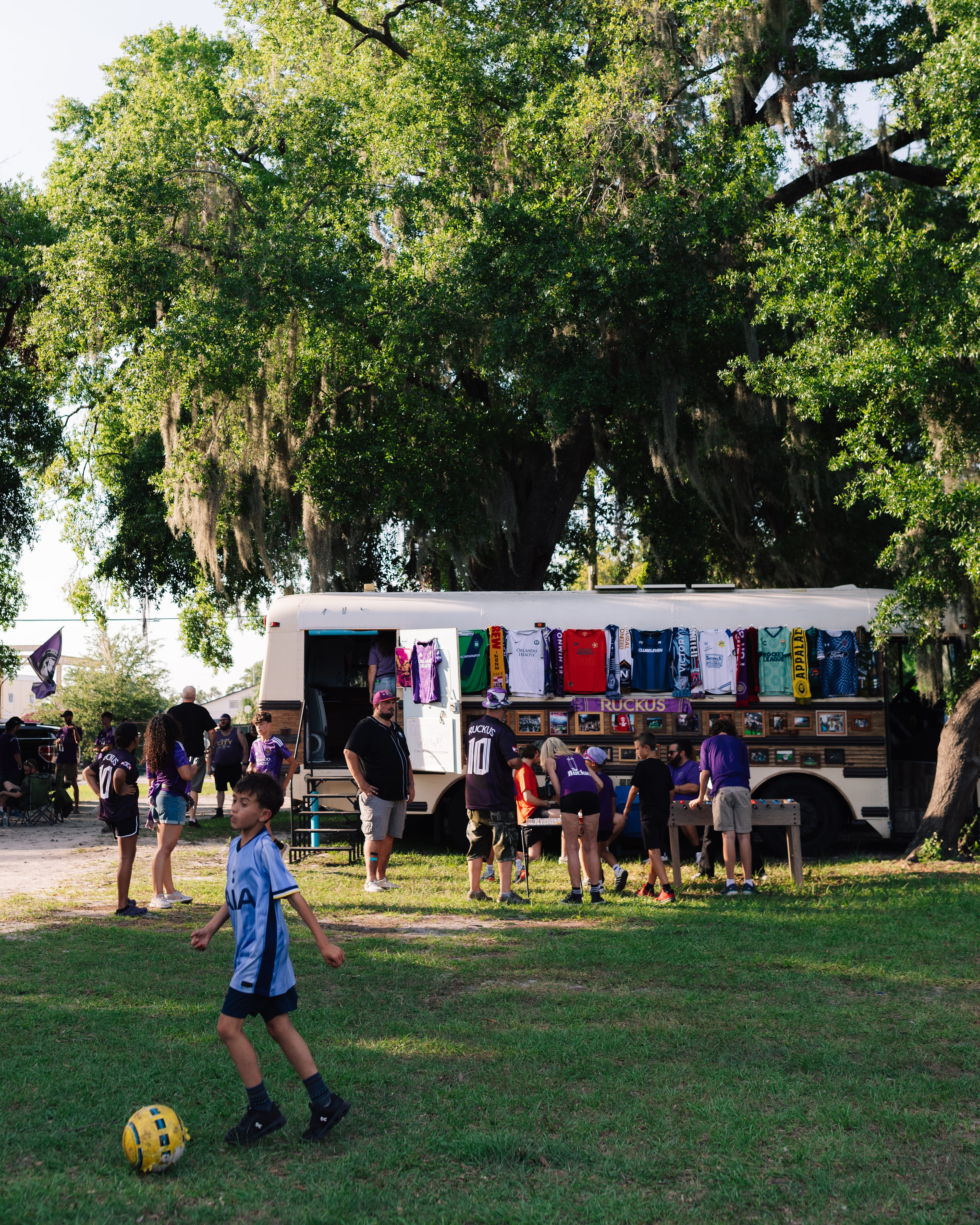
“There are so many different immigrant communities around the country that are gonna be able to experience watching their team play on the world stage, some for the first time. We want to cover how they’re celebrating the World Cup,” says Amatucci. “They have a huge German population in Cincinnati. St. Louis has the biggest Bosnian population outside of Bosnia. And then more obvious ones like the Mexican community in Texas.”
In other words: they’re not just looking for soccer. They’re looking for passion that just skirts the unhealthy—and the community it builds.
Read more like this