

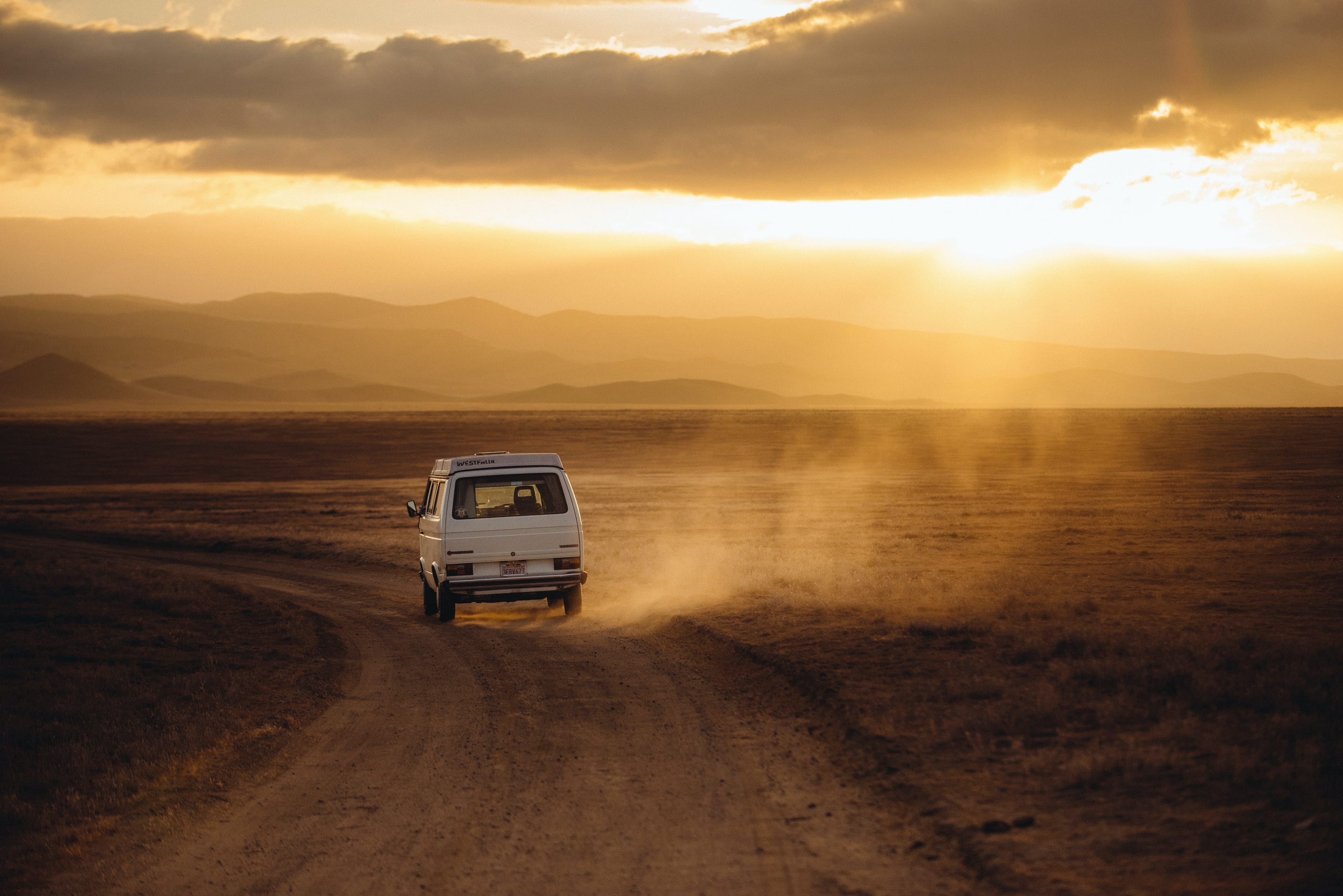
Winter in Yellowstone National Park
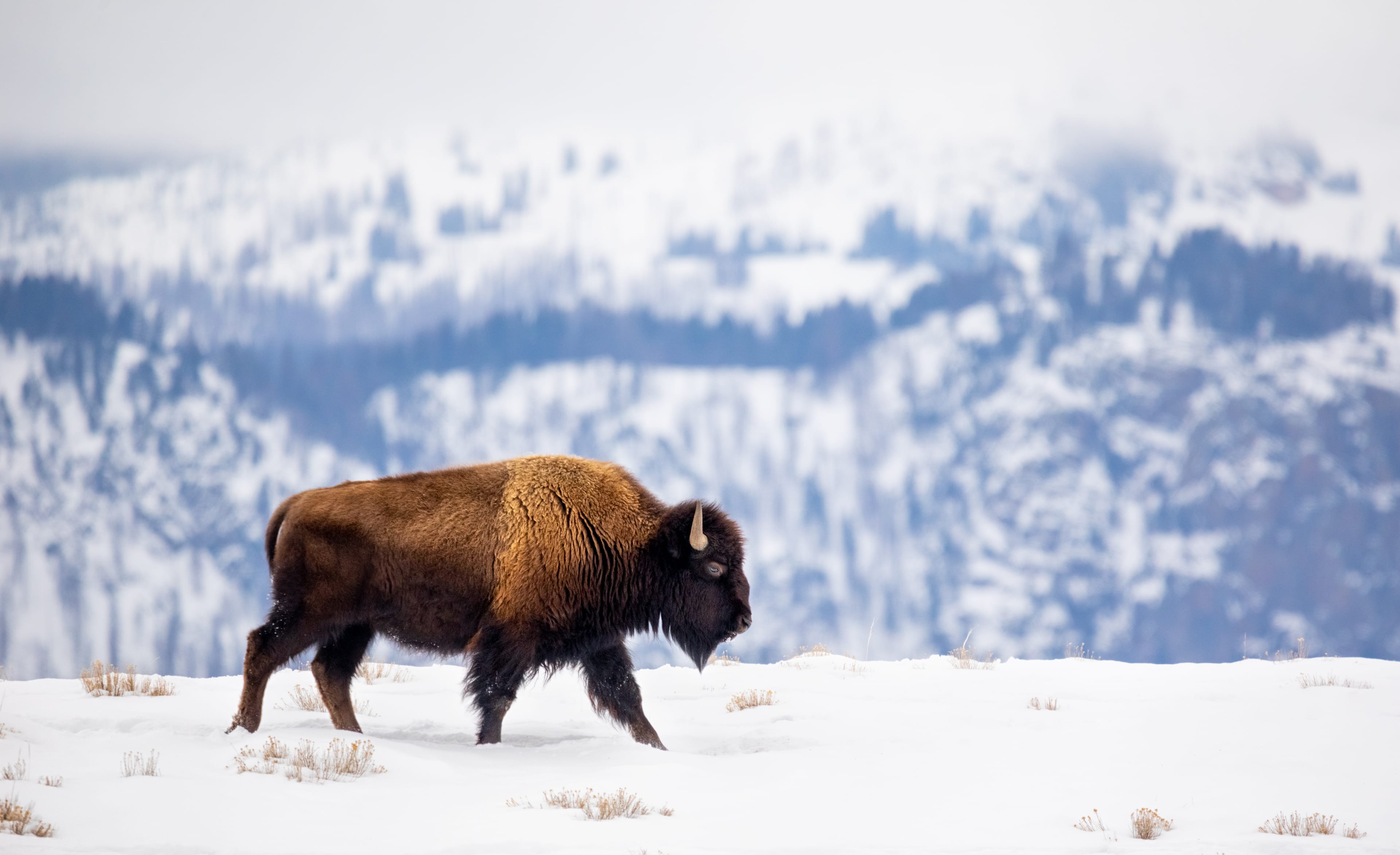
Bison traverse across a wintery Yellowstone landscape | Getty Images
The snowy months put our first national park into a special mode, with serene trails, zero crowds and wonders to behold.
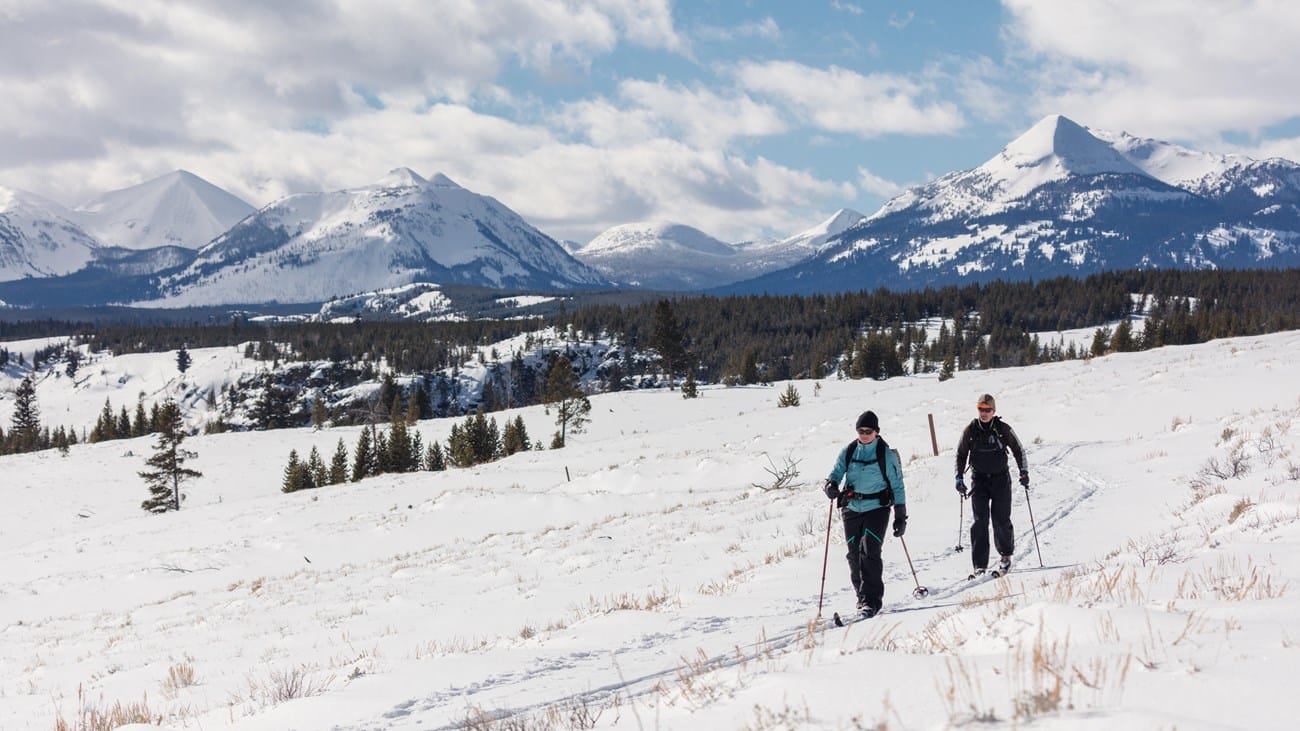
On a crisp January afternoon in Yellowstone National Park, the only other person in sight is my cross-country skiing companion. We’ve entered the park from the north gate via Gardiner, Montana, and will spend at least one night in Mammoth, home to one of only two hotels open in the winter inside Yellowstone’s boundaries.
The only plowed road heads east through the Lamar Valley, which is renowned for wolf watching, to the snowmobiling mecca of Cooke City. We park, however, near Tower Junction—about halfway to Cooke City—to ski the snow-covered road toward the Grand Canyon of the Yellowstone.
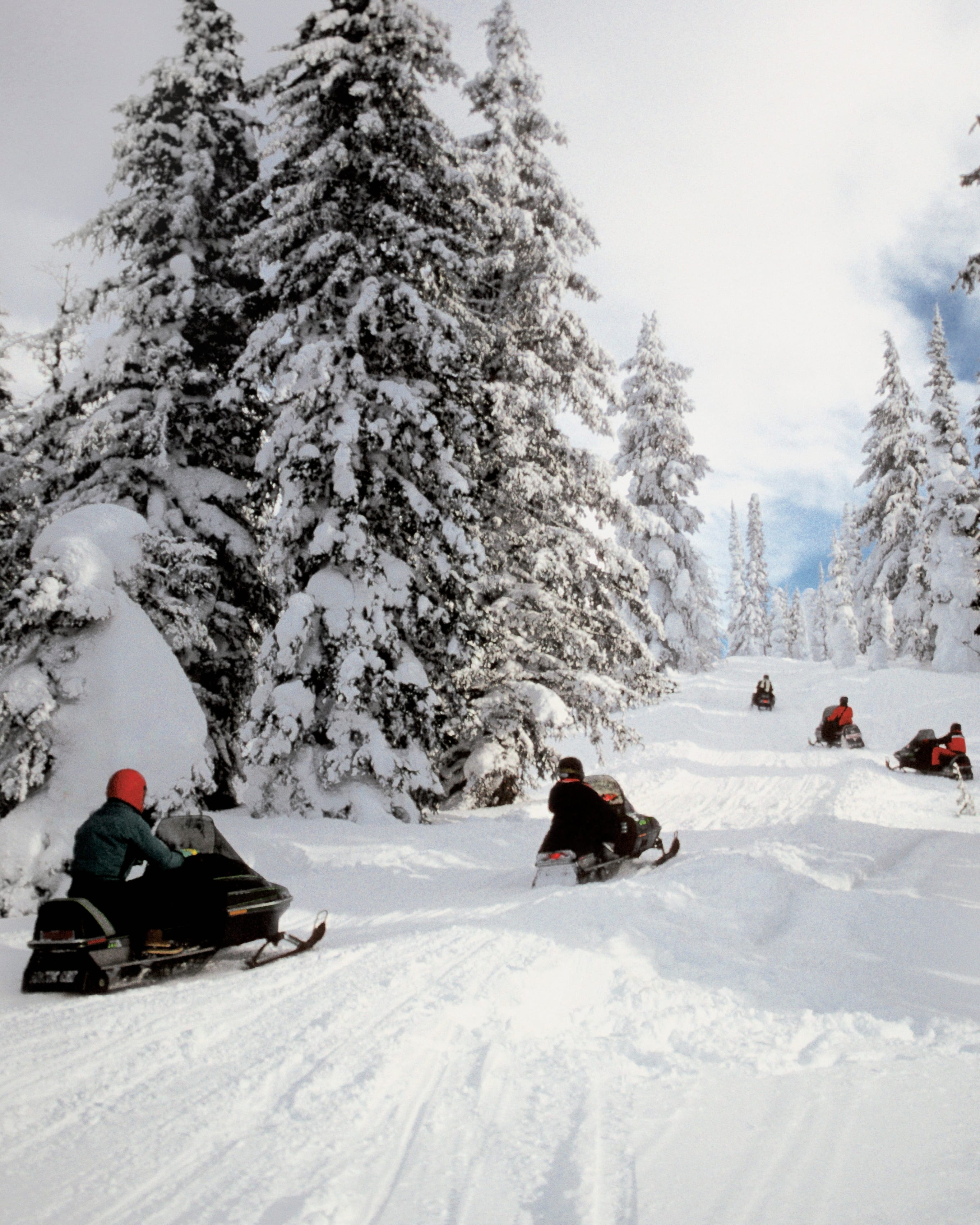
In the summer, this road is often crowded, bumper-to-bumper, with traffic lurching along at 25 mph through this 2.2-million-acre park. More than half of the park’s 4.7 million visitors in 2024 came between June and August; fewer than 9,000 entered through the north gate in January 2025. Add in snowmobiles, snow coaches, buses and nonrecreational vehicles, and the total reaches 66,000 rigs, a fraction of the annual visitation.
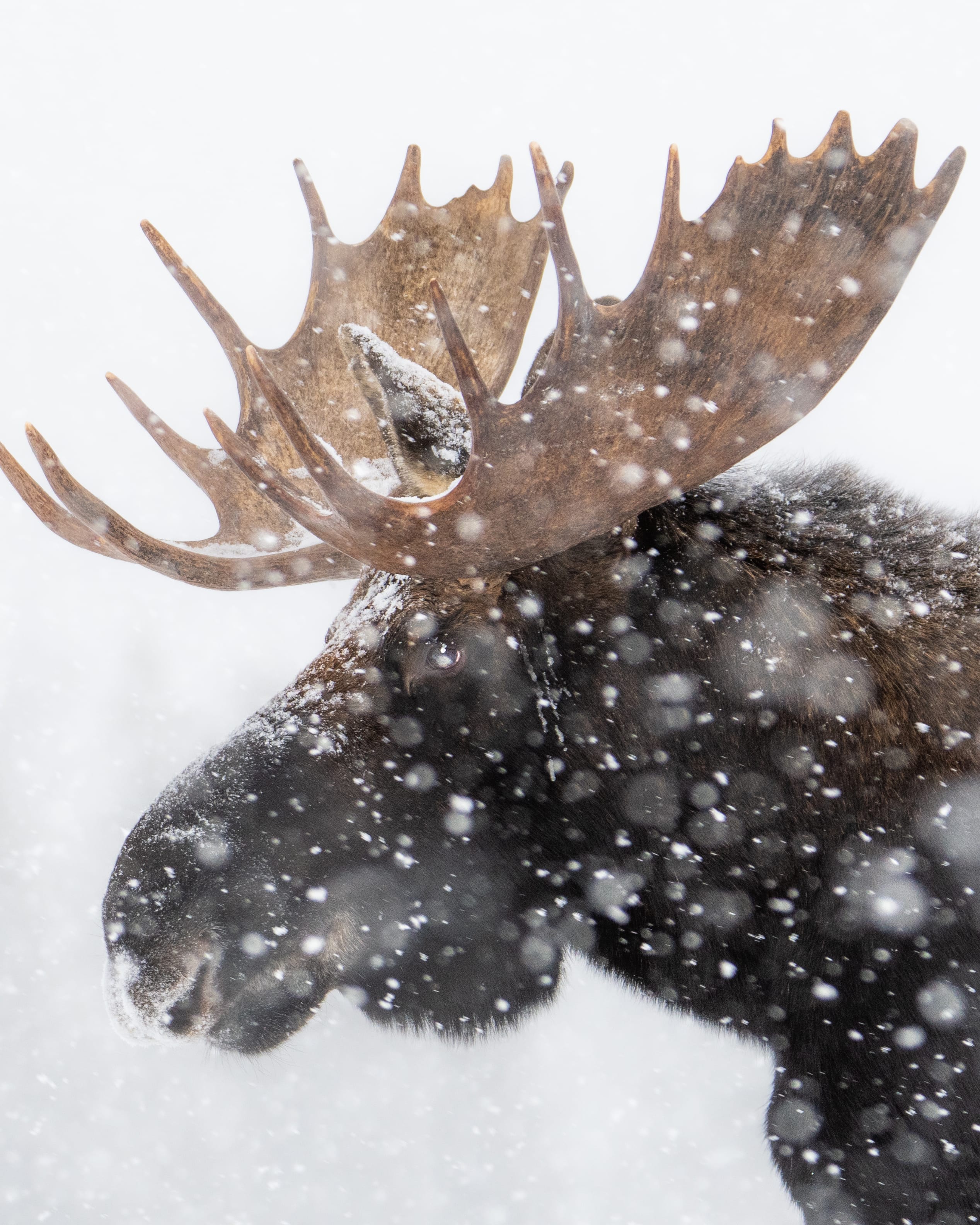
Today, instead of the low idling of cars and trucks, all we hear is the swish of our skis cutting through the type of champagne powder you find above 6,200 feet. We watch for coyotes and foxes hunting in the snow-covered meadows, and finally turn around after a few miles when our path is blocked by lumbering bison, their thick coats covered in white snowfall, while their breath surrounds them in misty halos in the 15-degree sunshine.
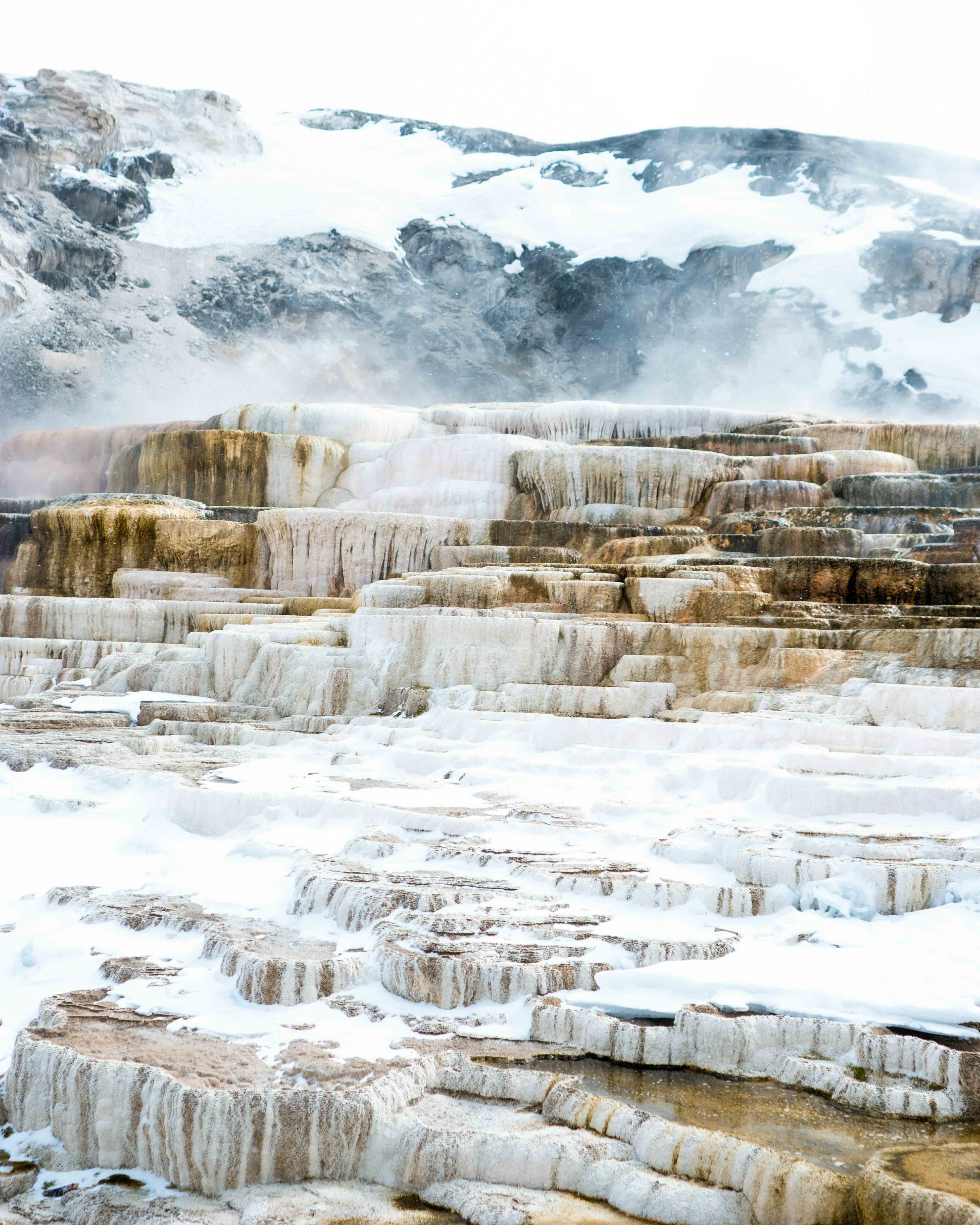
We return to Mammoth, grab our ice cleats, and head toward the travertine terraces to gingerly hike around the boardwalk, which is a bit icy from the freeze-and-thaw cycle of the thermal springs. The springs also create a ground fog, gently softening the sulfur scent rising from deep in the earth. We stay at least 25 feet away from the massive elk bulls and cows, which also like to hang out in Mammoth.
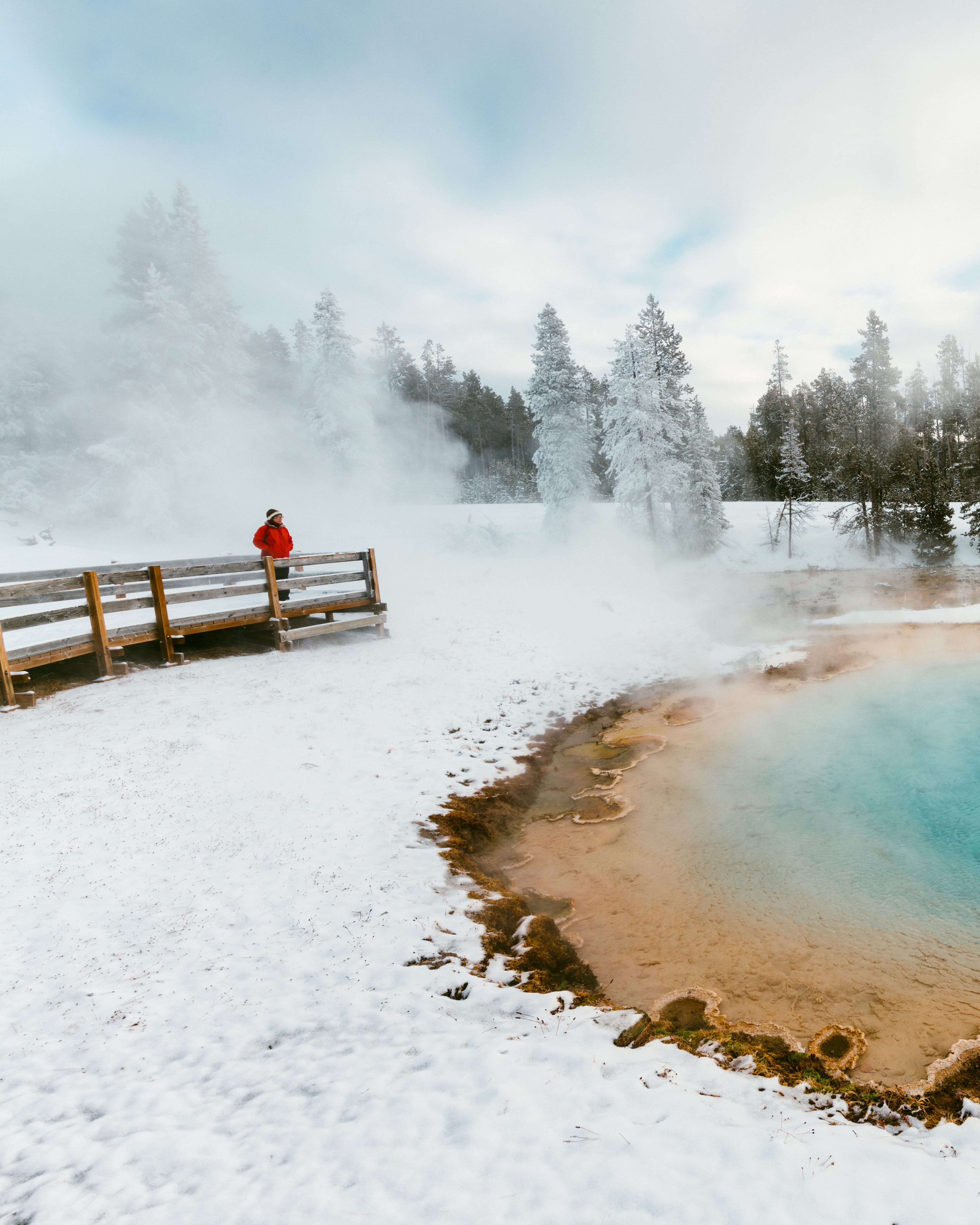
If we were a little hardier, we might have stayed at the Mammoth Campground, which is the only one in the park that’s open year-round. (It’s a no-hook-up situation.) Instead, we’ve opted for the Mammoth Hot Springs Hotel, where we’ll dine in the in-house restaurant. The menu looks fairly enticing, including a warm goat cheese salad, a bison burger, and a sumac-crusted Idaho red trout.
We plan to ice skate on the rink behind the lodge, which was built in 1936 and renovated in 2019. Then another raft of activities to ponder (many of them require reservations). Should we take a snow coach tour to the Old Faithful Snow Lodge, constructed in 1999, and watch the iconic geyser spout every hour or so? Should we take a guided snowmobile tour or a snow coach tour of the geyser basins? Do we want to explore the town of West Yellowstone, where snowmobiles are the main mode of transportation and the world-class Rendezvous cross-country ski also offers more than 30 miles of groomed track? Or do we instead drive ourselves from Mammoth to the small towns of Cooke City and Silver Gate, which, between the two, has a population hovering around 140 people and is renowned for its snowmobiling, skiing, and snowshoeing? All of it sounds absolutely magical, because it is. In winter, Yellowstone National Park is a throwback to another era: A refuge where cell service is spotty, where bison, wolves and elk roam like they’ve done for eons, and where solitude in this fast-paced life forces people to slow down, inhale deeply, and quietly ponder our relationship with nature. (Even if temperatures are hovering in the teens.)
How to Visit
TRIP LOGISTICS
Most of Yellowstone’s tourist infrastructure closes for winter. The road between the North and Northeast entrances remains open. Snowcoaches and snowmobiles can travel most roads; for snowmobiling, see nps.gov for information on permitting. Snowcoach tours operate from Gardiner and West Yellowstone, run by a number of tour companies. Teton Science Schools runs wildlife-focused tours out of Jackson Hole. Freeheel and Wheel in West Yellowstone is a time-honored stop for cross-country ski rental and information. Walking Shadow Ecology Tours, based in Gardiner, offers a couple of winter tours notable for naturalist insight, including an expedition focused on Yellowstone’s famed wolves.