


How RV Braking Systems Actually Work
Getty Images
What happens to your dinghy vehicle when you hit the brakes? We looked into a popular braking system to find out.
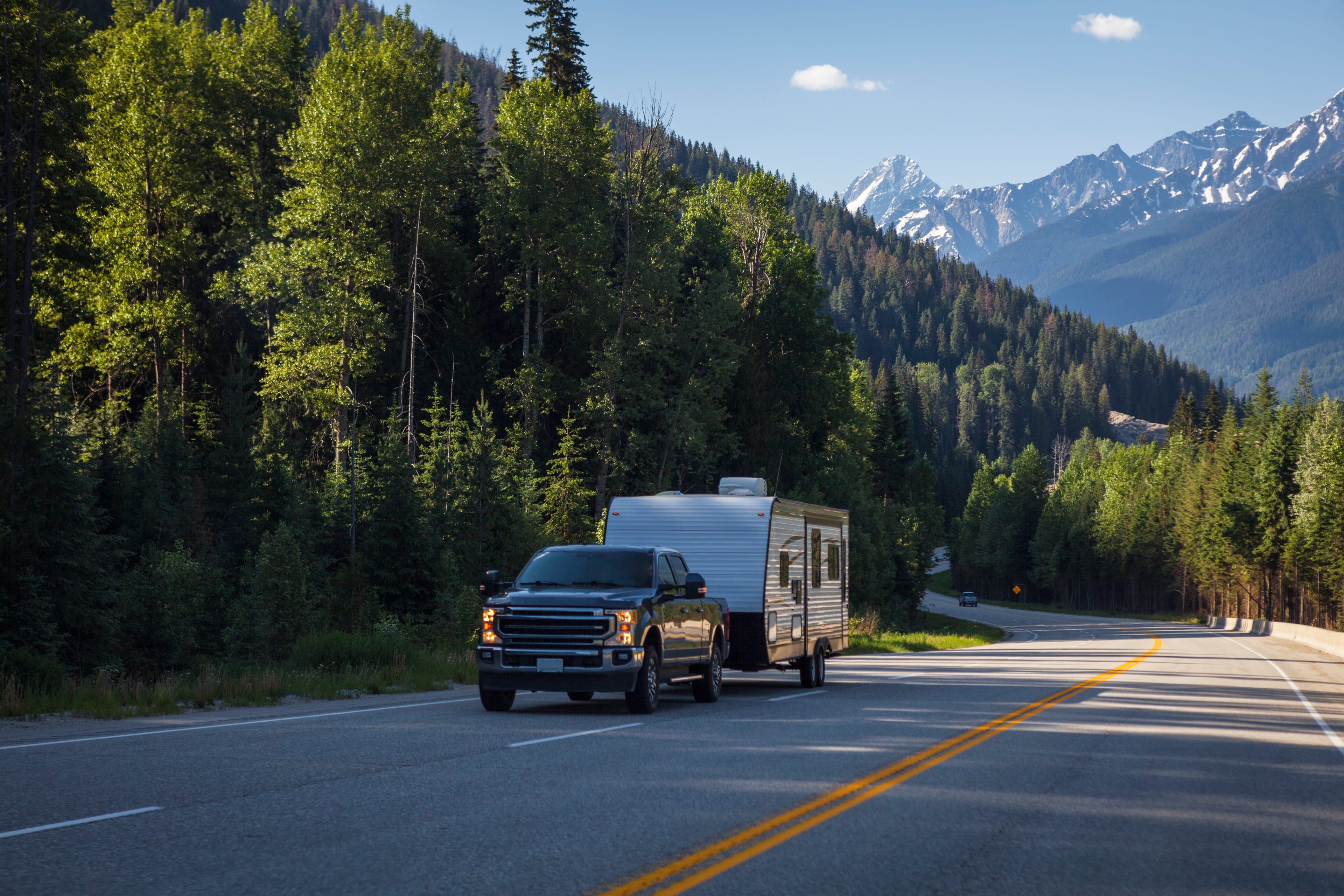
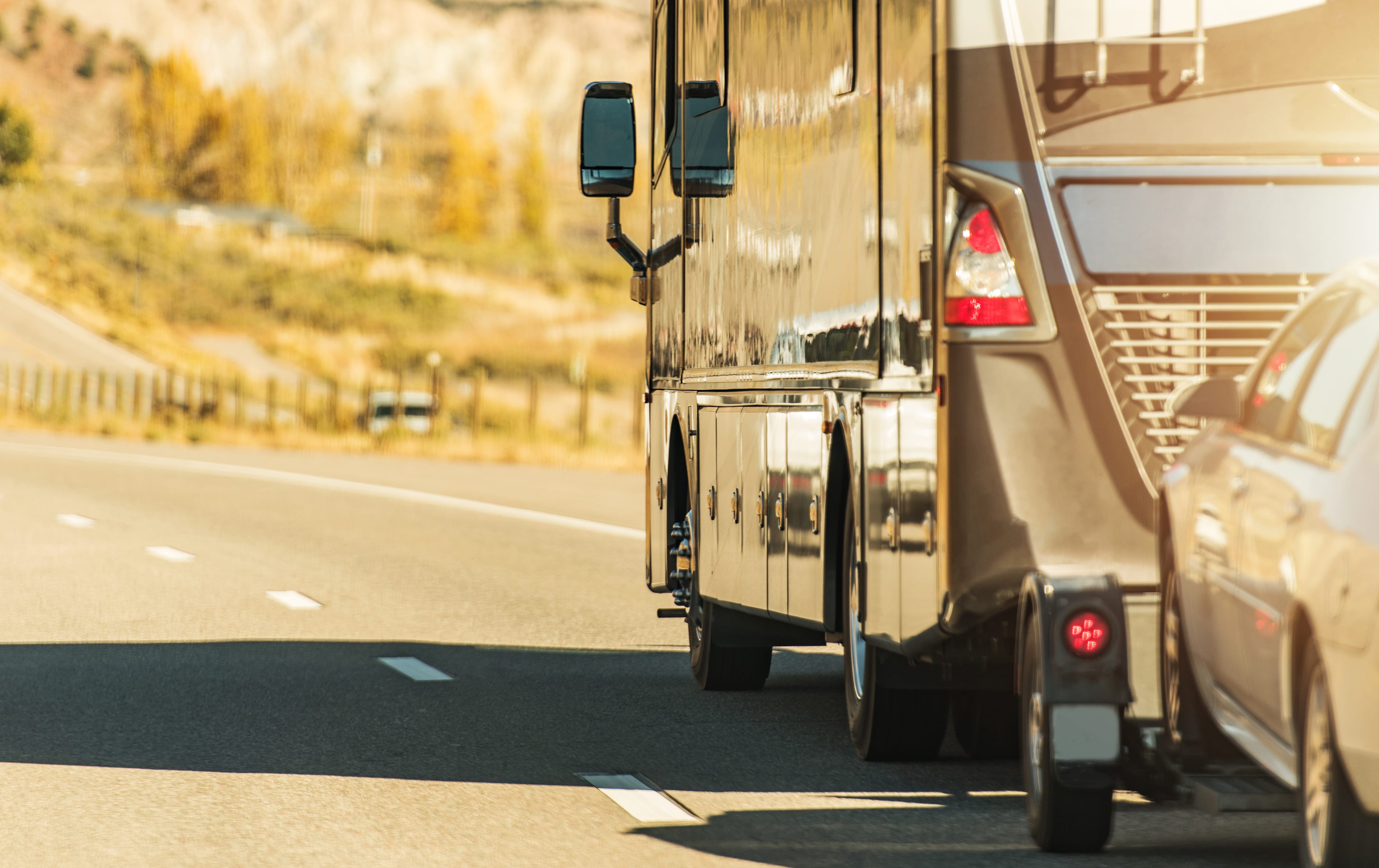
Motorhomes provide opulence in motion, and these days, they can do just about anything. But if you drive a big Class A—or even a smaller Class C—you’ll likely find yourself in need of something more: an auxiliary vehicle for short excursions, something you can tow behind your coach. You’ll also need to be sure that, when you apply the brakes, the vehicle you're towing slows down in harmony with your motorhome. Over the decades, supplemental braking systems have evolved to make this process easier.
“Number one, a supplemental braking system is a safety feature,” says Alex Walker, vice president of sales and customer service for Blue Ox, which sells the popular Patriot 3 Tow Brake. “No matter how large a coach you have, having 2,500 pounds behind you when you stop is going to put additional wear on your brakes and tires.”
Moreover, Walker notes, every U.S. state and Canada requires anyone towing a dinghy to employ some sort of auxiliary braking system. Insurance companies do, too. But how, exactly, does such a system work?
Read More: 6 Motorhomes We Wish We Were Driving
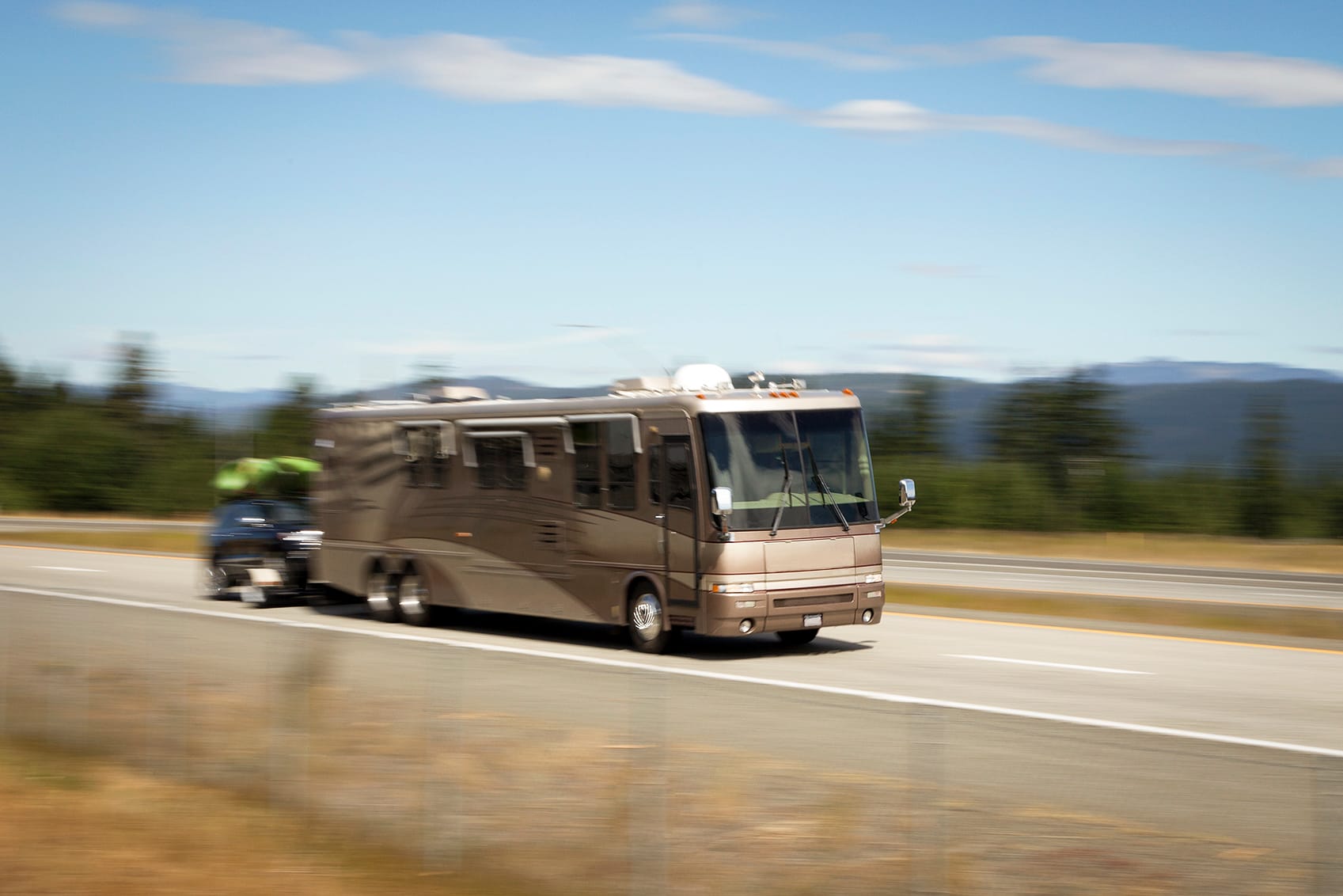
There are several types of braking systems on the market. Some rely on a coach’s air or hydraulic braking lines; some are permanently mounted within the tow vehicle's engine compartment; others use the dinghy vehicle’s weight pressing up against a tow bar to trigger the brake’s response. The Blue Ox version, however, is electronic and portable.
The Patriot 3 is what’s called a “brake in a box.” Electrical cables run from the motorhome through the vehicle’s engine compartment, through the firewall, and into the car’s cabin near the brake. The Patriot, a box-like device with an arm that attaches to the brake pedal, sits on the floor in front of the driver's seat. When you compress the brake on your motorhome, an electrical actuator tells the Patriot to compress the tow vehicle’s brake with identical force.
For safety, the Patriot utilizes a breakaway switch attached to tow bars. If the tow bars fail and the car detaches, the switch unplugs and the Patriot brings the dinghy to a stop. It also comes with a display screen for the motorhome that allows drivers to monitor the system in real time and adjust braking force.
“Probably about half the people who buy a motorhome are going to end up towing in some capacity,” Walker says. “There are a lot of different components that go into it, but it’s nothing that difficult.”
Read More: Compare four auxiliary braking systems on RV.com.

About the author
More Travel + Towing Stories
Check out the full February 2026 Digital Issue of Wildsam Magazine.