

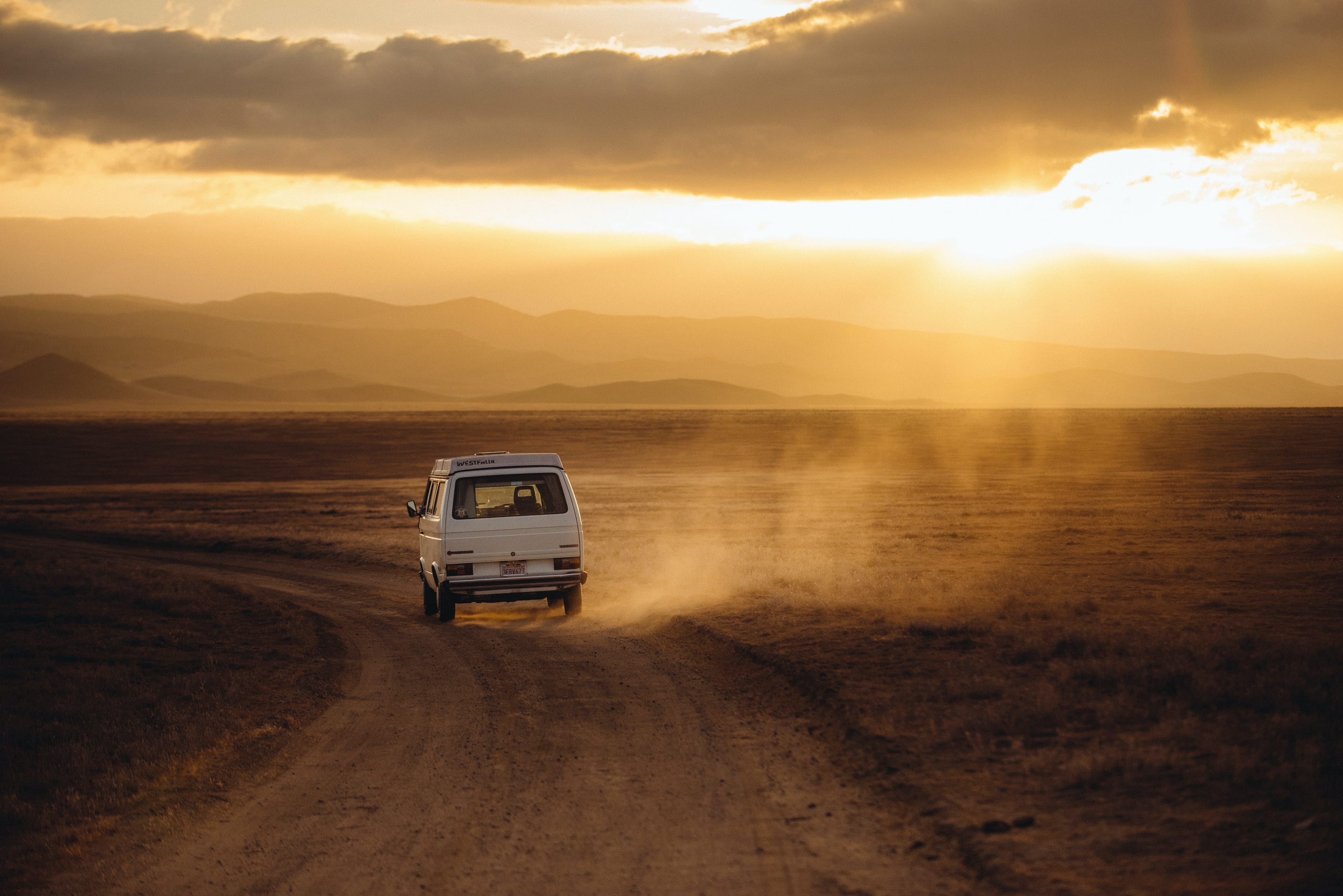
Roadside Eats: An Interstate Love Song

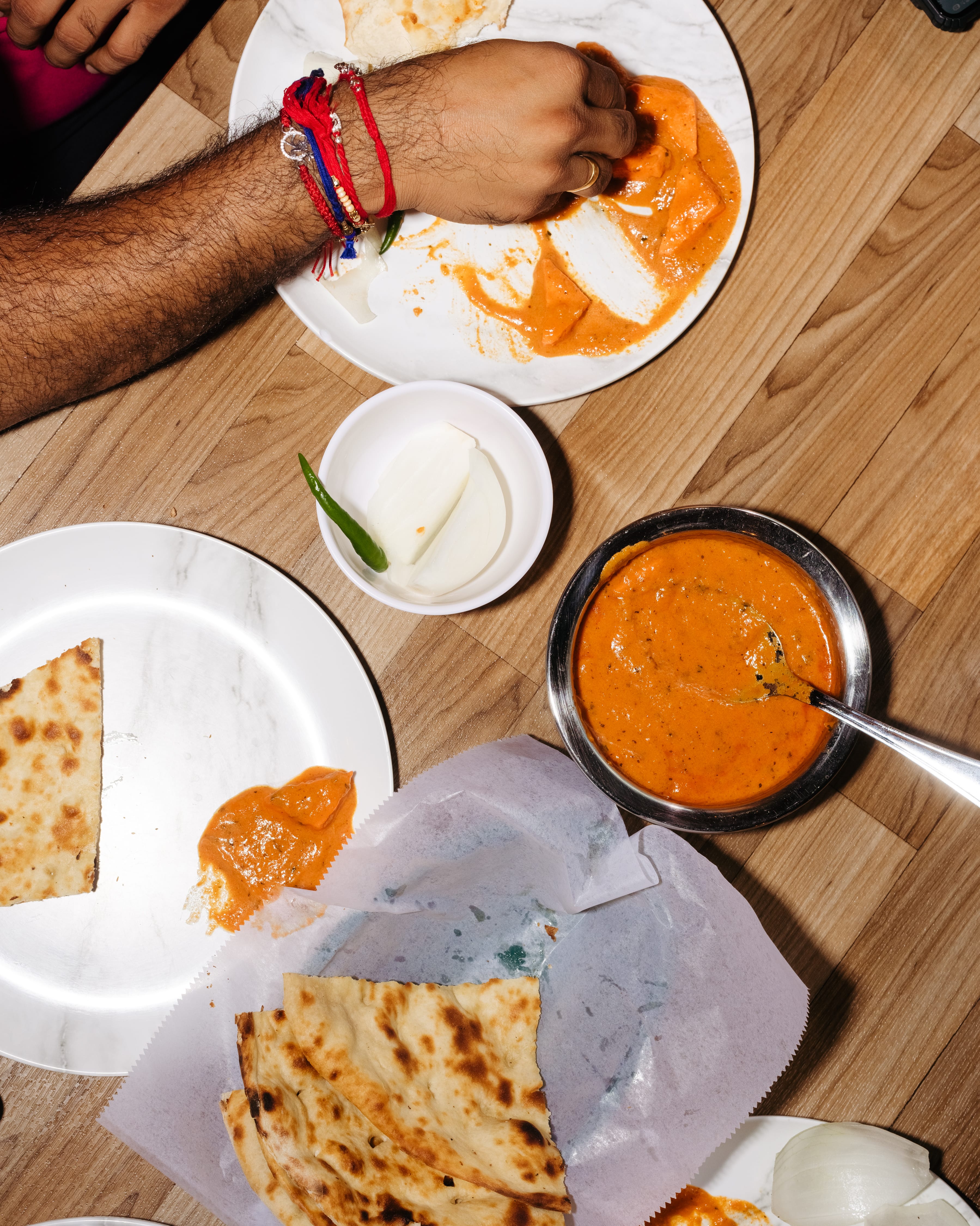
Tony Singh and his takeaway meal from Punjabi Dhaba in Kingston Springs, TN | Whitten Sabbatini
All along the “big slab” of the American highway, mom-and-pop dining establishments serve moments of culture, community and culinary brilliance. Ride along to discover some of the best food stops off the exit.
In early 2020, a trucker and folk musician named Paul Marhoefer—also called “Long Haul Paul”—went on a quest for “nanner nanner pudding.” This was the siren song of truck stop waitresses across the South announcing their restaurants’ banana pudding along with other daily specials over CB radio. Paul wondered: Where did the slogan, shouted out by so many through radio static, originate?
To find the answer, he takes listeners to three of his favorite Kentucky truck stop restaurants along 1-75 as part of his Over the Road podcast. He tells the story of the pudding while steaks sizzle, destined to accompany bowls of pinto beans and collard greens. We learn about the evolution of mom-and-pop truck stop restaurants, about the resilience and heart of their workers, the importance of familiarity and a place to step outside the cab for a hot meal and a precious moment of a community:
“If you’re halfway remembered,” Paul told us, “that seems to make the food taste even better, as opposed to just being a stranger passing through.”
This tale of regional pudding and universal need is one glimpse into an American institution: the roadside restaurant. You know the kind. Gas pumps out front; a grab-and-go store with beef jerky and chips, spinning hot dogs and mass-produced souvenirs. Often, the menus of the attached restaurants are uninspiring. But every once in a while, something magical happens just off the exit. The dishes offer a taste of a place or its people, showing the diversity and creativity of this country. These restaurants help tell the story of the road, and of America and how we move around. They also manage to stay distinctive and stand the test of time even as corporate entities and fast-food chains encroach.
Whether it’s spaces catering to the trucker pros or the regular gas stations for the four-wheeling kind, photojournalist Kate Medley has a theory about what makes the nation’s roadside food stops special. She’s the author of a book of photographs from gas station restaurants collected over 10 years of her travels, Thank You Please Come Again.
“Regardless of how much money you make or where you worship or who you voted for, we cross paths in the gas station out of necessity,” she told Francis Lam, host of public radio’s The Splendid Table. “If we’re lucky, we find hot food and sit down at a table next to another person in our community, with whom we are literally rubbing elbows and passing the ketchup.”
So to honor the mom-and-pops, we asked three writers in three parts of the country to tell us about a favorite place to exit for a hot meal. We head to the desert Southwest to visit an Indigenous-owned spot in Arizona for fry-bread tacos, New England to stop at a diner for chowder and pie and the American South, where a log cabin in Tennessee serves home-cooked Indian dishes.
Put on the blinker, tap the brakes. Lunch (and maybe banana pudding) awaits.
More Roadside Eats: Worth-the-Stop Road Trip Food Finds in the U.S.
Chee’s Indian Store
Words By Gustavo Arellano — Photography by Cassidy Araiza
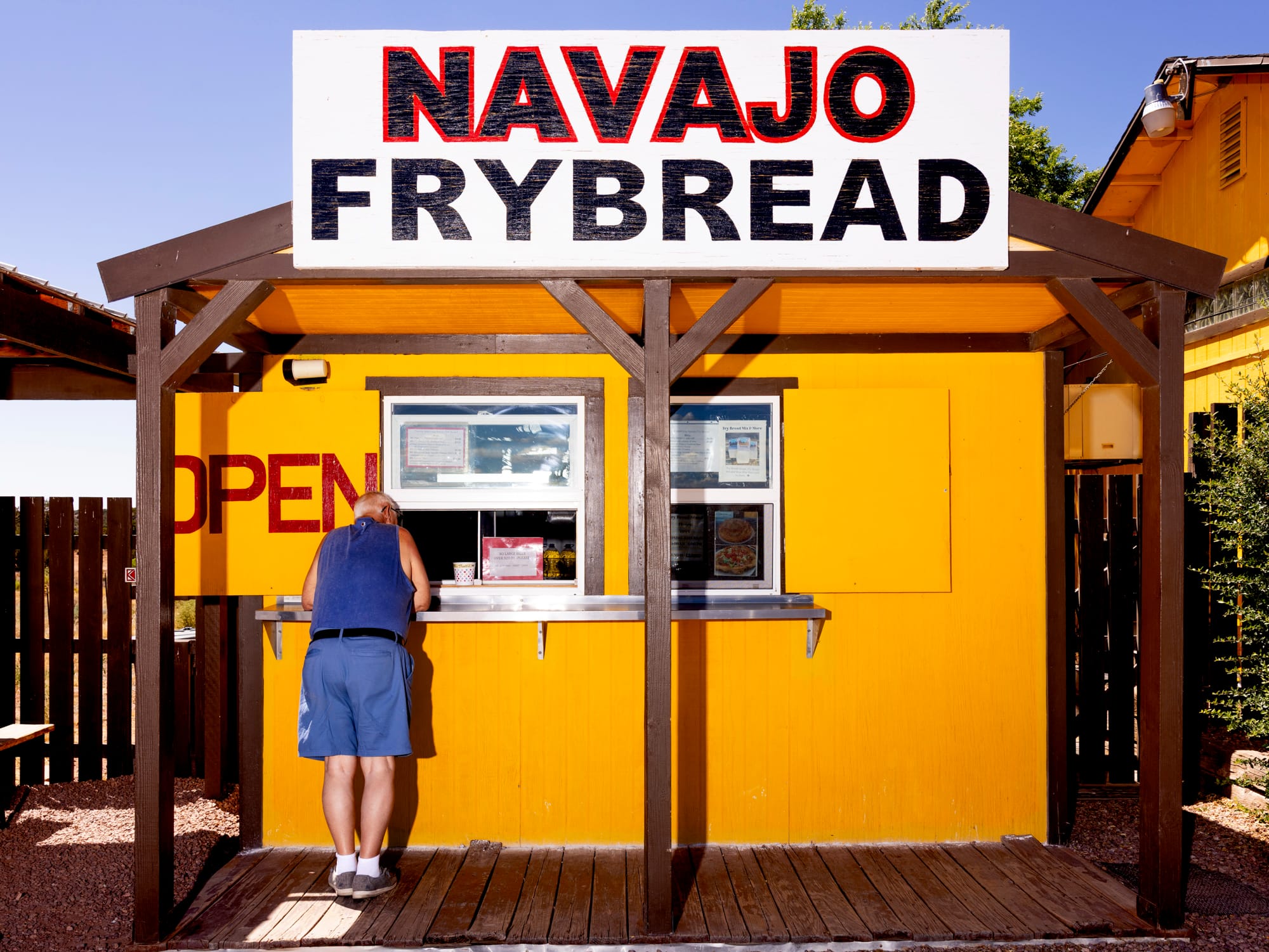
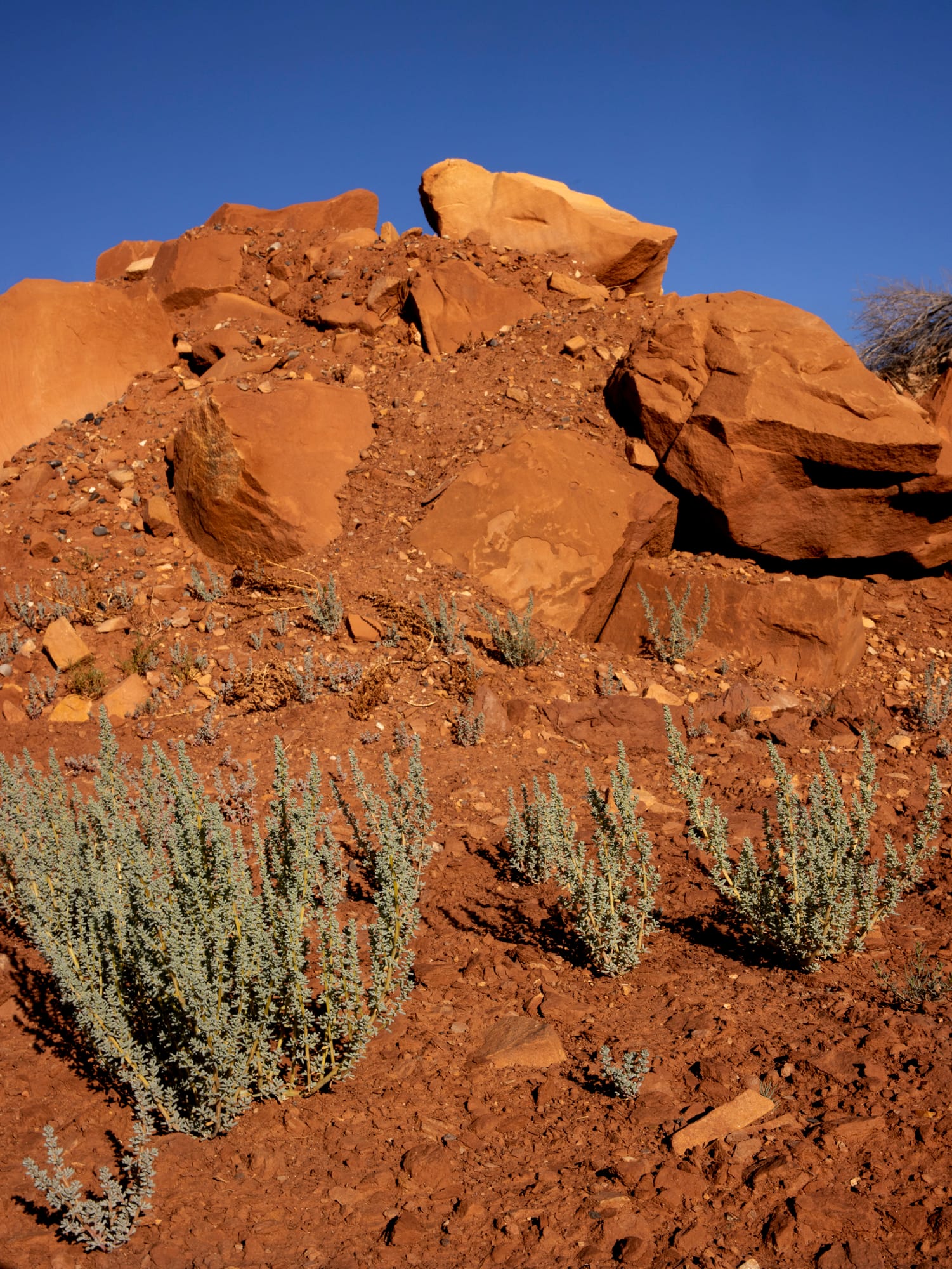
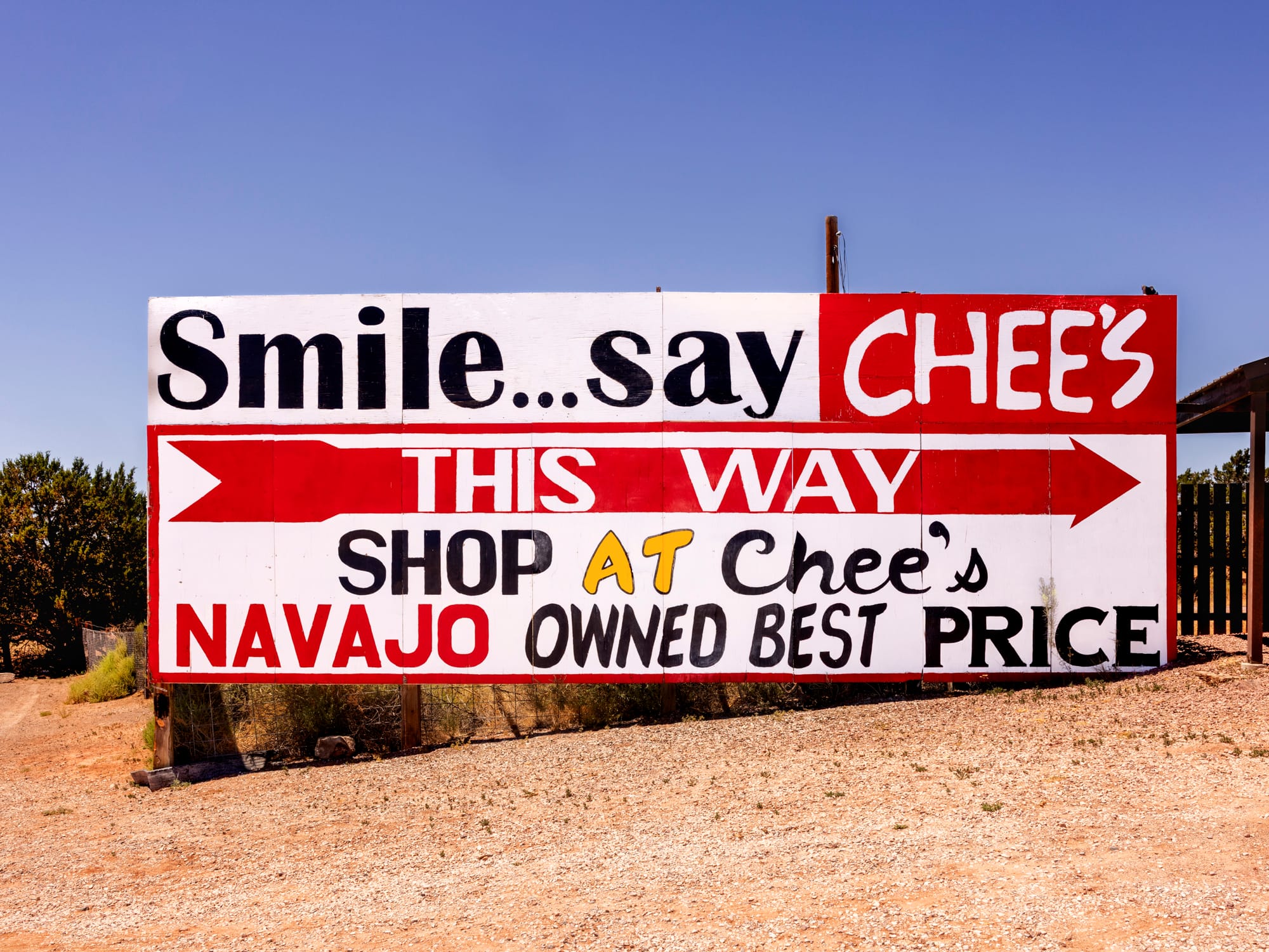
Wooden red-and-white signs advertise Chee’s Indian Store. It’s a small complex along I-40 near the New Mexico-Arizona border, where the freeway cuts through the Navajo Nation. People who frequent that stretch can easily visualize its shaky font and its corny admonition to stop by and—yep—“Say...Chee’s.”
Chees is one of multiple Native American trading posts along a stretch of Interstate 40 that roughly mirrors the old Route 66. But Chee’s can boast of one attraction few of its rivals carry, well worth a stop: Indian tacos.
Plan your own desert adventure with Wildsam Desert Southwest—a field guide to hot springs and trading posts, astronomers and desert naturalists, Navajo traditions and Route 66 charm.
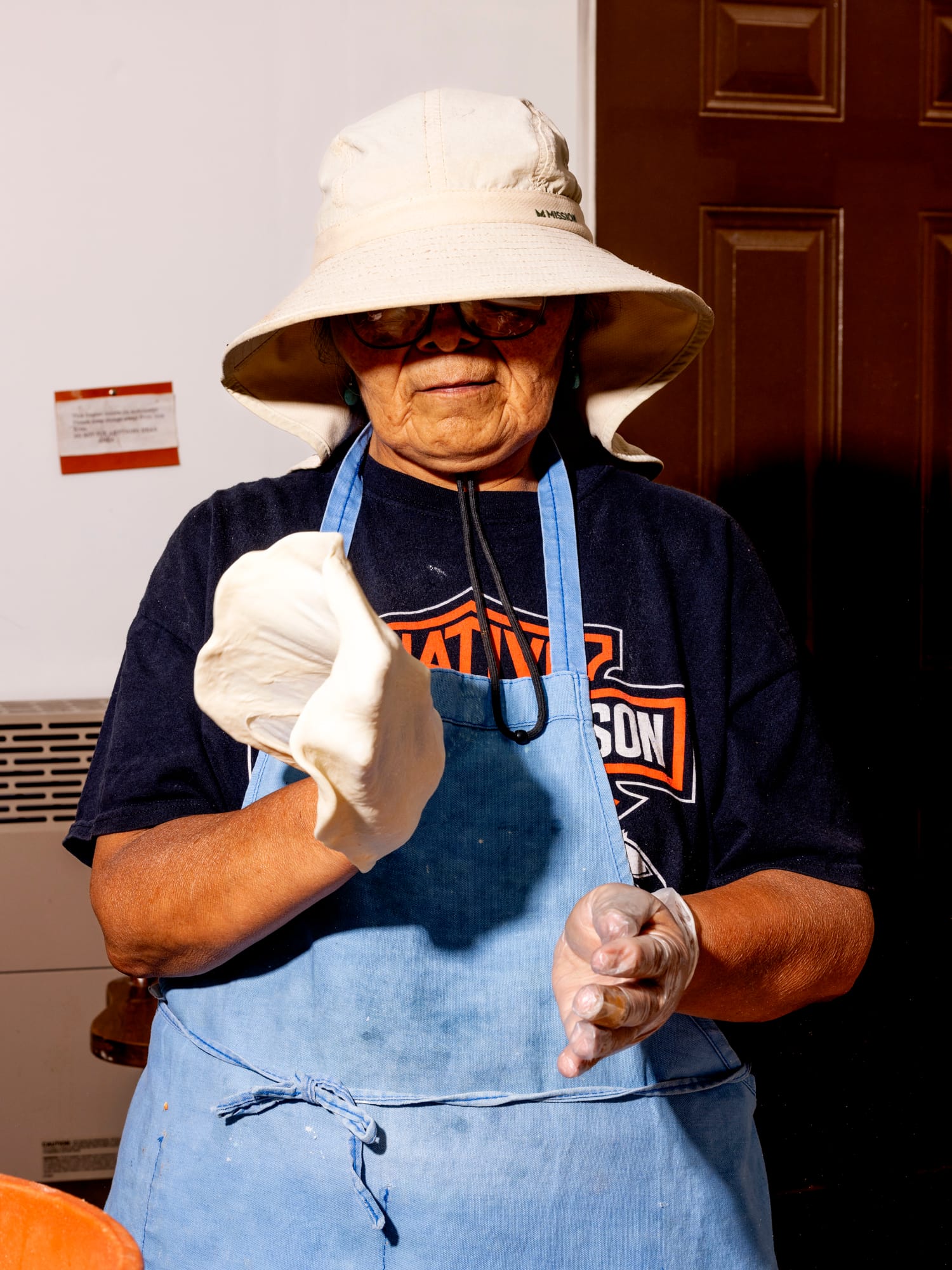
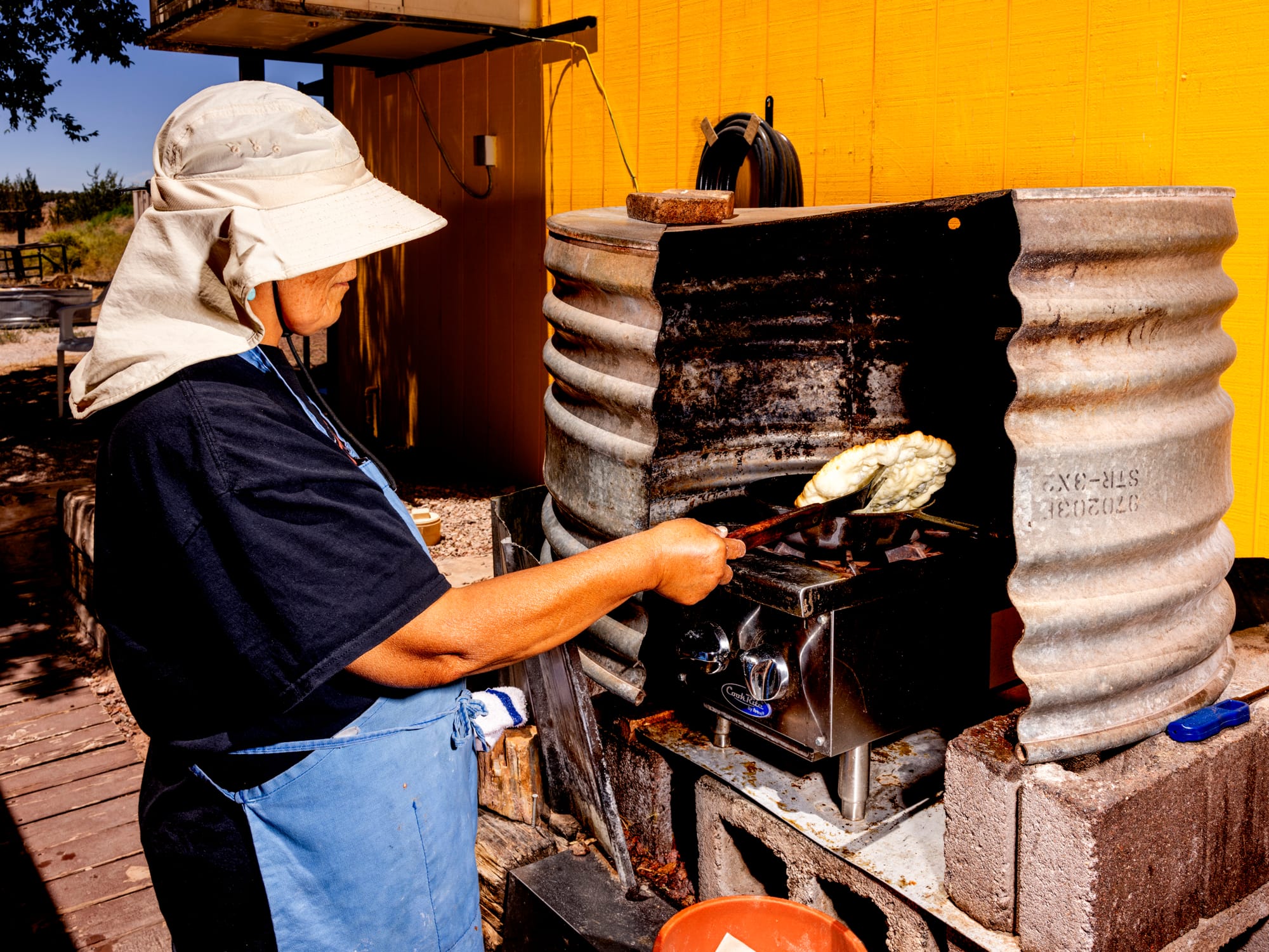
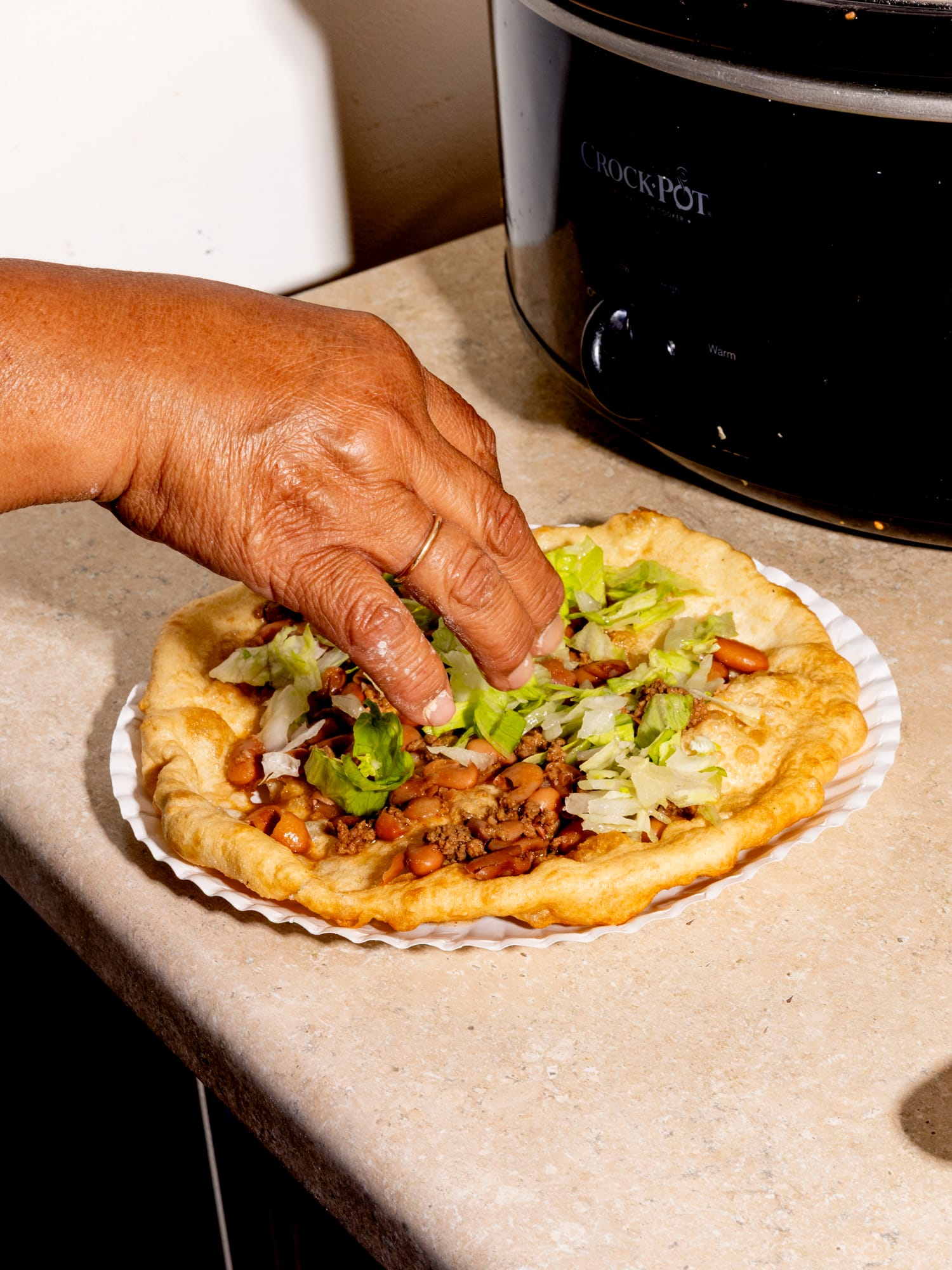
The dish of ground meat, lettuce, onion, tomatoes and yellow cheese on frybread is a collision of cultures that always works. I usually eat them at powwows in Southern California, delighting in explaining to people how the Navajo nation made the best of what colonialism threw at them, such as government commodity white flour, with which they created bread and, then, tacos.
But an Indian taco is a commitment of time and stomach-and whenever I’d pass Chee’s, I was often lacking in both. Food on Interstate 40, to me, always meant green chile in Albuquerque, steaks in Amarillo, burgers and pies in Oklahoma. I figured there was no reason to eat Indian tacos on the road since I could enjoy them somewhat regularly back home. But after speeding by Chee’s for a good decade, I finally stopped by a few years ago.
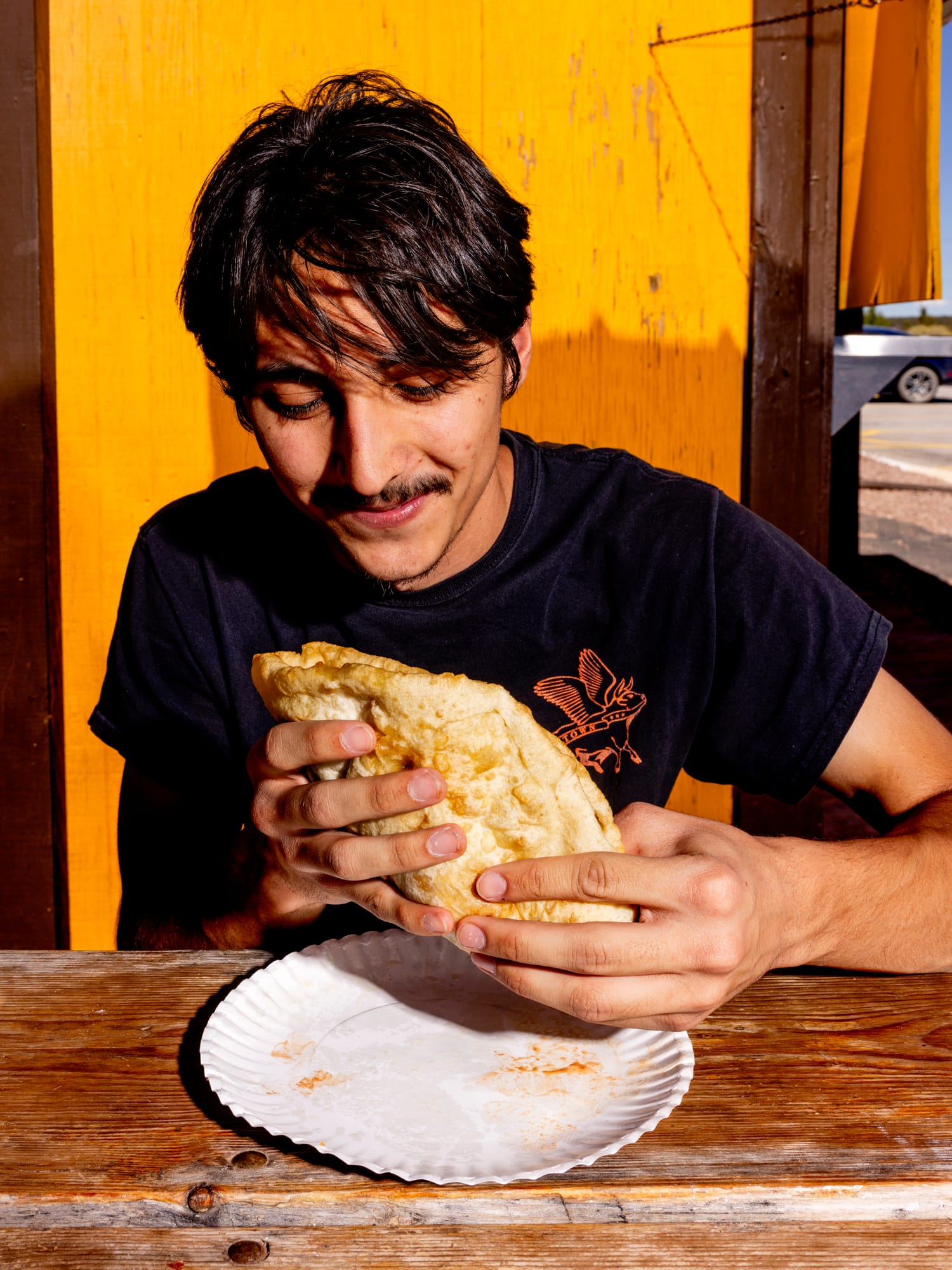
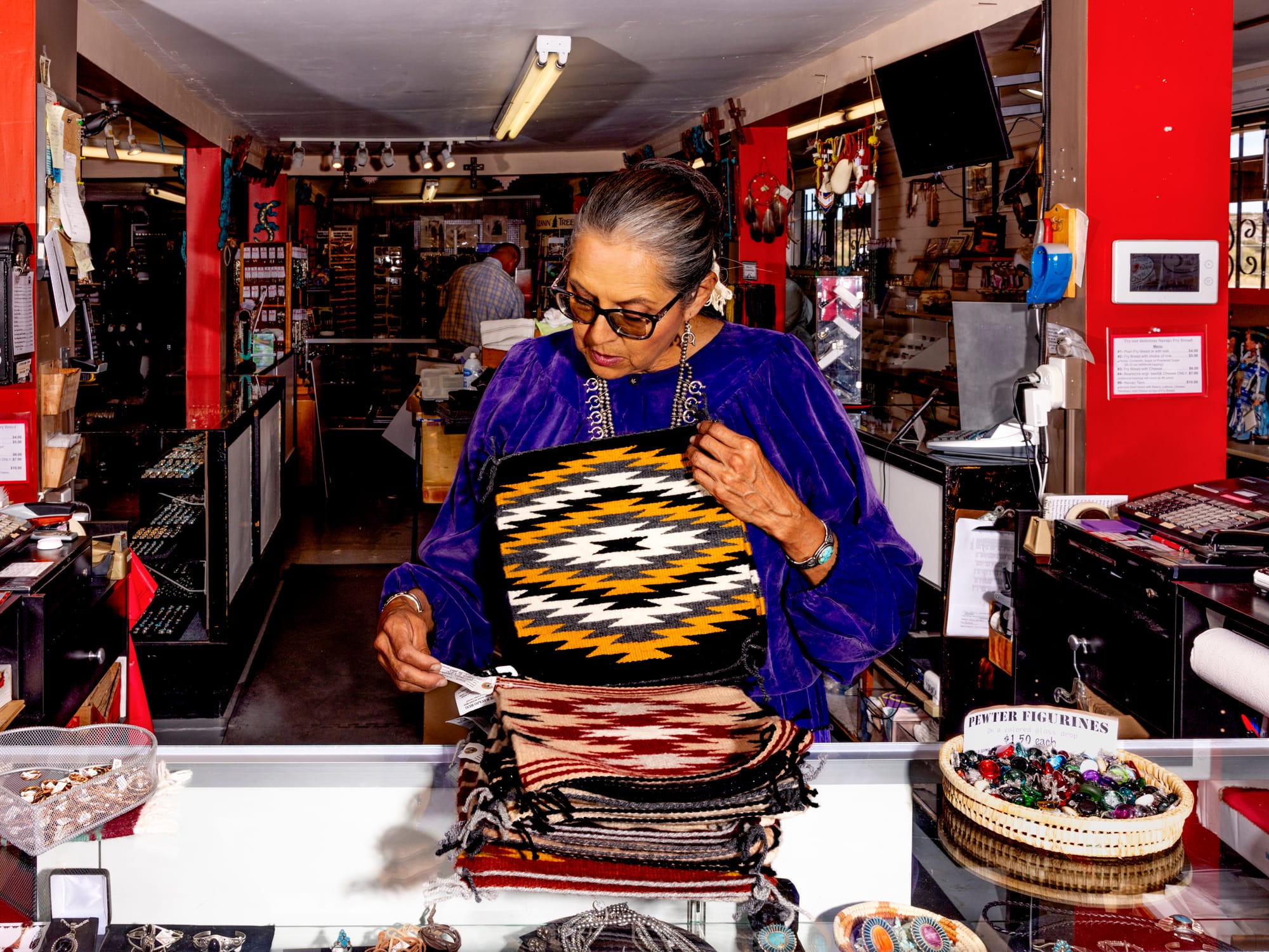
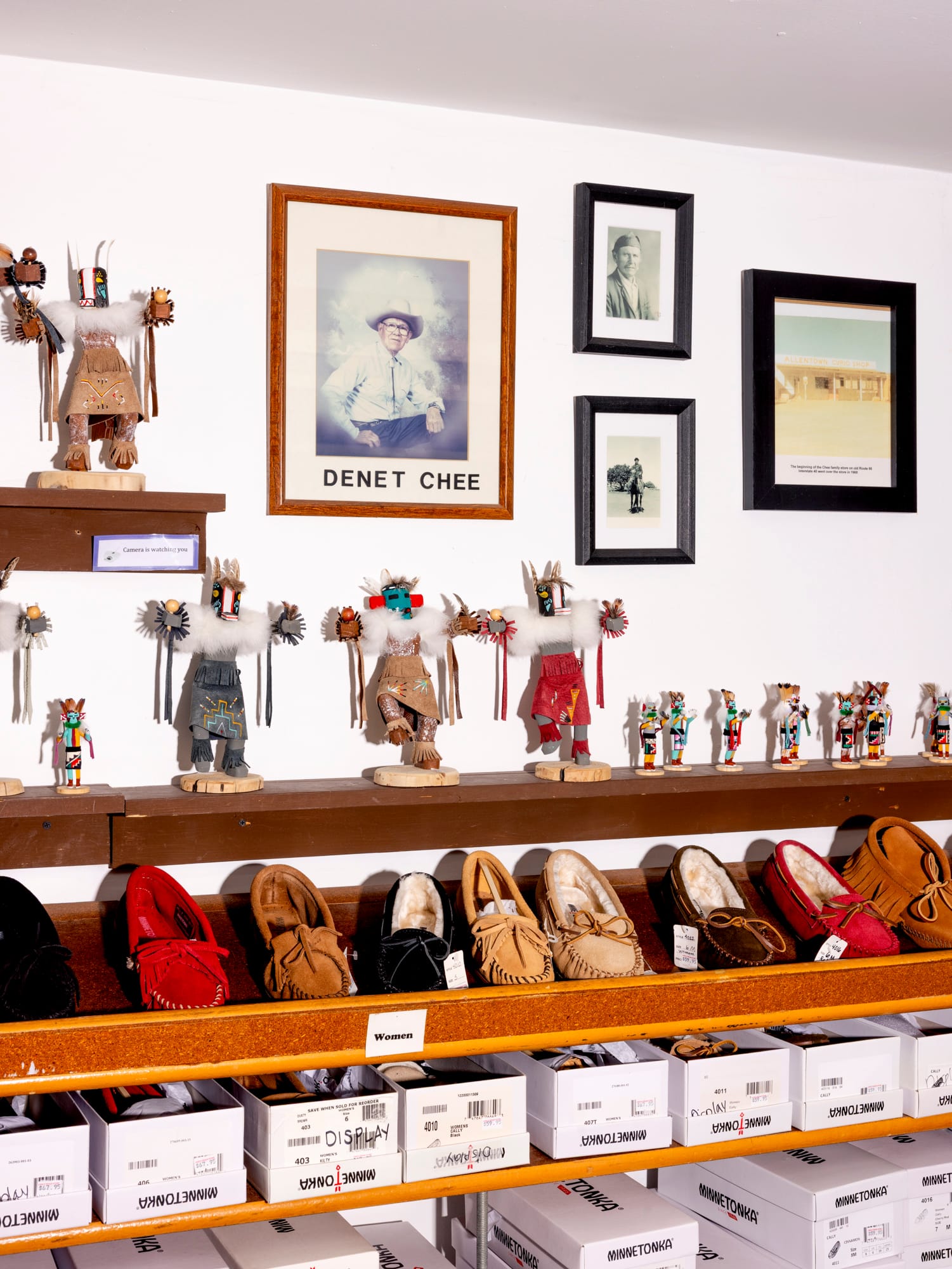
The complex consists of three buildings: a small structure selling mineral rocks and petrified wood, a proper trading post with kachinas of the Pueblo people and souvenir T-shirts and a low-slung kitchen where they make the tacos. There’s a bench for people who want to relax after ordering their meal from a takeout window. Above the awning is a sign that reads “Navajo Frybread,” plain or with powdered sugar, a good call for dessert.
But frybread works best as an Indian taco, the sweetness and crunch of the bread adding a perfect contrast to the savoriness of its toppings. And the toppings at Chee’s are as filling as they are simple. The snap of lettuce and onions, the sweetness of yellow cheese, the sumptuous medley of pinto beans and ground beef—this is comfort food, which is to say road food. You can try to fold an Indian taco, but I sliced my way through Chee’s massive version. Chee’s Indian taco isn’t an everyday meal, but it should be an every time meal.
More Roadside Eats: Oklahoma’s Classic Burger Is a Tearjerker
Dysart’s
Words by Kirsten Lie-Nielsen — Photography by Allie Leepson & Jesse McClary
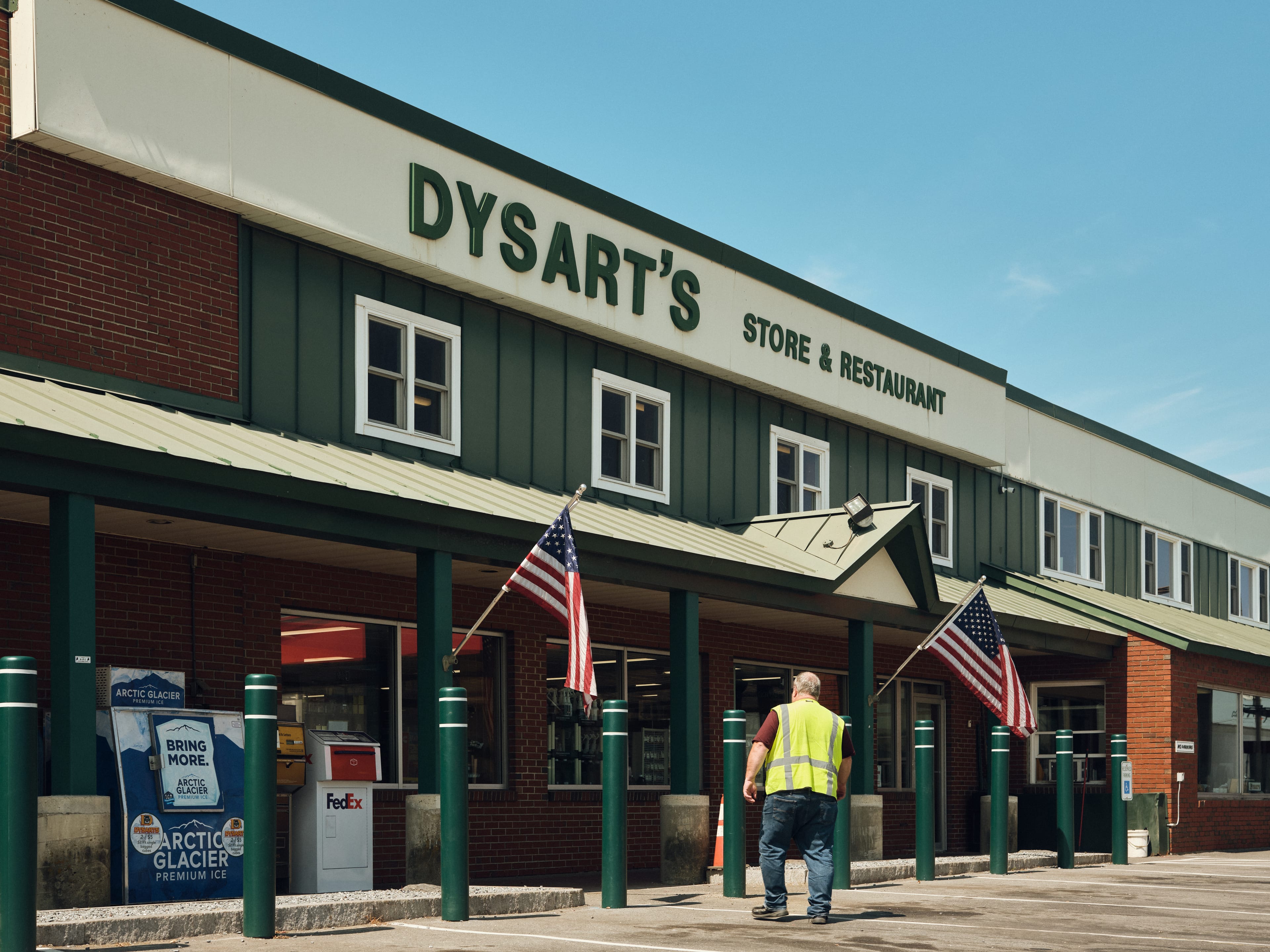
Highway I-95 in Hermon, Maine, is a straight strip of pavement through acres upon acres of dense pine forests. The further you drive, the more the exits thin out. Small towns give way to long stretches of trees, where the smell of balsam drifts through open windows in summer and snow piles along the shoulders in winter. It’s a part of Maine that feels remote, even when you’re not far from Bangor. And then, just when you’re wondering how long until the next sign of life, an oasis appears at Exit 180: Dysart’s Restaurant & Truck Stop.
The Hermon location of Dysart’s is the original and the most iconic of a chain of “travel stops” sprinkled across the region. It’s a landmark for Mainers, a tradition for travelers, and for anyone who’s ever driven through this stretch of I-95, it’s a beacon.
Plan your own northeastern adventure with Wildsam New England—a field guide to bookshops and lobster shacks, lighthouse keepers and fishing guides, maritime lore and colonial charm.
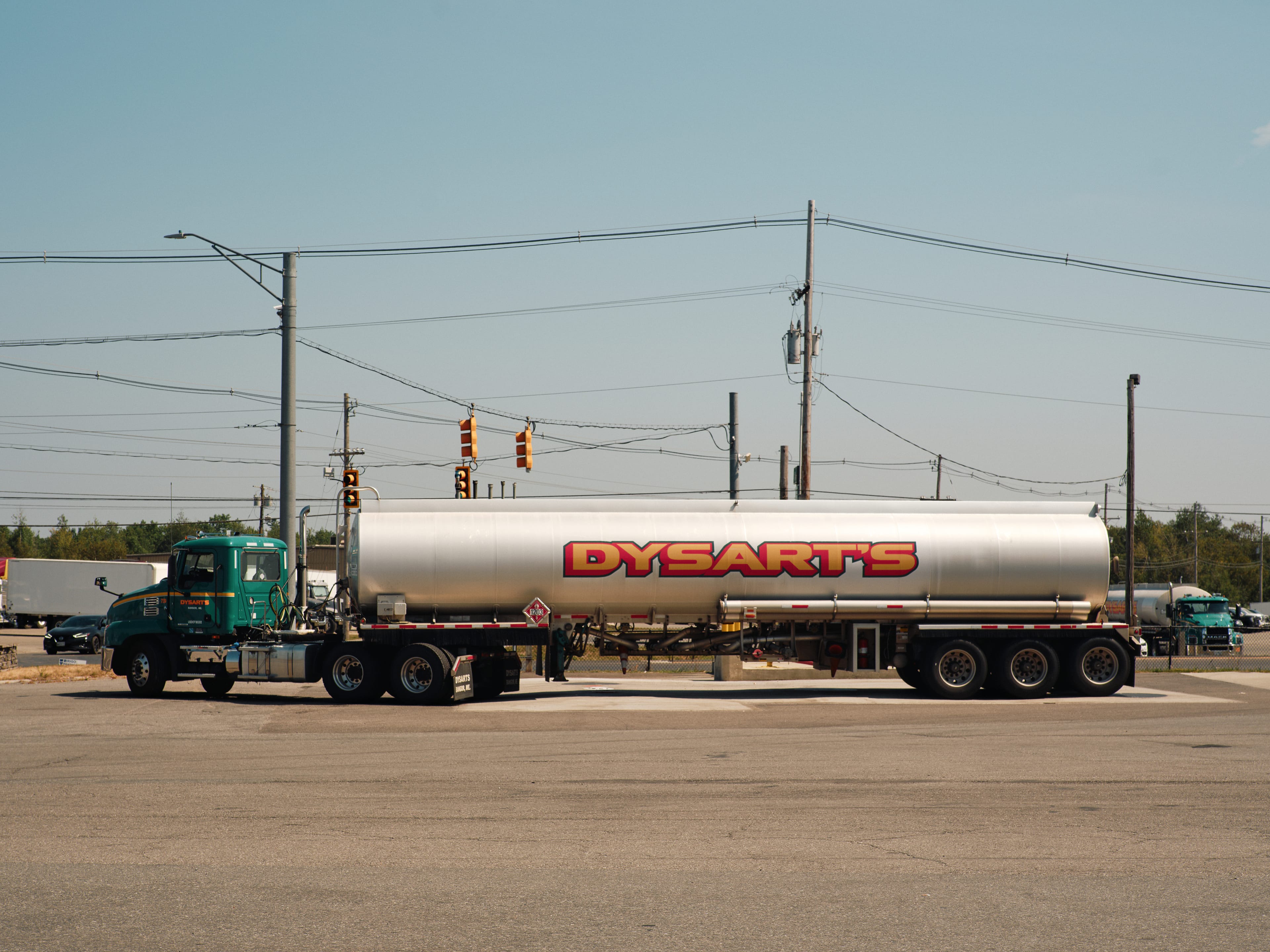
Pulling into the parking lot, you find yourself surrounded by idling big rigs, their drivers stretching their legs, alongside Subarus or trucks coated in a winter’s worth of road salt.
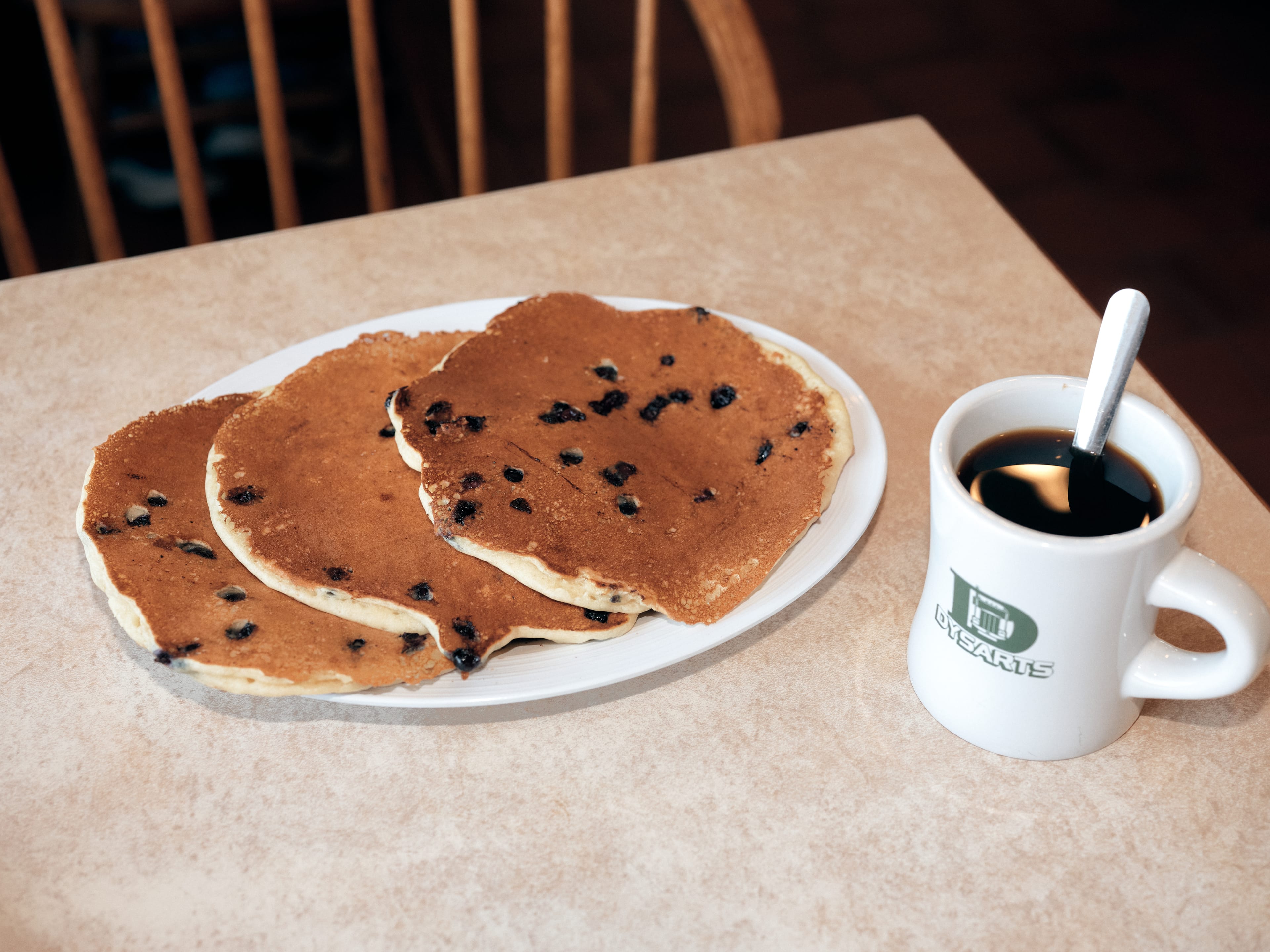
What you might have meant as a quick gas stop turns into something else entirely. The smell hits you first: a warm, homespun aroma of blueberry pancakes sizzling on the griddle, bacon crisping at the edges and coffee brewed strong enough to revive the most road-weary traveler.
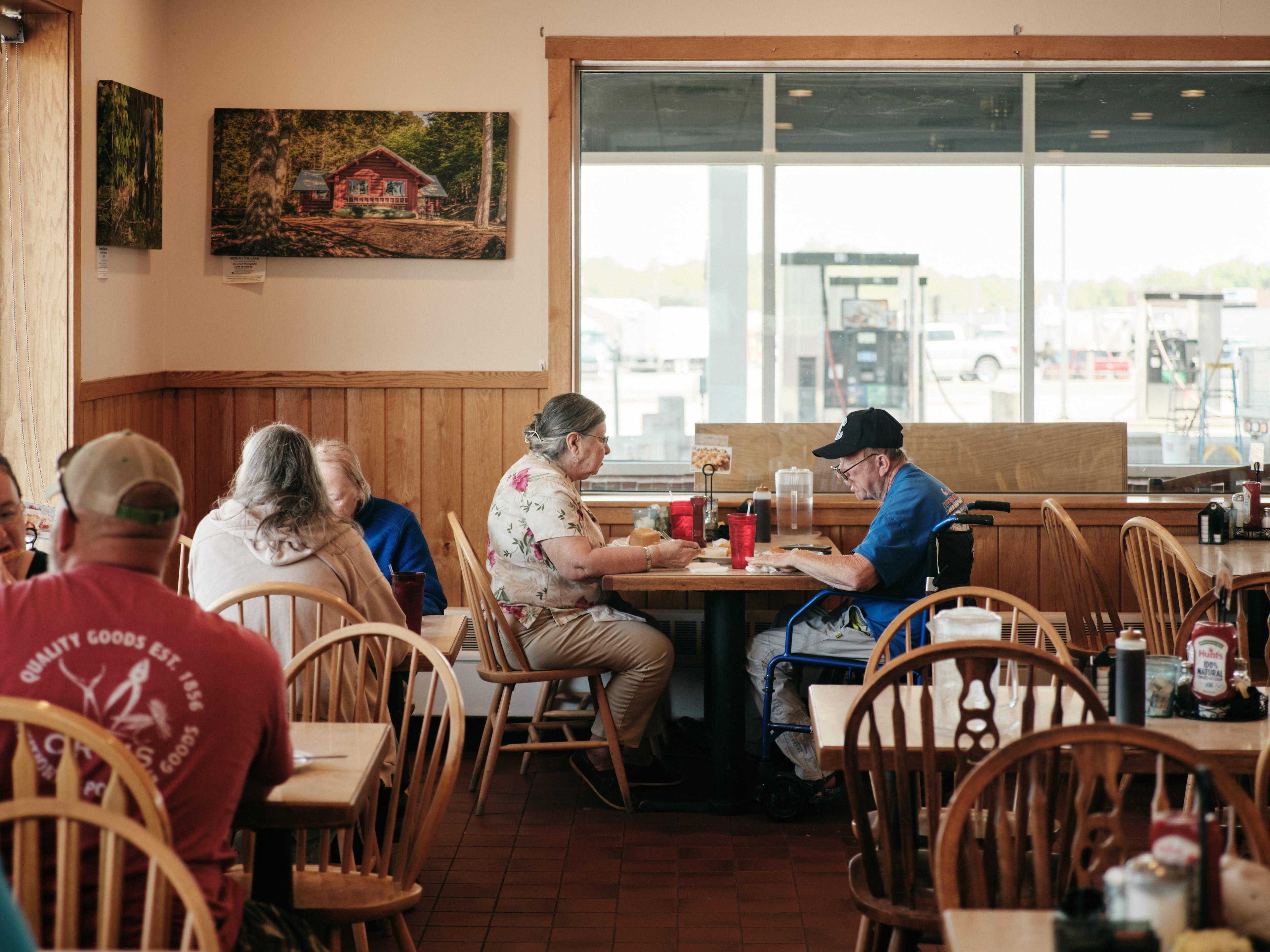
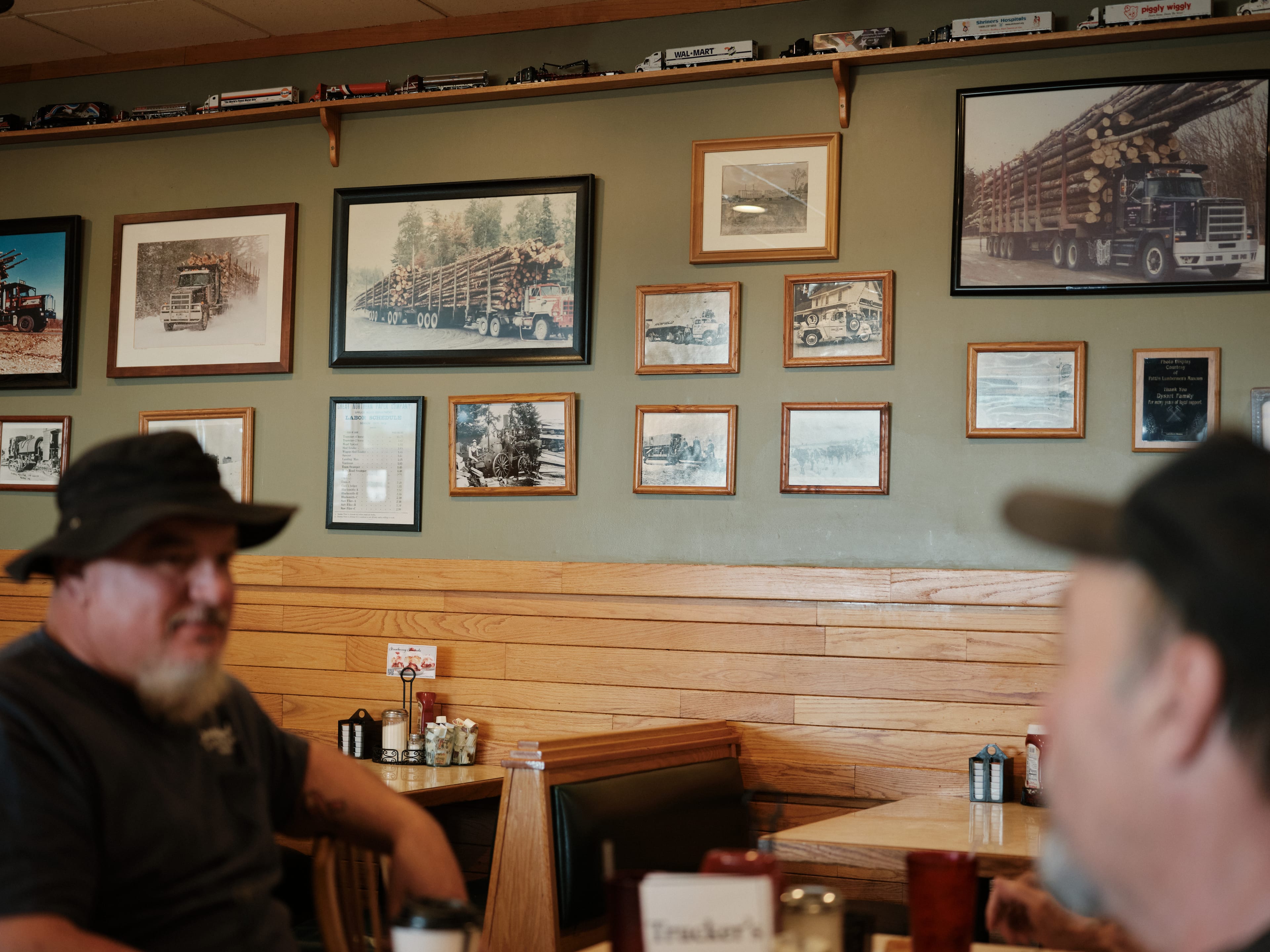
Inside, the dining room is sprawling but somehow still feels homey, the kind of place where strangers nod a greeting as you pass their table. There’s a pie case up front, glistening slices under the lights: lemon meringue, dense chocolate cream and, of course, blueberry pie. The walls are a collage of Americana, vintage snowmobiles inconceivably hanging on the ceiling, chrome truck grills gleaming like trophies along with black-and-white photos of Dysart's earliest days, when the truck stop opened in 1967 with just a handful of pumps and the idea that good food could make the road feel shorter.
The menu is a quilt of diner classics and Maine staples: stacks of pancakes, shortcake French toast, pot roast with gravy that tastes like Sunday suppers, biscuits swimming in sausage gravy, burgers with crisp fries, golden-fried haddock sandwiches, steak tips, pizzas, and even baskets of wings for late-night stops. You can order breakfast at dinner time, a midnight slice of pizza or a mid-morning steak-and-cheese.
“My favorite was always the Maine blueberry pancakes that hung over the edge of the plate,” says Rache Herrick, a native of Mechanic Falls, who now operates Slow Farms in Cameron, North Carolina. “But as a homesick Mainer many years and miles away from Dysart’s food, what makes me choke up with feels are the baked beans and haddock chowder. Nothing can summon me home like those.”
The haddock chowder is a dish so iconic it might as well be on the welcome sign. Creamy without being heavy, the broth is brimming with tender flakes of fish, potatoes that melt in your mouth, and just enough seasoning to taste like the coast.
And if you tell yourself you’ll skip dessert, you’ll probably be wrong. The waitresses are masters of the gentle nudge, and before long, there’s a wedge of pie on your table, blueberry more often than not. The crust is golden, the filling jewel-bright and just tart enough to balance the sweet.
Dysart’s is the kind of place that makes you slow down, even if only for an hour, and taste where you are. Truckers and loggers sit shoulder to shoulder with vacationers on their way to Acadia National Park, forming a crossroads of Maine life.
And when you get back on the highway, the smell of coffee clinging to your sweater, you’ll know you’ve been somewhere that feeds more than hunger.
More Roadside Eats: Phoenicia Diner Is a Classic with a Modern Twist
Punjabi Dhaba
Words By Tallahasee May — Photography by Whitten Sabbatini
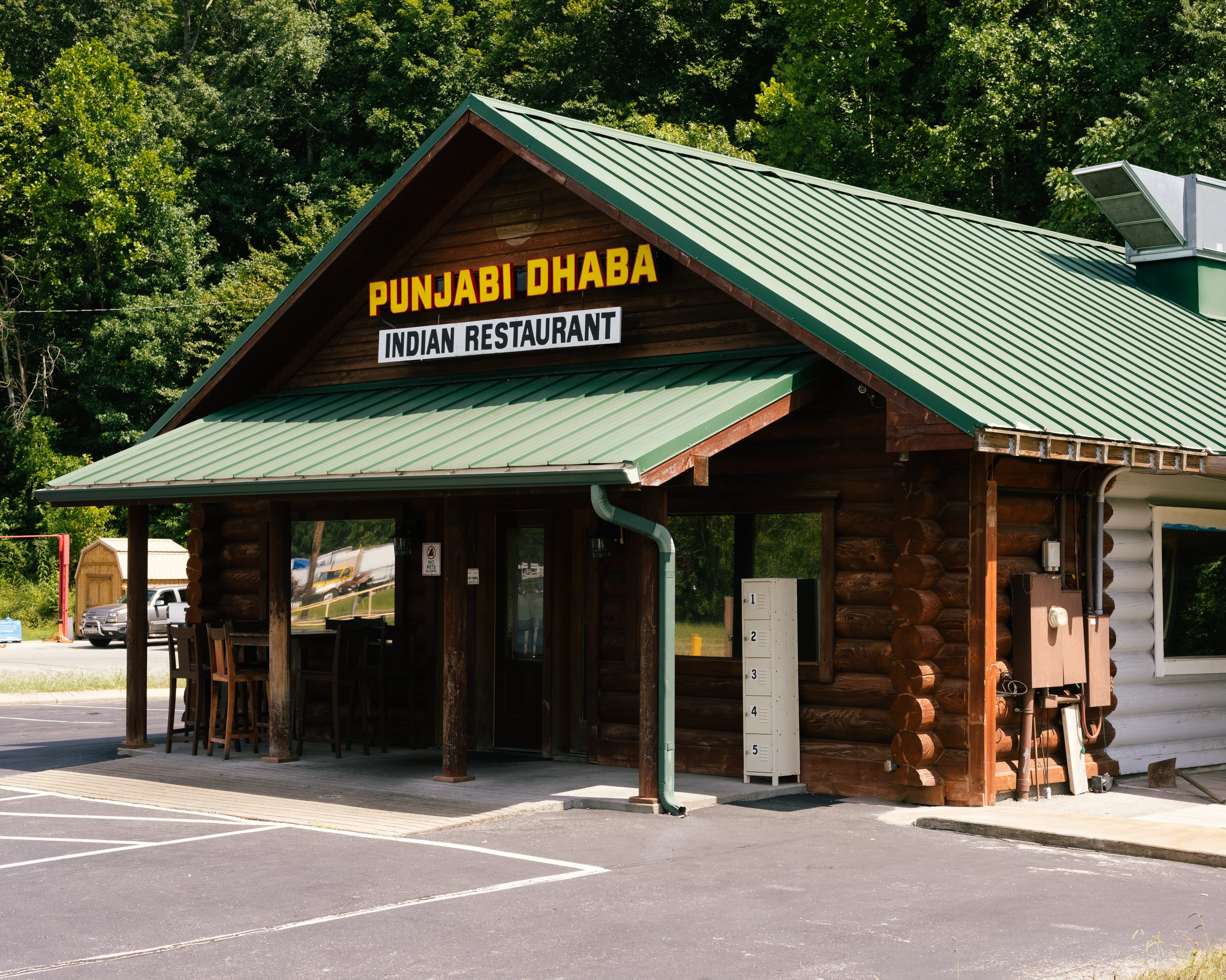
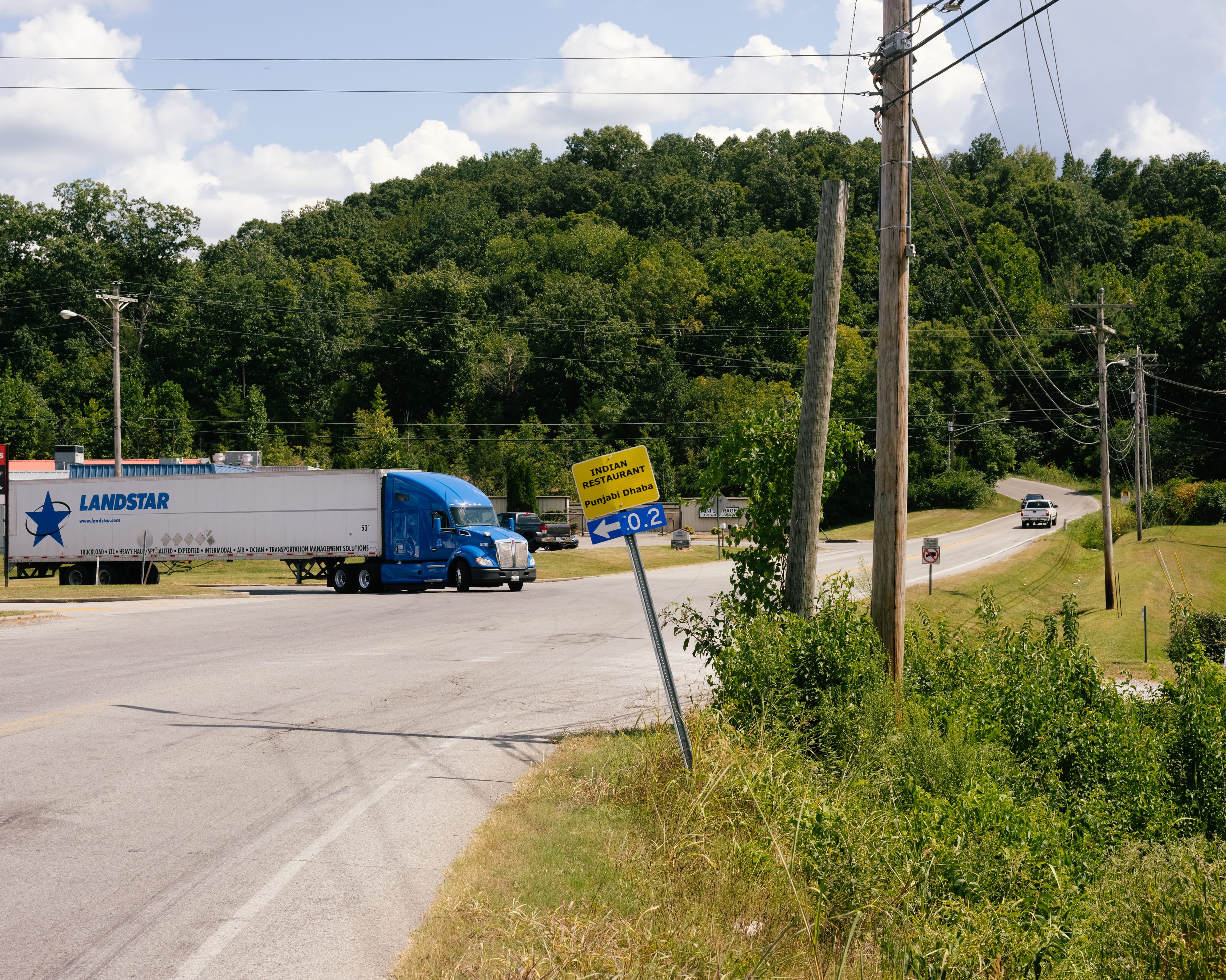
Just off of I-40 in quiet Kingston Springs, the Punjabi Dhaba restaurant lives at the far edge of a large truck stop, in a shaggy log cabin more reminiscent of a Southern barbecue joint than an authentic Indian restaurant. The parking lot is an obstacle course of bumps and potholes, and the plain yellow-lettered sign is rarely lit. But inside, the mingled fragrance of spices and cooking ghee fills the air:
“Dhaba,” in the Hindi language, means “roadside restaurant,” usually implying local ownership and reasonably priced, homestyle food. Punjab is a state in Northwestern India, and dhabas run by Punjabi immigrants in this country scatter along interstates. If you drive 1-40 through Arkansas, Oklahoma and Texas, you might see the occasional faded billboard announcing a Punjabi Dhaba alongside other truck stop amenities, like a tire store or a wash and wax. They provide a service but also familiar comfort food to a growing number of Punjabi truckers.
Plan your own southern adventure with Wildsam American South—a field guide to old-school southern barbecue and small-town squares, horse jockeys and jazz musicians, civil rights legacies and back-road wonders.
My husband and I frequently visit the Kingston Springs Punjabi Dhaba-sometimes even twice a week. Although nearby Nashville has an amazing variety of immigrant-run restaurants, the Punjabi Dhaba gives us a quiet booth, and we can show up in all manner of casual dress. In the kitchen, cooks of all ages and genders tend to breads on the griddle, made to order and slathered with ghee and garlic before serving. Dals and stews bubble in large pots on the stove. The paneer pakoda and samosas come out shiny and crackling, fresh from the fryer, with a sweet tamarind dipping sauce. The korma is hearty and flavorful, sweet with carrots and cashews, and the mattar paneer shimmers with tomatoes and peas. Generous sides of rice, fragrant with cumin seeds, accompany everything. Because the cooks vary, the flavors have subtle shifts a more toasty flavor one night, fresh tomatoes add a brighter tang the next.
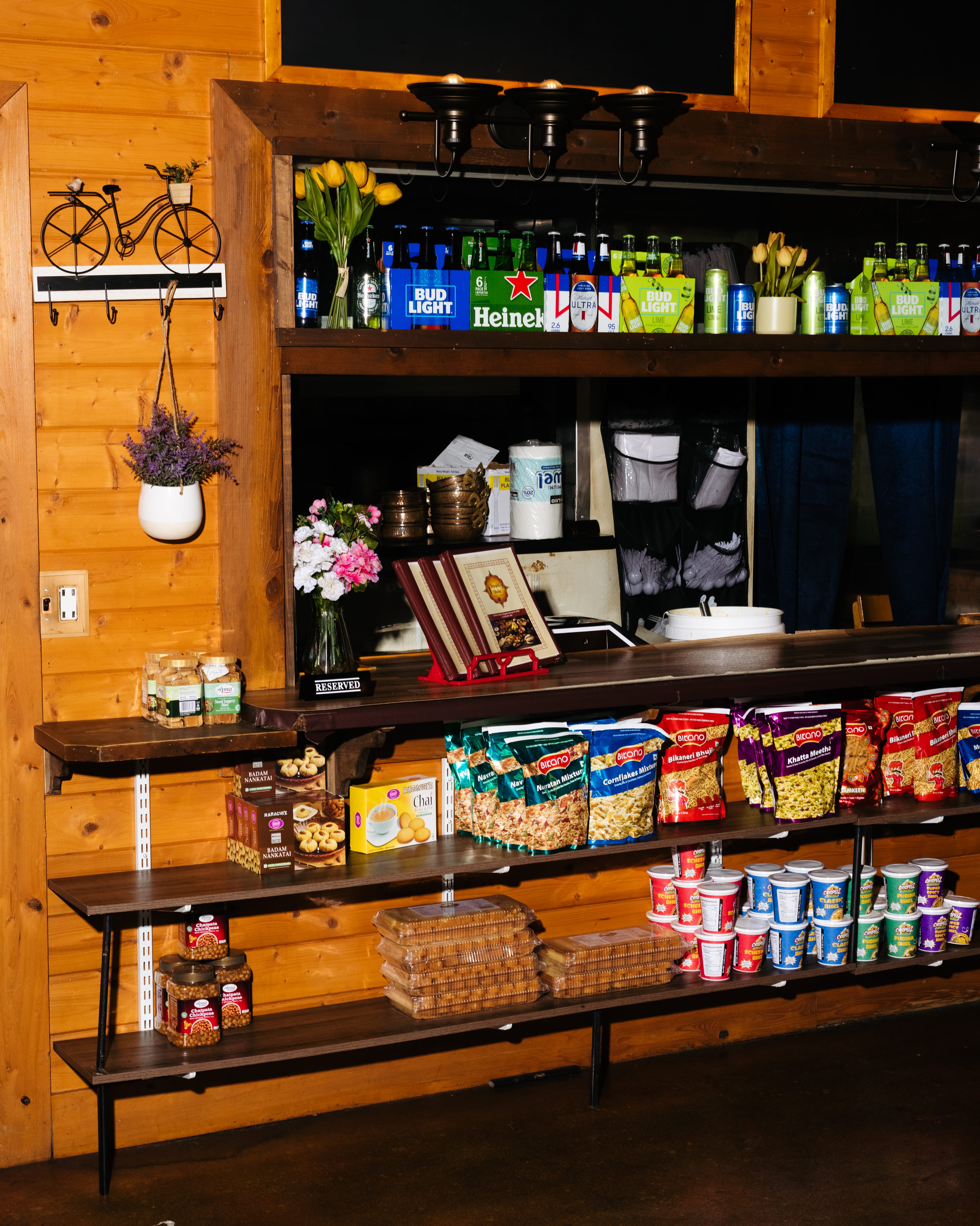
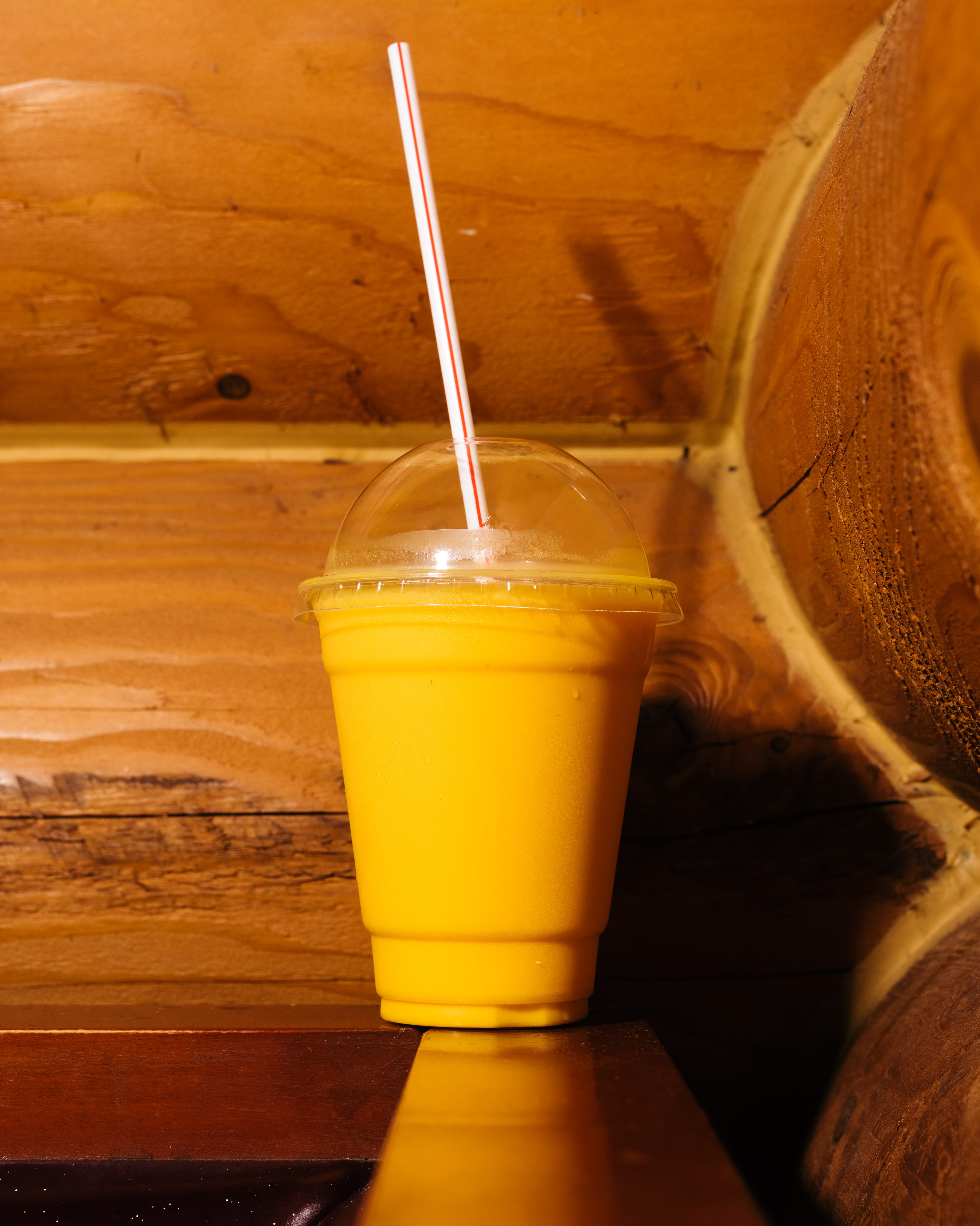
A steady flow of truckers enter to claim their orders. As they wait, they might talk with family on the phone or watch the Bollywood videos that play on the TV above the door. And then they walk back to their trucks parked across the street, juggling plastic bags filled with to-so containers of curry, warm paranthas wrapped in slick paper and cups of hot chai ora mango lassi.
It is not long before we are full and ask for our own to-go containers for leftovers. The circular Bhangra rhythms of the Bollywood videos send us off into the night, and we already look forward to our return.
More Roadside Eats: SCs Okàn Puts Southern and World History on a Plate