



Road Trip Rides: Rivian R1S
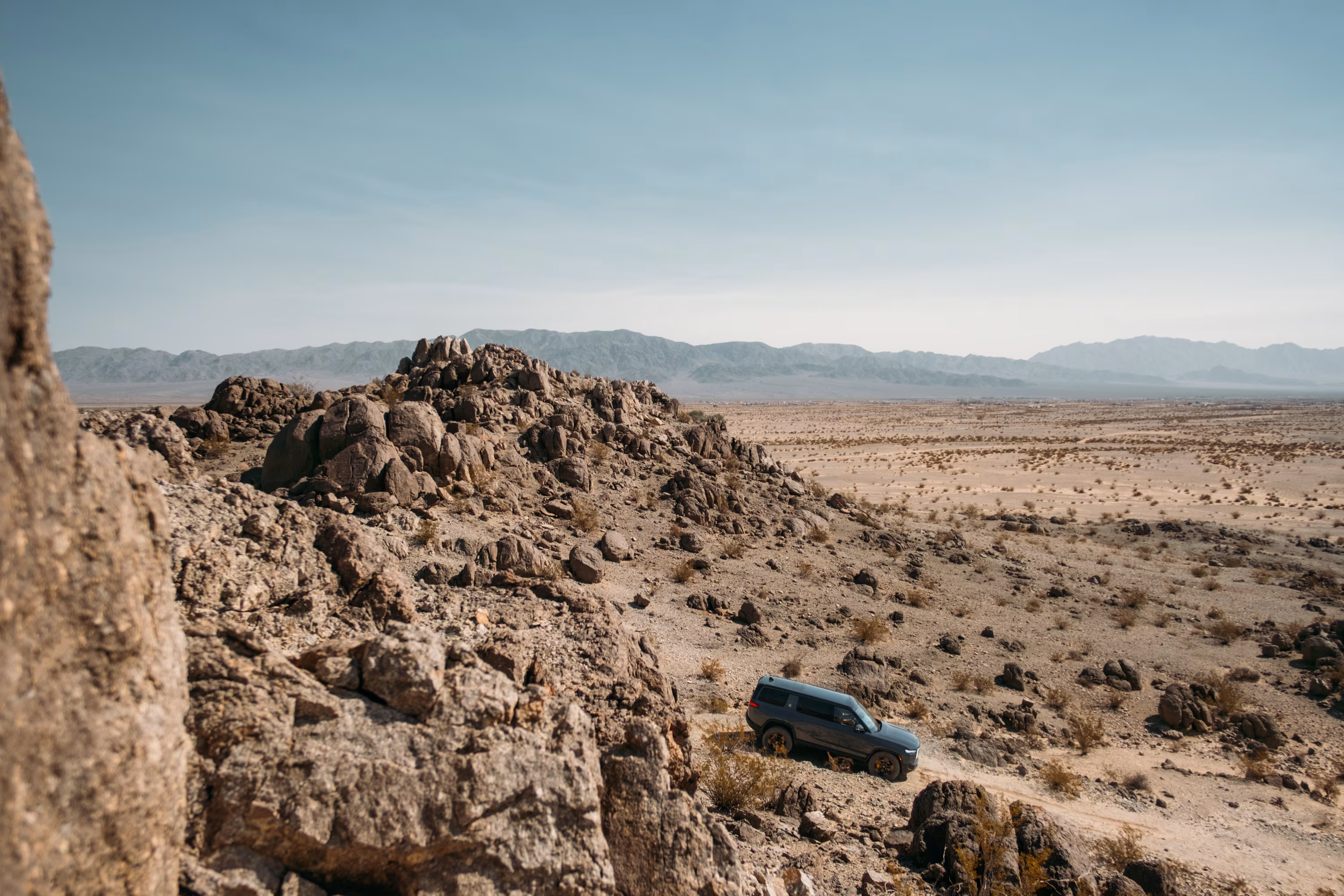
Photo courtesy of Rivian
Fun, fast, and powerful, this luxury SUV sets the standard for everyone else to follow.
Editors’ Note: This review is part of an ongoing Wildsam series, testing out new road-trip rides on the kinds of journeys we tend to favor.
When Rivian first burst onto the scene way back in 2018, the electric vehicle market was still largely just a curiosity for most car buyers. The introduction of the company’s first model—the R1T midsize pickup truck—was a revelation for many, arriving with a slew of impressive features and thoughtful design elements. It also embodied the concept of a software-defined vehicle, which adds features, tunes performance, and evolves over time thanks to regular updates to its operating system. Later, the brand added the R1S to its lineup, delivering similar tech and functionality in the form of a luxury SUV. Both vehicles almost instantly redefined what consumers should expect from an EV.
Fast forward to 2026, and both the R1S and R1T now ride on Rivian’s second-generation EV platform. The Gen 2 vehicles received a slew of updates that include significantly upgraded technology—including more powerful computers and better cameras—along with a streamlined manufacturing process that improves efficiency and reliability. As a result, these already great vehicles got even better. And with its latest models, Rivian has even converted over to the North American Charging Standard (NACS), bringing native compatibility with Tesla Superchargers and other charging networks.
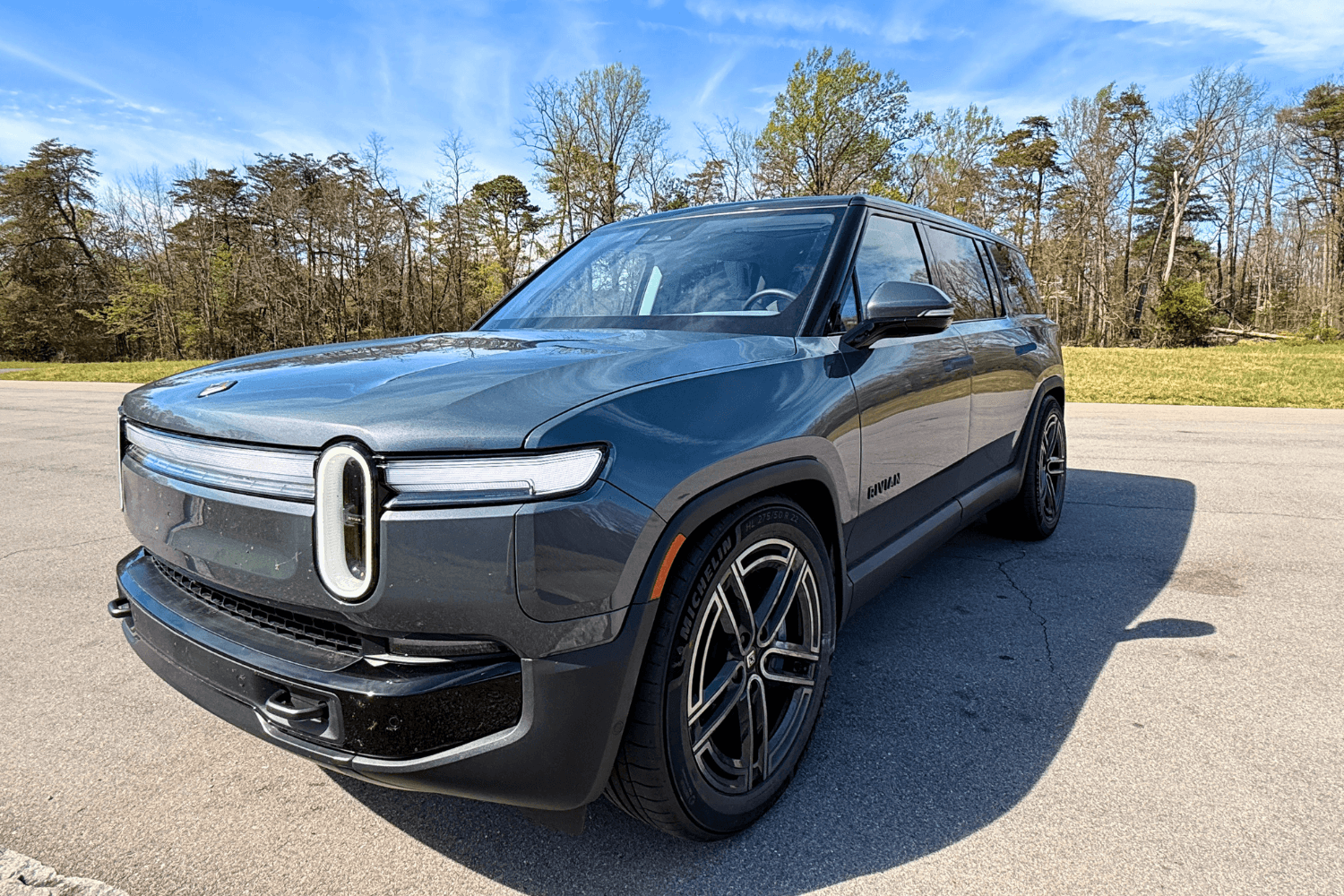
Recently, we had the chance to spend a week test-driving the 2026 Rivian R1S and were completely blown away by the experience. Smooth, quiet, and efficient, the SUV redefined our expectations of what a vehicle can and should do, offering an amazing blend of performance and technology that was so good, we ultimately ended up buying one of our own.
Simply Electrifying
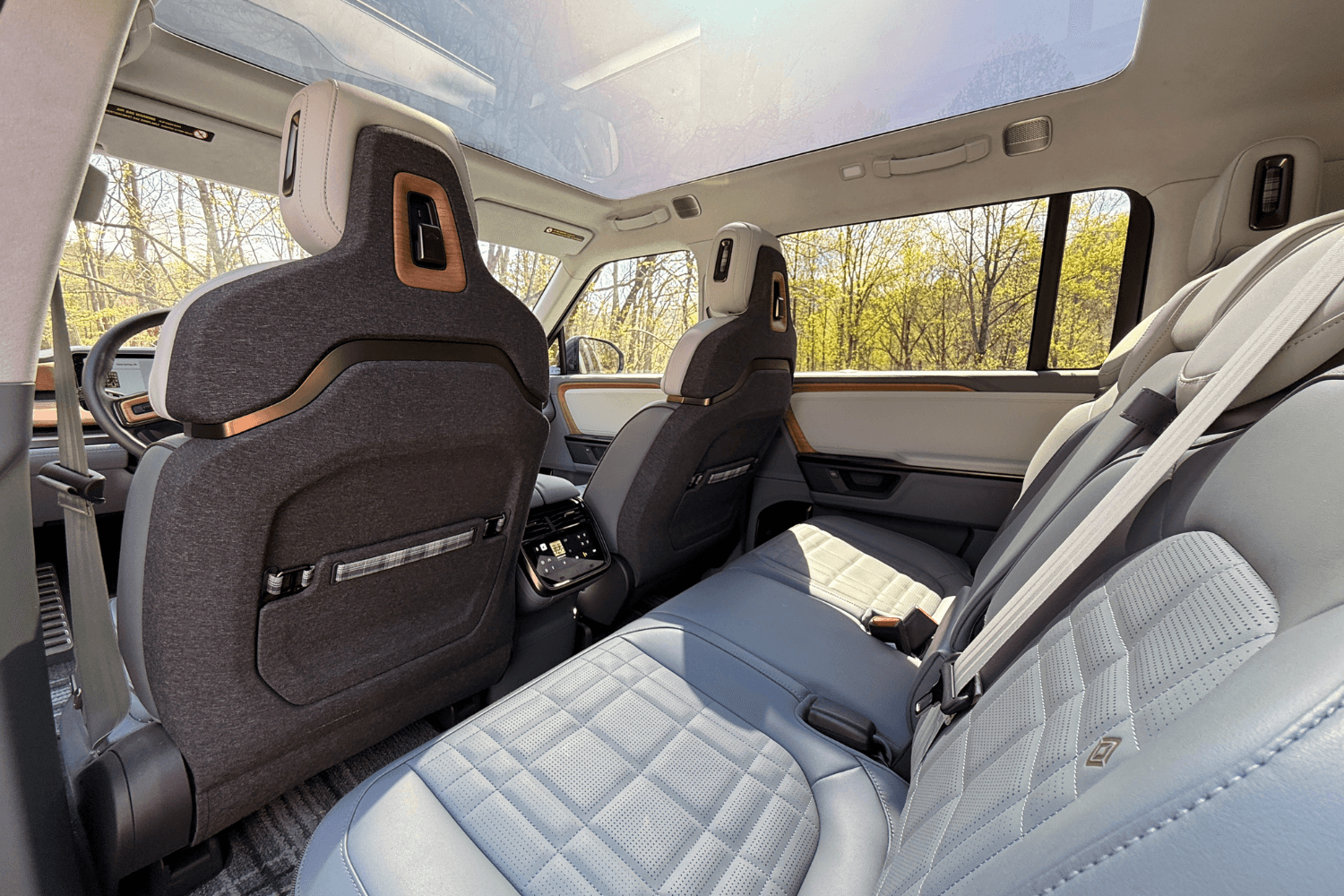
Our test model was a fully loaded Rivian R1S All-Terrain Quad Max with the Ascend Package. What does all of that mean? In a nutshell, it is the nicest version of the electric SUV, with features like a vegan leather interior, a suede headliner, and premium wood accents throughout the interior. But more importantly, this is a performance package with four motors (one on each wheel) that produces 1,025 horsepower and 1,198 pound-feet of torque. That’s enough to go from 0 to 60 mph in just 2.6 seconds. The “Max” designation in the name is the size of the EV’s battery pack, which in this case offers 141.5 kWh of usable capacity, giving it a range of up to 374 miles on a full charge.
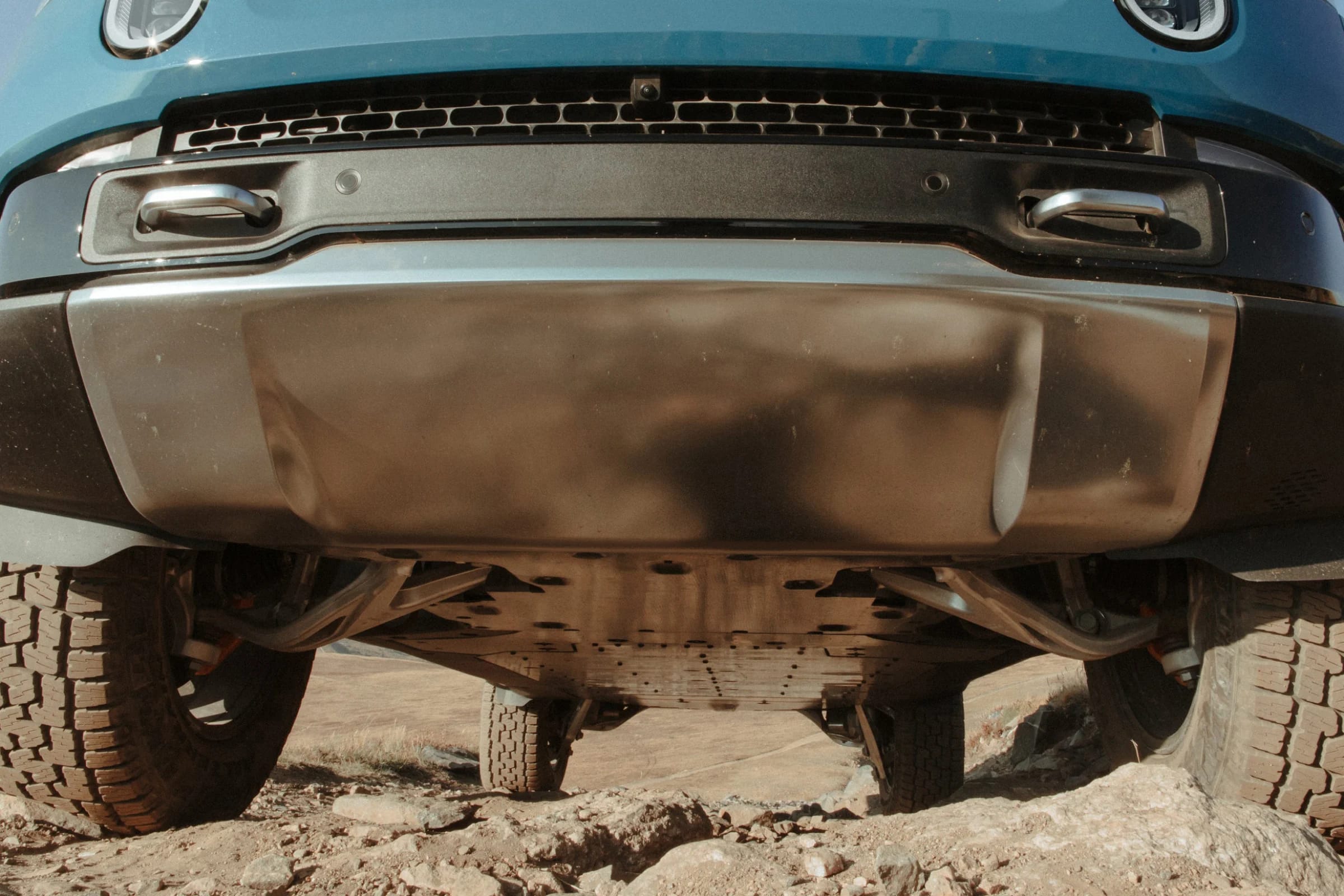
All of those tech specs give the R1S a startling amount of power and speed, allowing it to accelerate off the line in a manner that is equal parts exhilarating and terrifying. A sophisticated and adjustable air suspension ensures a smooth, comfortable ride, both on road and off. Around town, the EV is smart, sophisticated, and extremely fun to drive. Transition to a trail—and switch to off-road mode—and you have a vehicle that’s capable of rock-crawling with the best of them. You can even add up to 6.5 inches of additional ground clearance just by setting the air suspension to its highest level. This even allows you to cross rivers and streams with a depth of up to 39 inches.
This being the highest-spec R1S available, it should be unsurprising that it comes with a price tag to match. The Quad model that we drove comes in at above $122K, putting it well out of reach for most buyers. The base Dual Standard edition starts at around $77,000, which is more approachable to a wider range of buyers, but it comes with a significant reduction in power—even if 533 HP is nothing to sneeze at—and range, which drops to 270 miles. The Rivian’s R1S Dual edition pushes those numbers up a bit, including a range of 410 miles, with a starting price of $84K.
The Ownership Experience
As already noted, the R1S offers an incredibly refined driving experience that is comfortable, quiet, and quick. The cabin is designed to provide a sense of serenity, and it succeeds in that regard. Like all EVs, the lack of engine noise is instantly noticeable, but the interior is well insulated from outside noise in general, making it a relaxing and pleasant place to spend time.
The Quad-motor version of the R1S comes with four drive modes, each with its own distinct characteristics and personality. For instance, Conserve mode is made for highway driving, restricting power and acceleration in favor of efficiency and range. All-Purpose is designed for everyday driving around town, while Sport mode maximizes power and even automatically lowers the suspension to achieve blisteringly fast acceleration. Finally, Snow mode adjusts the vehicle’s traction control, braking systems, and torque for stability in snowy conditions. There are also several off-road-specific modes, including All-Terrain, Sand, Rock Crawl, Rally, and Drift.
As with a gas-powered vehicle, the range you get from the R1S depends on how aggressively you drive it. High speeds and hard accelerations will drain the battery much more quickly than driving the speed limit and accelerating at a more managed pace. The vehicle’s regenerative braking system also plays a key role, feeding power back into the battery when slowing down or coming to a complete stop. Rivian offers three levels of regen braking to meet individual drivers’ needs. The lowest setting provides the least amount of braking and power, while more closely mimicking the handling of a traditional car. Meanwhile, the medium and high settings offer more aggressive, some would say abrupt, braking with the added benefit of collecting more kinetic energy. As with other RVs, the R1S even offers one-pedal driving, allowing drivers to stop without ever having to touch the actual brake pedal. After a few days behind the wheel, this quickly became our preferred option.
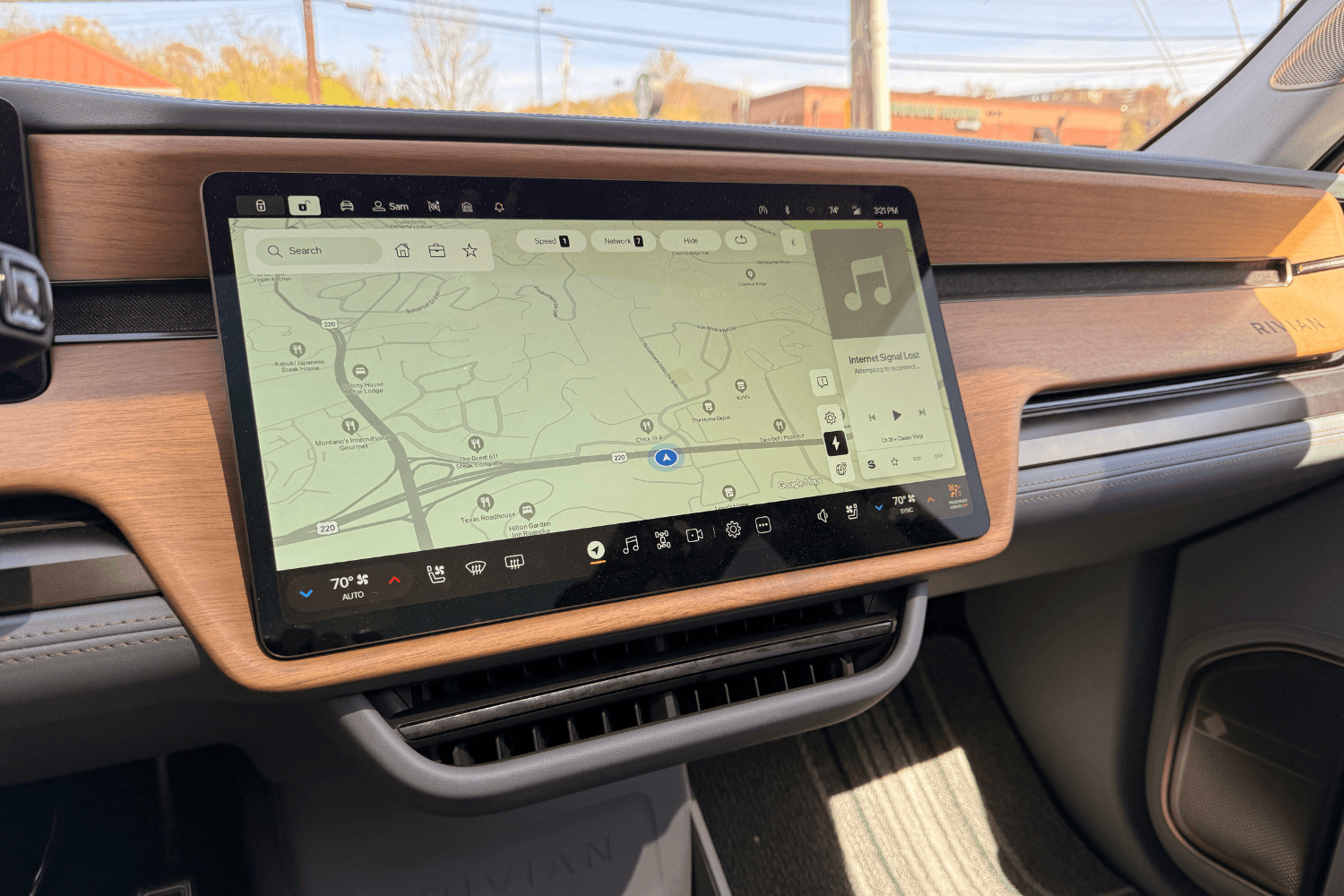
Of course, no matter how conservatively you drive an electric vehicle, eventually you’ll have to charge it. The R1S has a 400-volt charging architecture, allowing it to go from 10% to 80% in about a half-hour using a Level 3 DC Fast Charger. The built-in navigation system makes it a breeze to find compatible chargers and will even pre-condition the battery en route to ensure optimal performance. At home, a Level 2 charger will fill the battery overnight, while Level 1 offers slow, reliable, and inexpensive charging when speed isn’t of the essence.
An Evolving Vehicle
One of the best things about owning a software-defined vehicle is that they continue to get better with regular over-the-air updates. Much like the operating system on your computer, the software that runs a Rivian SUV or truck receives regular updates that fine-tune performance and add features. For instance, just in the past few months, the company has rolled out new versions of its OS that have added and adjusted drive modes, given owners the ability to use their phones as a digital key, and streamlined the charging process. One recent update even added an AI assistant that can control vehicle features using voice commands, assist with navigation, play music, send text messages, and even share insights on current events. These updates keep the vehicle feeling fresh and fun even years after completing the purchase.
One of the company’s biggest bets for the future arrived on Gen 2 vehicles a few months back in the form of Autonomy+. That’s the name given to the brand’s self-driving system, which is currently in beta but remains impressive nonetheless. These autonomy efforts are made possible thanks to the Rivian Autonomy Platform, which utilizes improved computing power and higher-resolution cameras to enable hands-free driving on over 3.5 million miles of road across the U.S. and Canada. Essentially, the service is akin to Tesla’s Full Self Driving platform, with arguably better underlying technology.
Our test model came with the Autonomy+ system activated, giving us a chance to test it out in the real world. While this software remains very much a work in progress, it was still quite impressive in its current state. When activated, it deftly navigates along city streets, country roads, and highways with ease, following along with traffic unless instructed to pass. For road trips, it is especially handy, allowing the driver to relax and enjoy a stress-free ride, arriving at their destination relaxed and refreshed, something we can all appreciate.
In its current state, Autonomy+ doesn’t recognize traffic lights or stop signs, although Rivian says that will be added in a future update. Eventually, the AI-powered system will even be able to navigate from point-to-point without the driver taking control at all, although that is still further down the road. But as it stands now, Autonomy+ is the perfect example of how a software-defined vehicle gets smarter over time. In this case, however, the full update won’t be free. Owners can choose to pay $49.95 per month or a one-time fee of $2,500, which gets them unlimited use of the service.
Thoughtful Features Abound
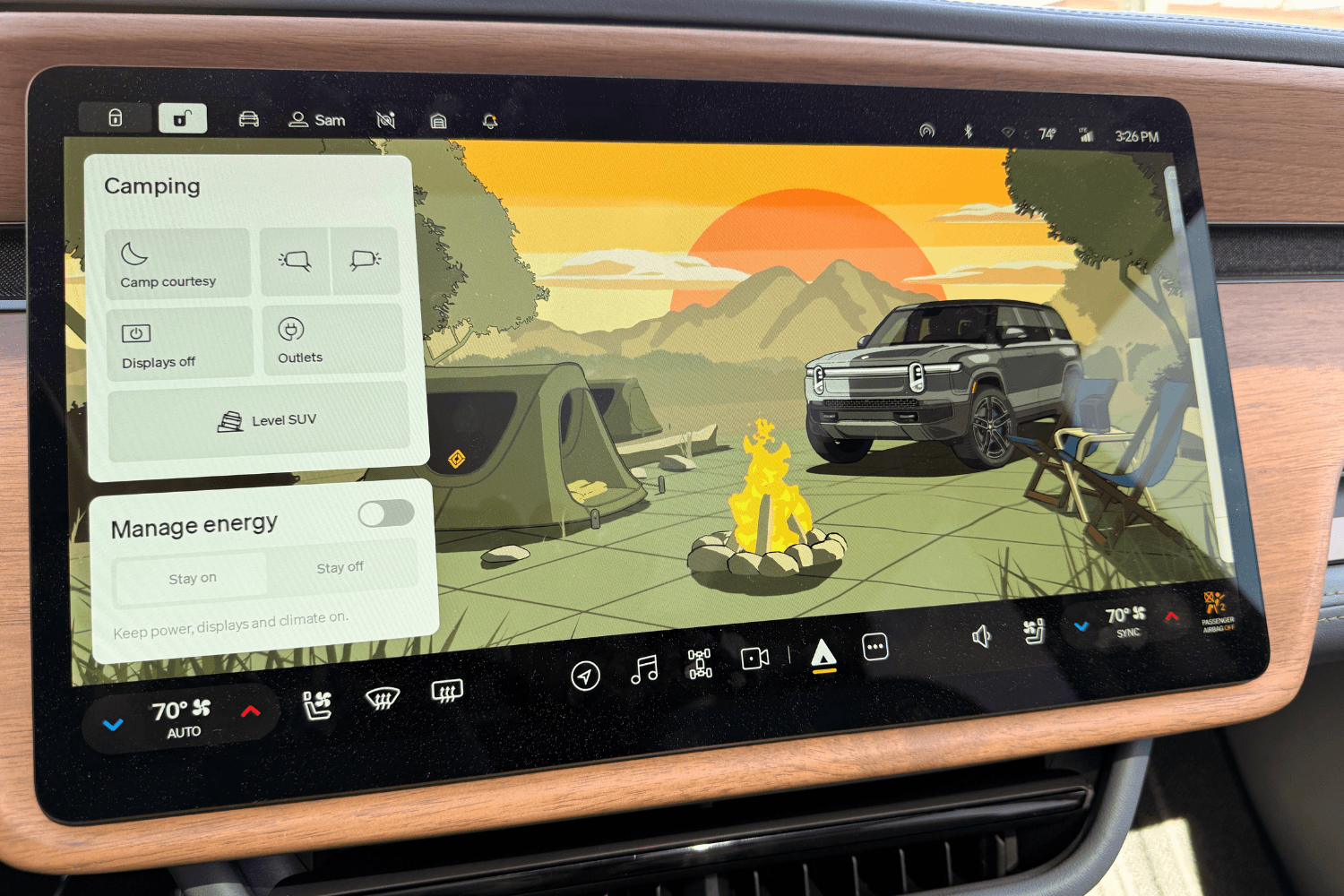
I’m 1,500 words into this review, and have only started to scratch the surface of everything the R1S has to offer. For instance, I haven’t had a chance to mention Pet Mode yet, which engages the HVAC to keep our furry friends safe and comfortable inside the vehicle when we’re not there. Gear Guard is another cool feature that uses the vehicle’s plethora of cameras to record any suspicious activity happening around or to the vehicle. It even has a Camp Mode, which automatically levels the EV when parked at a campsite with uneven ground, manages energy systems while there, and turns off some features that may bother other campers.
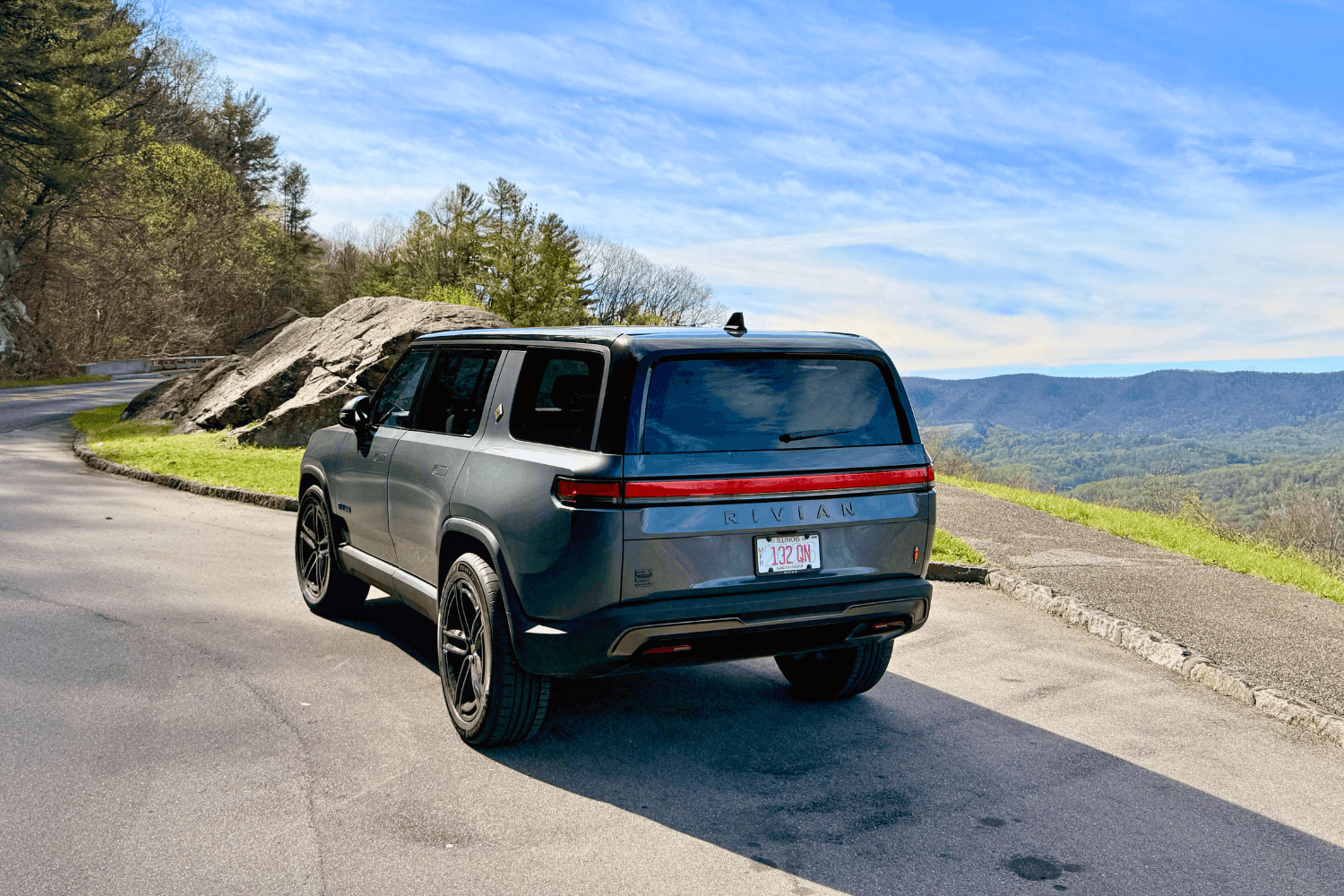
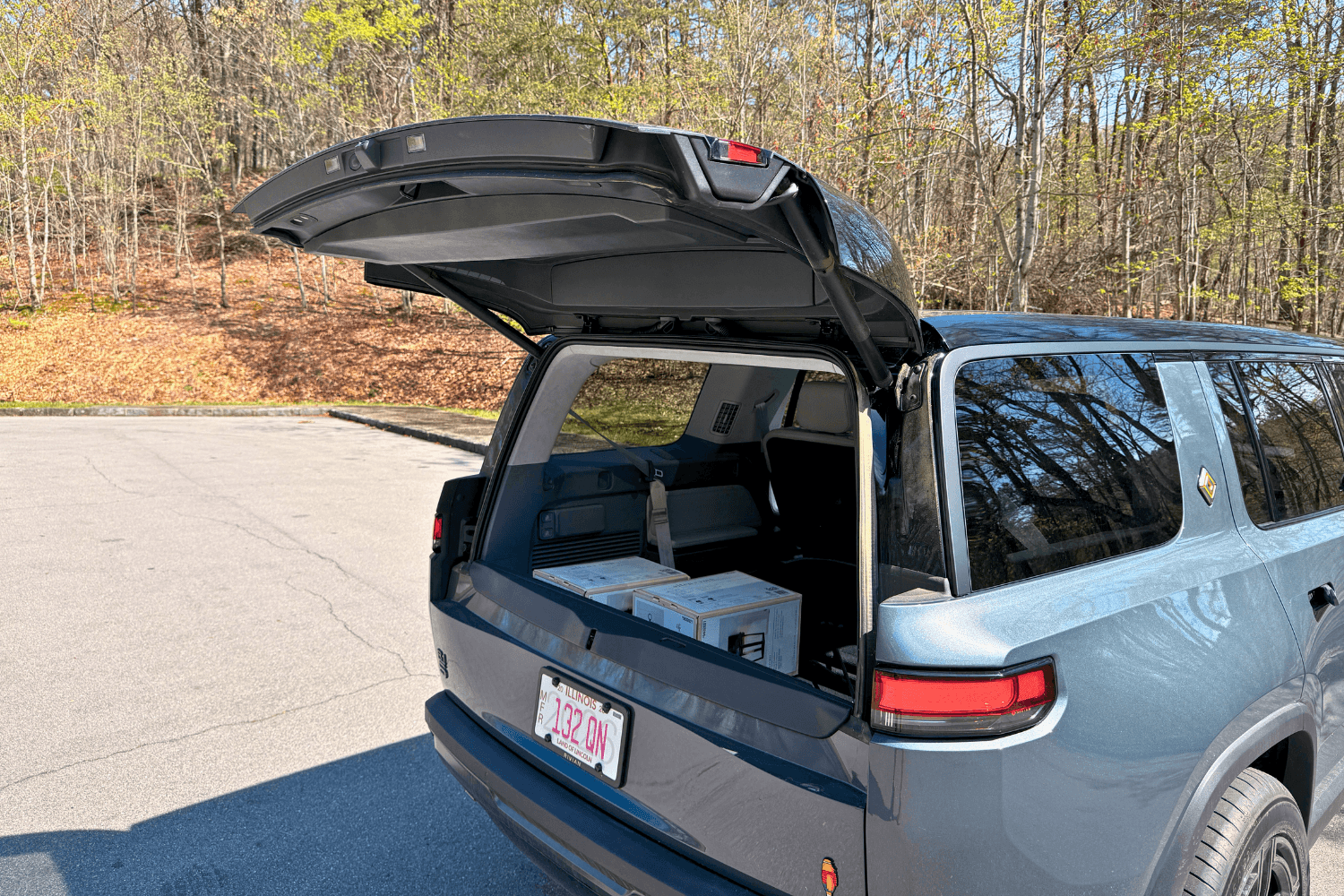
It is all of those little, yet meaningful, features that help distinguish a Rivian from just about anything else on the road. There are tons of thoughtful touches throughout, like driver profiles with seat, mirror, and steering wheel memory for any driver assigned a key. Or how the navigation system automatically adds charging stops along a route, eliminating range anxiety altogether. I even love how the heated and ventilated seats remember your settings as you come and go throughout the day or how useful and spacious the frunk (front trunk) is for hauling gear, luggage, and groceries.

As someone who regularly writes product reviews, the biggest compliment I can give to anything I test is that it is so good I would actually buy it myself. Such is the case with the R1S, which convinced me that I needed a Rivian of my own. That prompted a purchase of a preowned R1T pickup, which for all intents and purposes, is the same as the SUV, just in truck form. That’s a testament to just how good these vehicles are right now, and how they continue to evolve and improve the longer you own one.
That said, Rivian recognizes that not everyone wants a three-row SUV or pickup truck, and even fewer people can afford a new R1S or R1T. Thankfully, the automaker has a new model called the R2, which is a smaller, lighter, and more affordable EV. This model just started shipping to customers and has a starting price of $45,000, making it a compelling option for anyone shopping for a refined electric vehicle with advanced features.
No matter which Rivian model you choose, you’ll be getting a glimpse of the future of automobiles. Vehicles that grow and evolve with the driver, adding smart features that are truly useful and enhance the ownership experience over time. Whether you’re shopping for an EV or a traditional gas model, this is the kind of car we all deserve, regardless of brand, style, or price point.

About the author
Kraig Becker is a writer in the RV, outdoors, and adventure travel space. Over the course of his career he has contributed to such outlets as Popular Mechanics, Outside Online, Business Insider, TripSavvy, Digital Trends, GearJunkie, The Adventure Blog, and countless others. An avid runner and cyclist, he enjoys camping, hiking, mountain biking, kayaking, and just about any other outdoor activity. His travels have taken him to seven continents and on many amazing adventures.
Kraig Becker is a writer in the RV, outdoors, and adventure travel space. Over the course of his career he has contributed to such outlets as Popular Mechanics, Outside Online, Business Insider, TripSavvy, Digital Trends, GearJunkie, The Adventure Blog, and countless others. An avid runner and cyclist, he enjoys camping, hiking, mountain biking, kayaking, and just about any other outdoor activity. His travels have taken him to seven continents and on many amazing adventures.