

Mother Road Revival
In Tulsa, Route 66 threads through rich culture, history and lush parks.
Route 66 launched our nation’s love affair with road tripping and fueled our sense of adventure. As “the Mother Road” vrooms toward its 100th birthday on Nov. 11, a reinvigorated ribbon of history entices with uniquely American culture and roadside attractions.
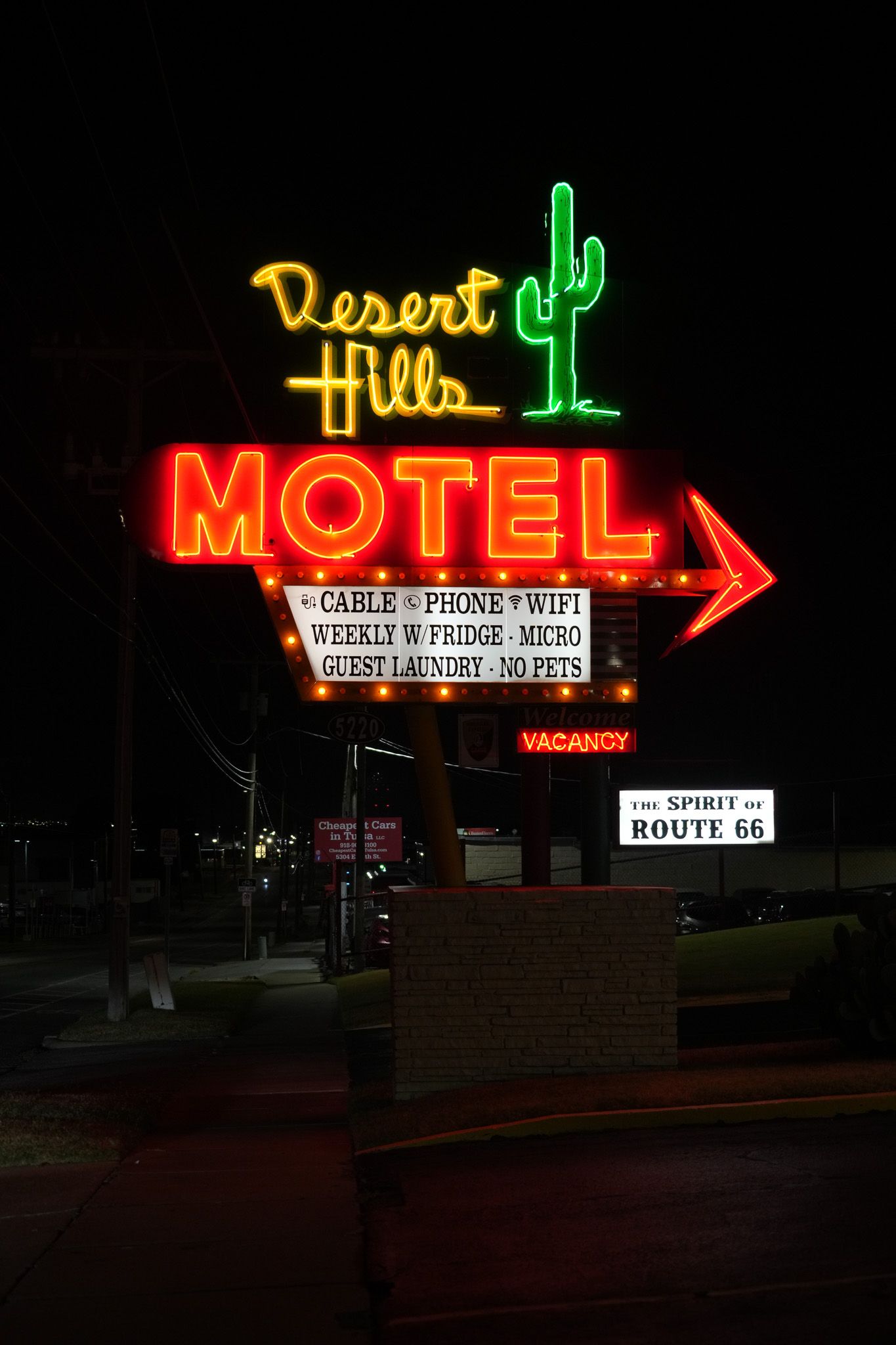
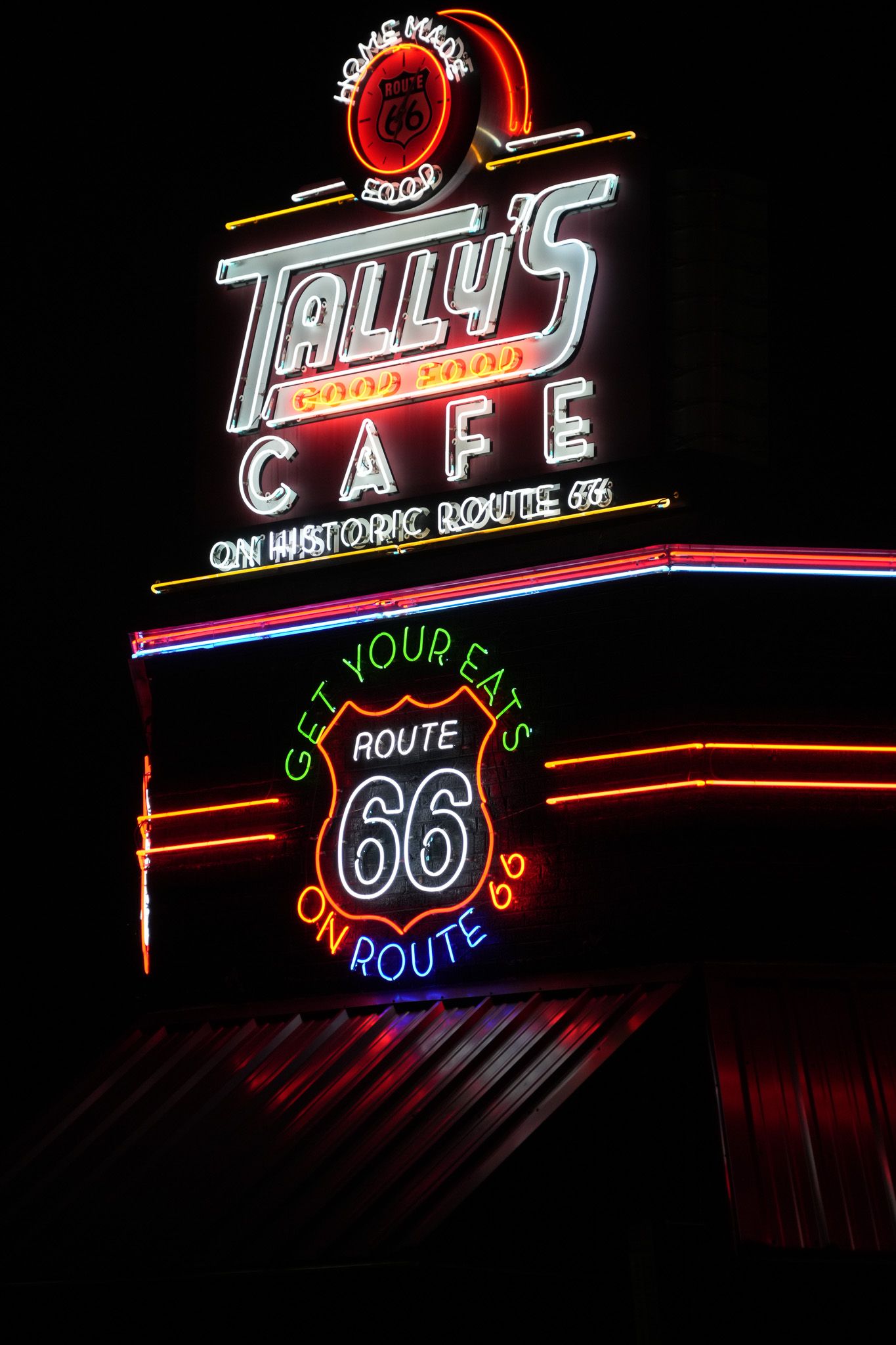
Nowhere captures the spirit of this iconic road more than Tulsa, Oklahoma, a geographical and cultural crossroads. With 28 miles of the original highway, this rising metropolis has been celebrating the Route 66 centennial all year, and packs plenty of nostalgia and neon to ring out the commemoration.
In this itinerary, we begin on 11th Street, along Tulsa’s main alignment of Route 66. Then we venture off-route to explore the city’s culture and history—the joy of the journey lies in discovering the unexpected and taking a few detours.
ROUTE 66 + MIDTOWN
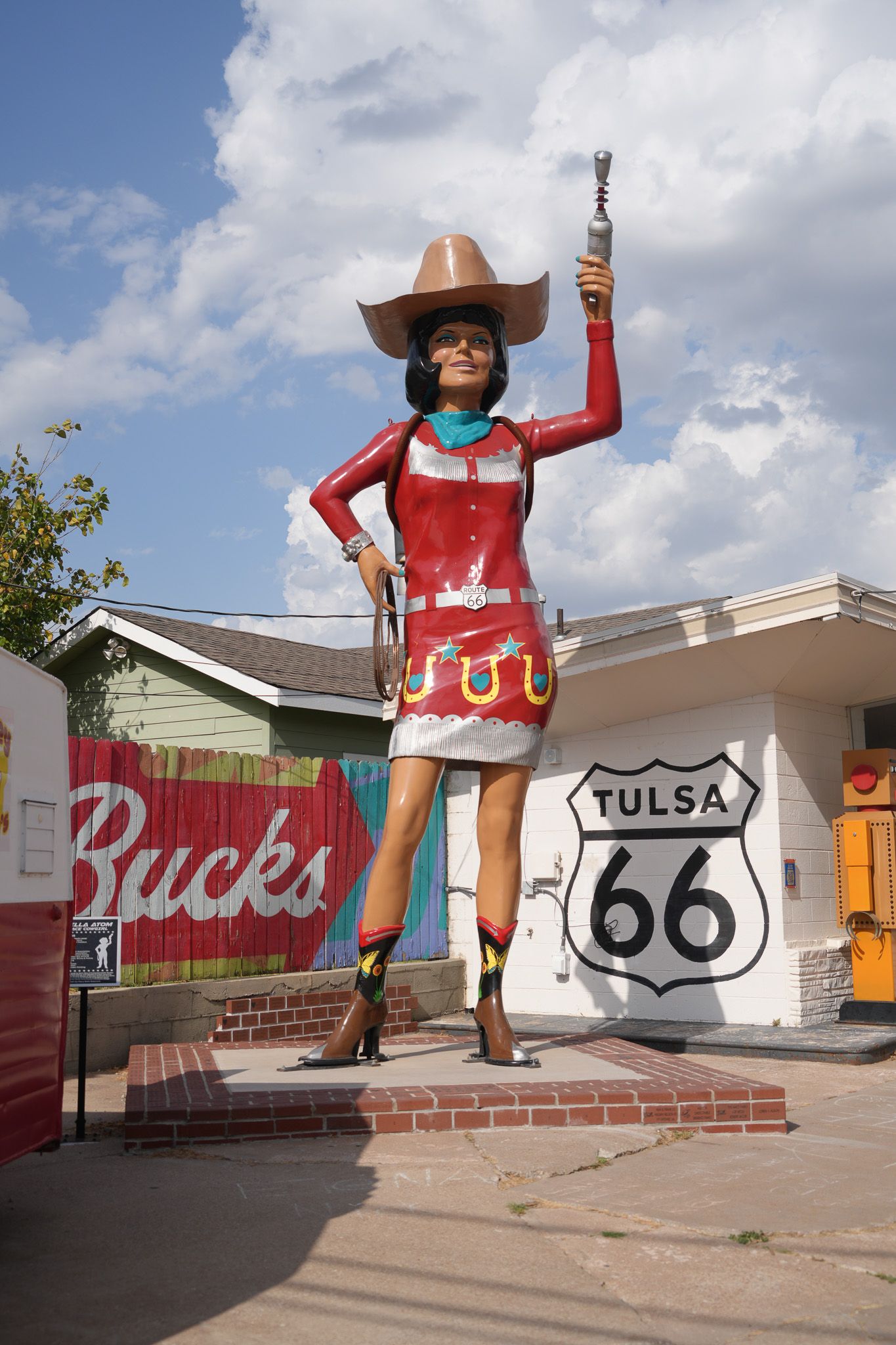
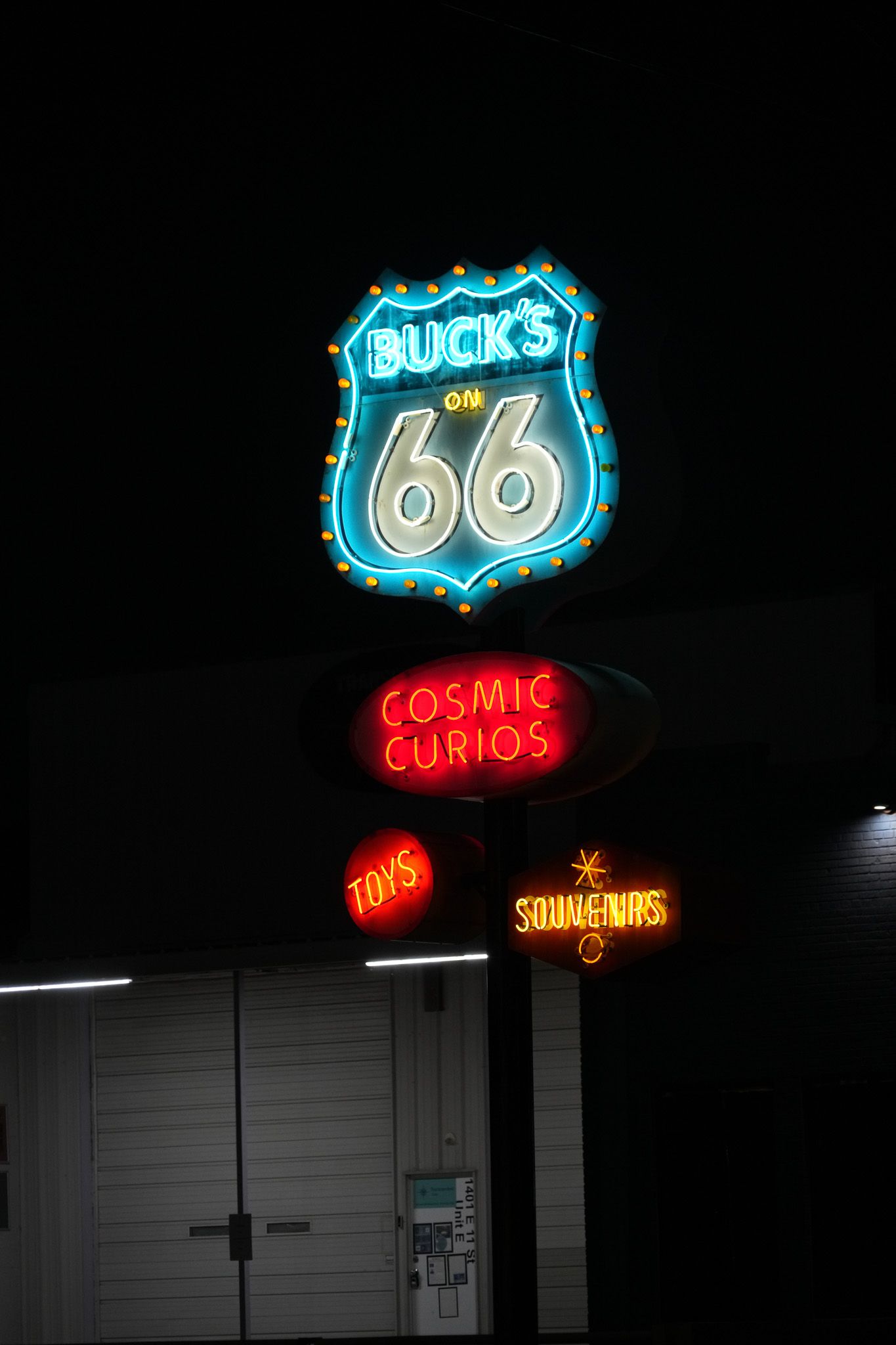
A mile east of downtown on 11th Street, a 30-foot red and yellow neon sign, towering over a 20-foot-tall cowboy and lumberjack, serves as the welcome to Tulsa’s Meadow Gold District. “I want to help make memories for people,” says Mary Beth Babcock, who transformed a vacant gas station into a Route 66 gift shop in 2018 and put up the first of five giant fiberglass “muffler men” a year later.
Today, Buck and Stella Atom flank her bustling Buck Atom’s Cosmic Curios on 66. Meadow Gold Mack (the lumberjack) stands sentry for a building that shares his name and provides local creatives a place to sell their wares. Cowboy Bob overlooks a handful of vintage and Western wear shops called the 66 Collective. A few blocks away, Rosie the Riveter captures the “We Can Do It” spirit of small business owners who took a chance on this historic strip of asphalt.
“We saw potential, and creative people love potential,” says Lisa Wakefield, who opened her lifestyle store, Jenkins & Co., a decade ago in a 1950s Route 66 car dealership. “There are so many creative businesses here now,” she adds, nodding to the swath of galleries and independent shops, which includes a record store and the Southwest Trading Company, which features Native American jewelry, textiles and pottery.
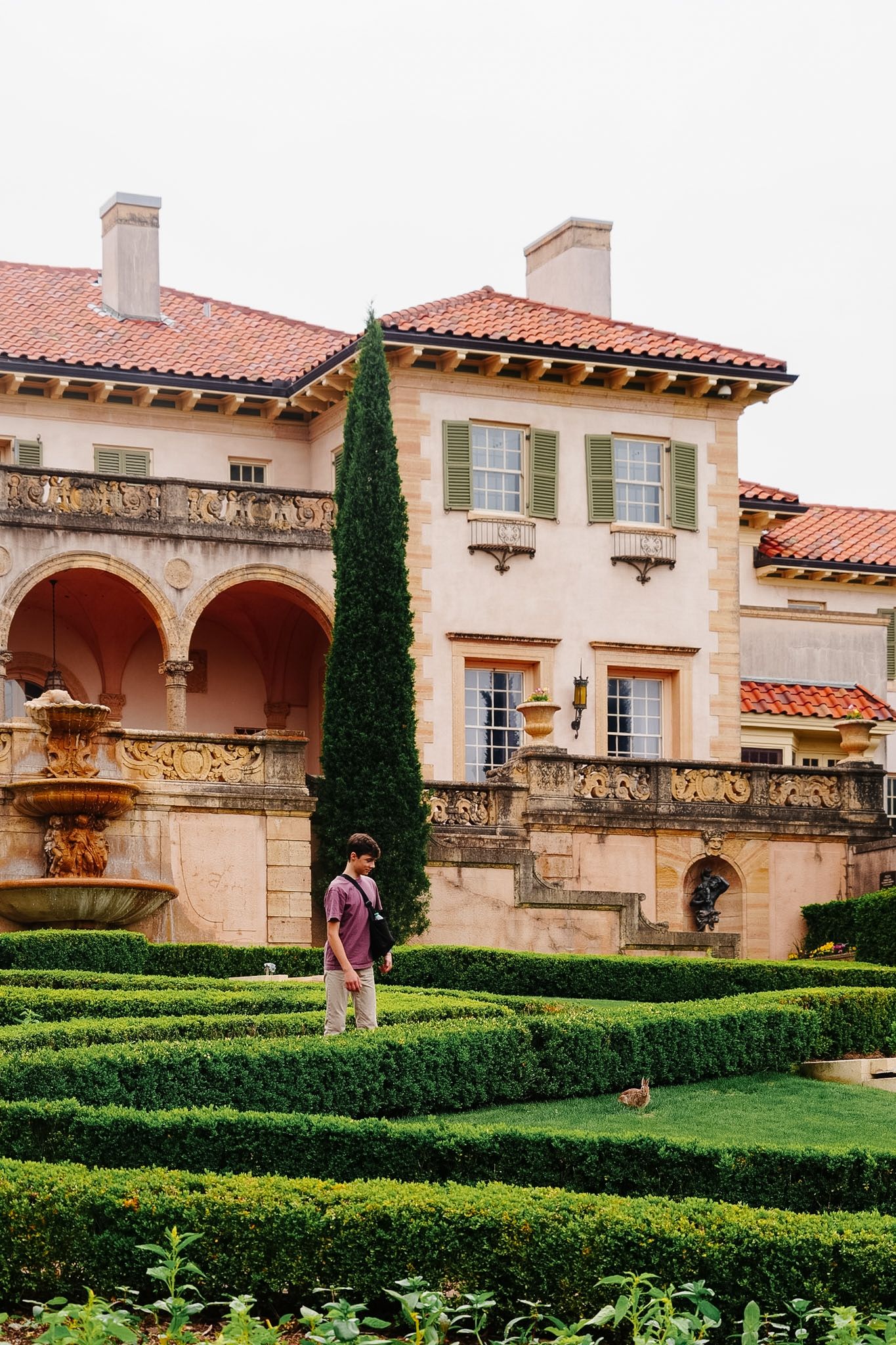
Just a mile and a half south of 11th Street/Route 66 in Tulsa’s midtown, the Philbrook Museum of Art spans a 72-room Italian villa surrounded by stunning gardens and loaded with American, Native American and European art. An impressive exhibition called Roadside Abstractions: Route 66 & American Modernism runs into January.
Wind down the day at another urban oasis of international acclaim, the 66-acre Gathering Place. Walkways weave through 6,000 trees, native prairie and artful slabs of Oklahoma sandstone, with an adventure playground for kids.
DOWNTOWN, GREENWOOD + TULSA ARTS DISTRICTS
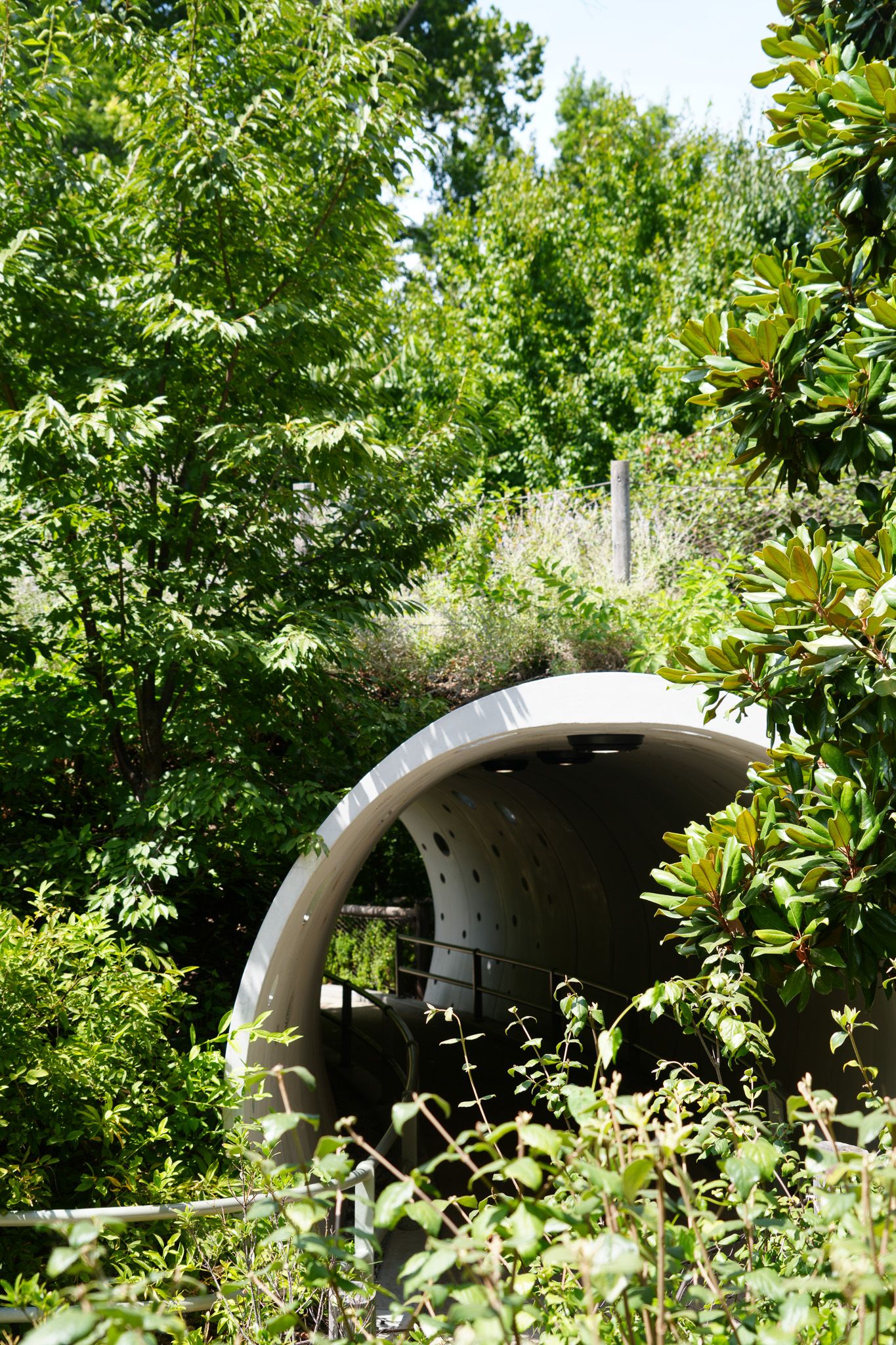
Tulsa’s downtown serves as the second-day starting line. Located near the intersection of Osage, Muskogee (Creek) and Cherokee lands, Tulsa suddenly surged with oil companies and get-rich-quick dreamers after colossal nearby oil discoveries starting in 1901. Soon, the city reigned as “The Oil Capital of the World” and a stunning skyline rose from the rolling prairie. More than a dozen Art Deco and Neo-Gothic skyscrapers remain. A handful of once-secret tunnels under these buildings allowed for the private business transactions among wealthy oil barons during the boom years, when they also feared for their safety during a wave of high-profile kidnappings for ran - som in the 1930s. Look skyward for rarified craftsmanship on the PhilTower, Philcade, Tulsa Club, MidContinent and Atlas Life buildings before venturing into (and under) the marble and brass Bank of Oklahoma lobby. Subterranean passages include timelines, photos and stories—and a historic vault, signaling how much cash flowed with the oil.
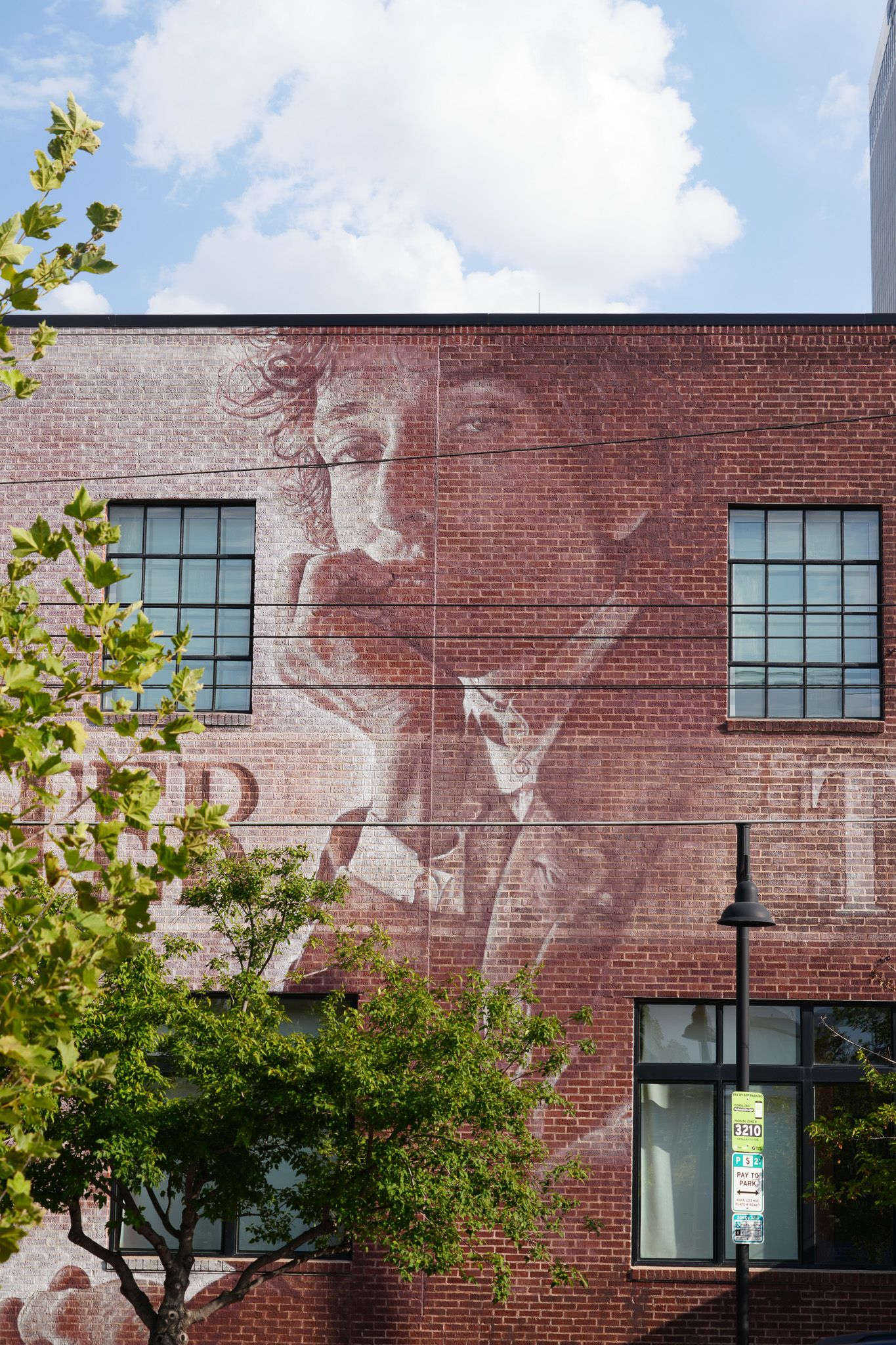
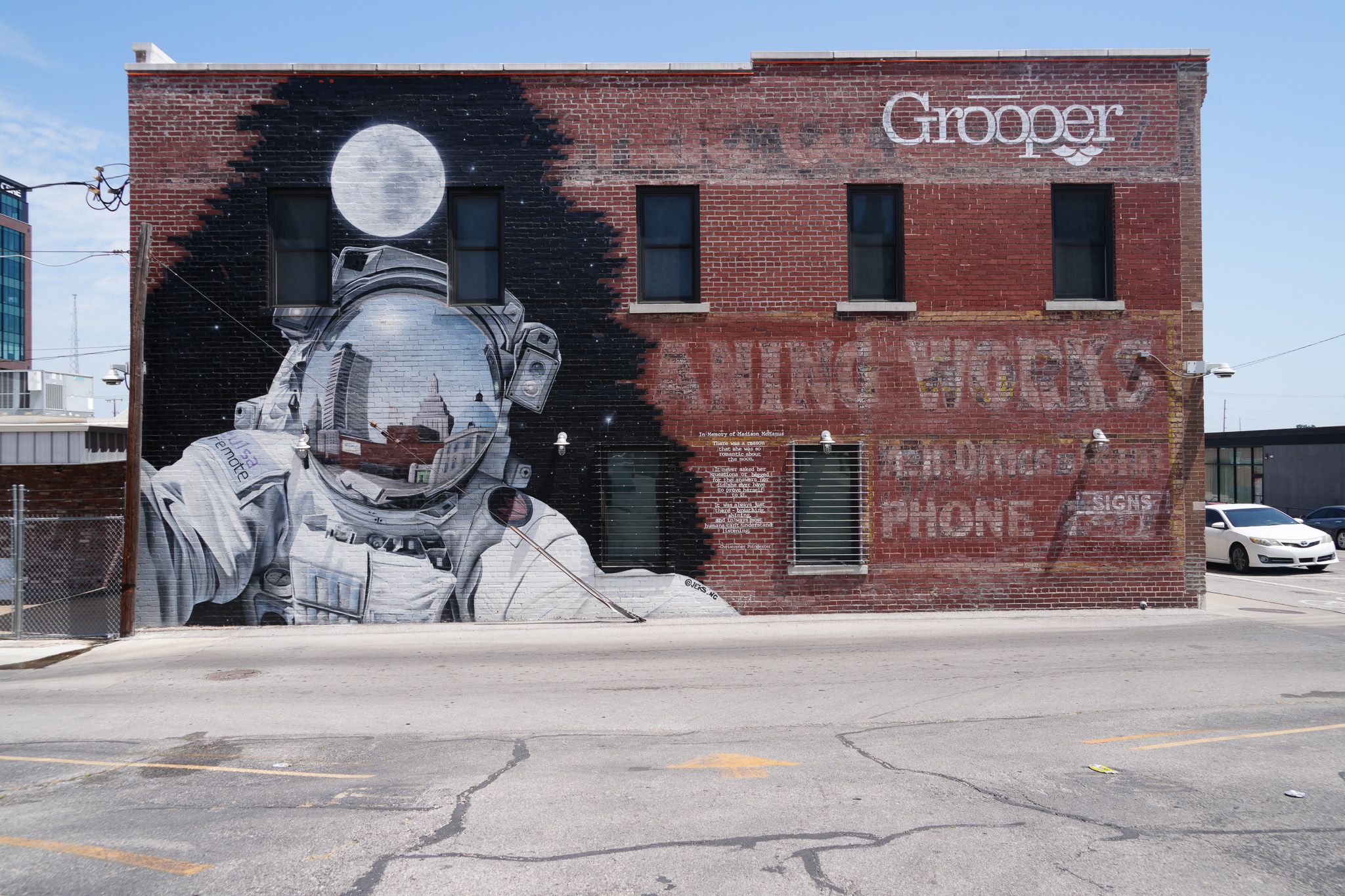
No Tulsa history lesson is complete without a visit to Green - wood Rising, a museum of hope and resilience amid unimaginable devastation. In the early 1900s, Greenwood bustled with Black-owned theaters, churches, restaurants, shops and services, just north of downtown. In 1921, armed white men burned all 191 businesses in “Black Wall Street” and destroyed 1,200 homes. The death toll remains unknown. Survivors of the Tulsa Race Massacre rebuilt their thriving neighborhood, only to have an interstate highway tear it apart decades later. Rebounding yet again, Greenwood’s compact blocks of shops, cafes and murals warrant exploration.
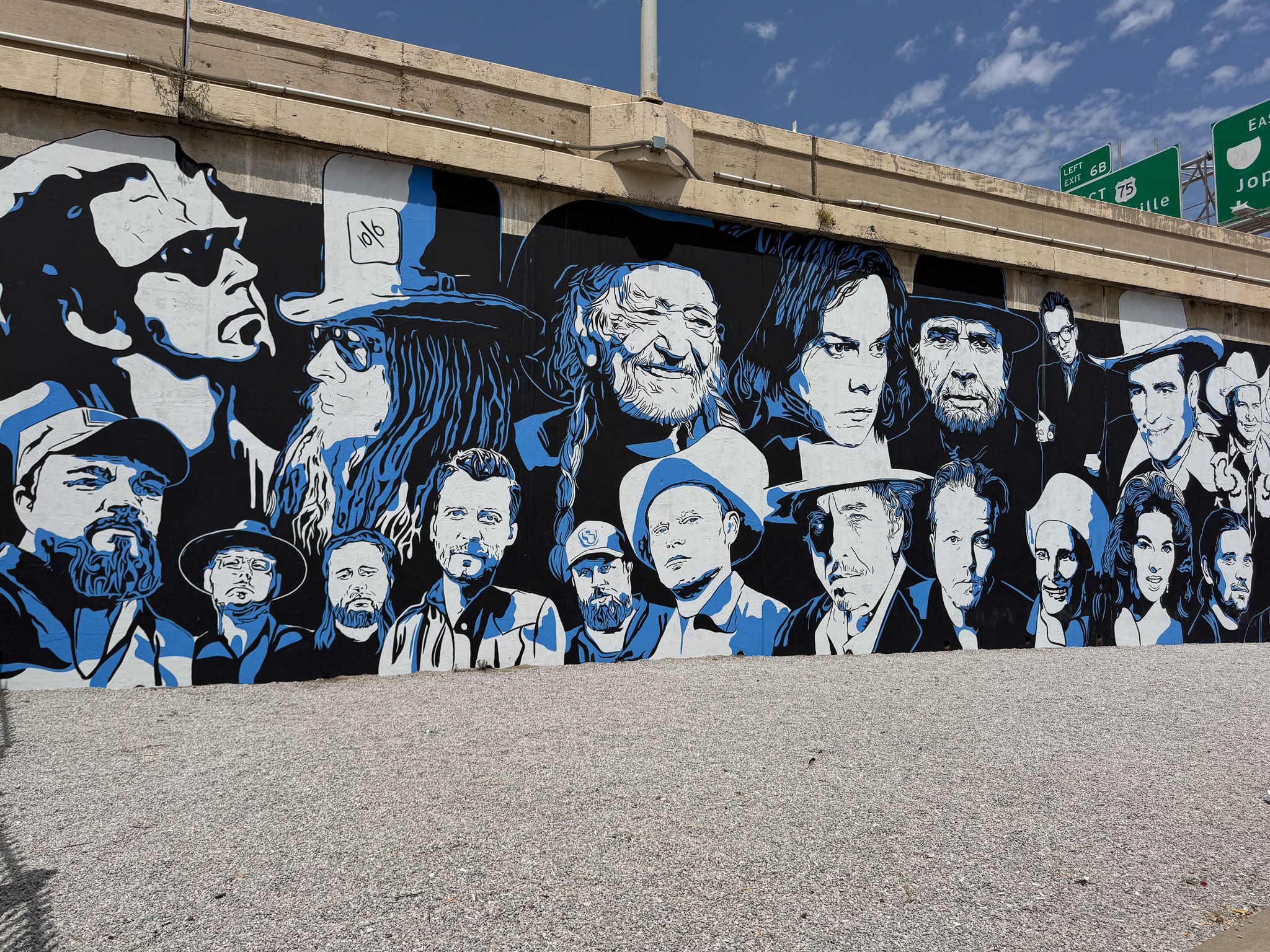
Another take on hope and equality unfolds at a pair of nearby museums dedicated to music legends. The Woody Guthrie Center pays tribute to the folk singer and activist. Next door, the Bob Dylan Center showcases the 70-year career of the Nobel Prize-winning folkie turned rock ’n’ roller, who was deeply inspired by Guthrie. Both centers brim with listening stations, photos, video and personal notebooks, letters and instruments.
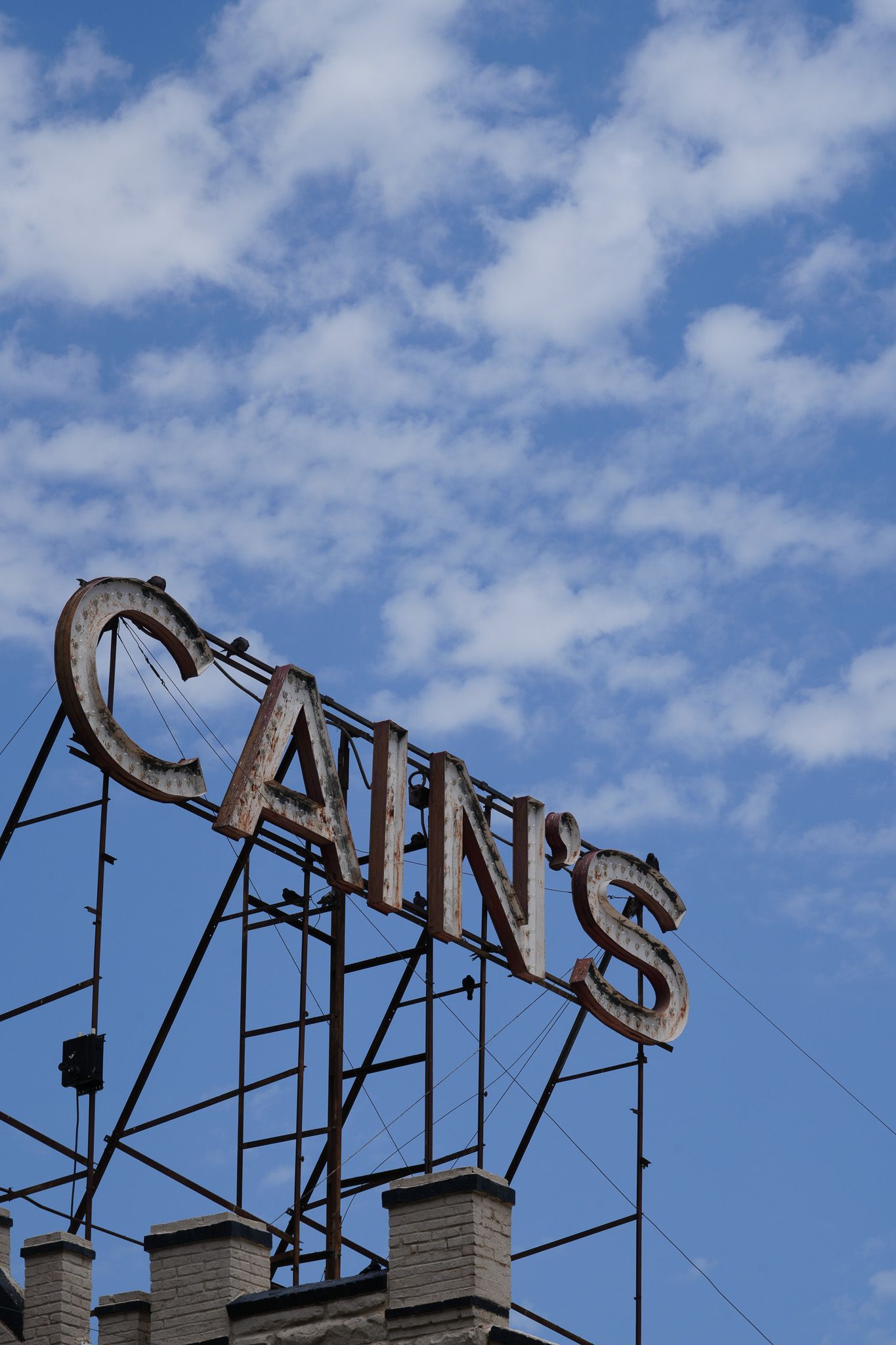
Today’s music scene resonates with this history in new ways. The intimate Mercury Lounge mixes rising talent with quirky decor and top-notch acoustics in a vintage gas station. Cain’s Ballroom is as legendary as Route 66—and a year older. Long known as the “Carnegie Hall of Western Swing,” Cain’s (capacity 1,800) has hosted a who’s-who of rockers, punks and country icons for the past 50 years.
And that's perfect for Tulsa, long a crossroads for American roamers, these days a destination unto itself.
Read more like this