


American Road Icons: Legendary Fords
Ford Heritage Vault
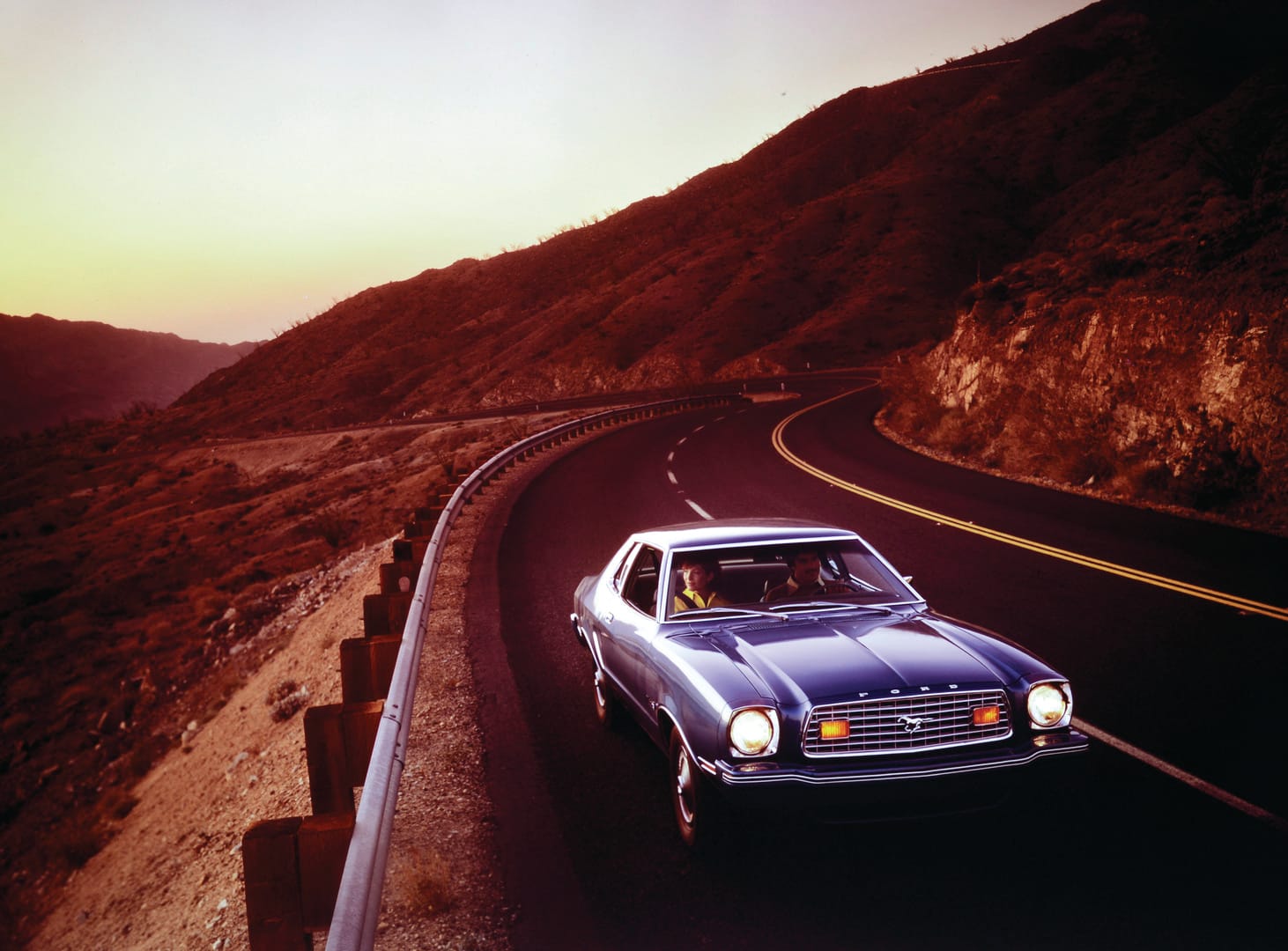
Times change, and our rigs change with them. Some vehicles don’t just follow the trends, they define them. These three Fords revolutionized the American road trip.
LET’S BE REAL: VEHICLES ARE JUST TOOLS. Whether you’re in a land-yacht-sized RV, a two-seat sports car or a big-bodied minivan, you just need to get where you’re going, safely and on schedule. On two wheels, four wheels or more, they’re merely a means to an end.
Whatever! We all know this is “true,” but not true in a deeper sense. Especially when it comes to the epic form of travel known as the road trip, we all recognize that vehicles are not created equal. Many will get you there. Few will get you there in style. And only the most beloved (or notorious) rigs in America’s century-plus history of road tripping truly changed how we travel.
We set out to celebrate those vehicles. We started with big, frankly out-of-control lists of trucks, vans, RVs, muscle cars, you name it. Then we argued. (The Lamborghini Countach was a fraught topic.) We let the journey shape our list’s destination. We winnowed. We ranked. We asked a few friends to ride along. The result? A series of 10 highly argumentative choices, encompassing vehicles we know and love (or would love to get to know). Over the next few weeks, we'll share those selections here for your fantasy-driving pleasure.
Up first, we present: three Fords (yes, three—the most representation from a single make!) that made the cut as some of the most iconic road trip rides on record.
Ford F-150
MICHAEL CHARBONEAU, contributor to the Los Angeles Times, Men’s Journal and others, writes:
If there’s any vehicle that can claim the title of “quintessential American truck,” it’s the Ford F-150. In a production run that spans nearly 80 years, more than 41 million F-series pickups have been sold. Today, you can find them everywhere from remote construction sites to suburban strip mall parking lots.
And yet somehow, this truck is not merely commonplace. In fact, the F-150 has long been my unattainable crush. When I was a kid, my dad had a green 10th-gen model. Although I never drove it, I did enjoy a fateful ride in the bed while he shuttled my buddies and me to an adjacent neighborhood for trick or treating. Gliding down the street with tree branches passing overhead, the wind gently rushing in my ears—that sold me on the magic of a pickup.
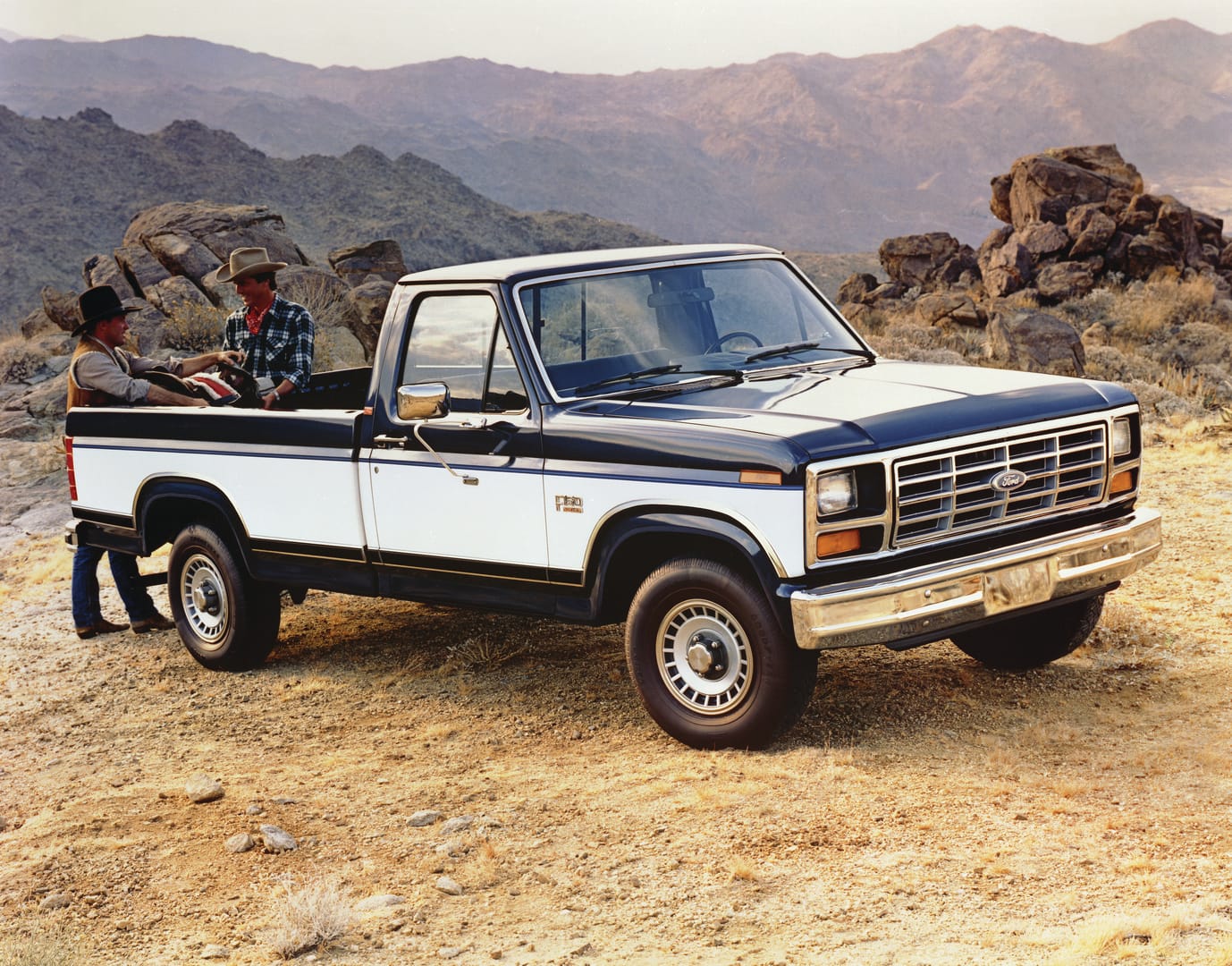
My crush deepened in high school. As a teenager, I wanted nothing more than a regular-cab Bullnose (produced 1980-86, distinguished by its prominent grill and square headlights). To me, the rig’s clean, straight lines and blocky shape were perfect. These trucks looked solid and timeless; built to work, beautiful in their simplicity. I pored over listings online, dreaming about cruising with the windows down, my girlfriend beside me on the wide bench seat. I vividly recall falling for a handsome long bed with a red and silver paint scheme. Unfortunately, it was in West Virginia, hundreds of miles away. At 16, I had no money anyway.
What would I have done if I got it? Probably what most people do: drive the hell out of it. Whether you slide a camper in the bed, tow a trailer or just toss a blanket in the back to look up at the stars, the F-150 is an ideal workhorse for exploring. It’s not sporty or fast, but it can promise one thing: It’ll get you there.
THE ERA
1975-Present
CLASSIC VERSION
Early ’90s models have a special something.
TOTAL SALES
More than 41 million!
TELLING DETAIL
Several bed lengths reflect a heritage of workhorse versatility
CULTURAL MOMENT
Hard to pick one, so we’ll go recent: Robyn Ottolini’s 2020 pop-country hit “F-150.” The late nights, the bonfires…
Ford Mustang
With their distinctive looks and overabundance of power, American muscle cars, like the Chevy Camaro, Dodge Challenger and Pontiac GTO, are the stuff of open-road fantasy. But for our money, nothing beats the dream of climbing behind the wheel of a classic 1965 Ford Mustang convertible, dropping the top and heading out for a long cruise up the coast. Any coast.
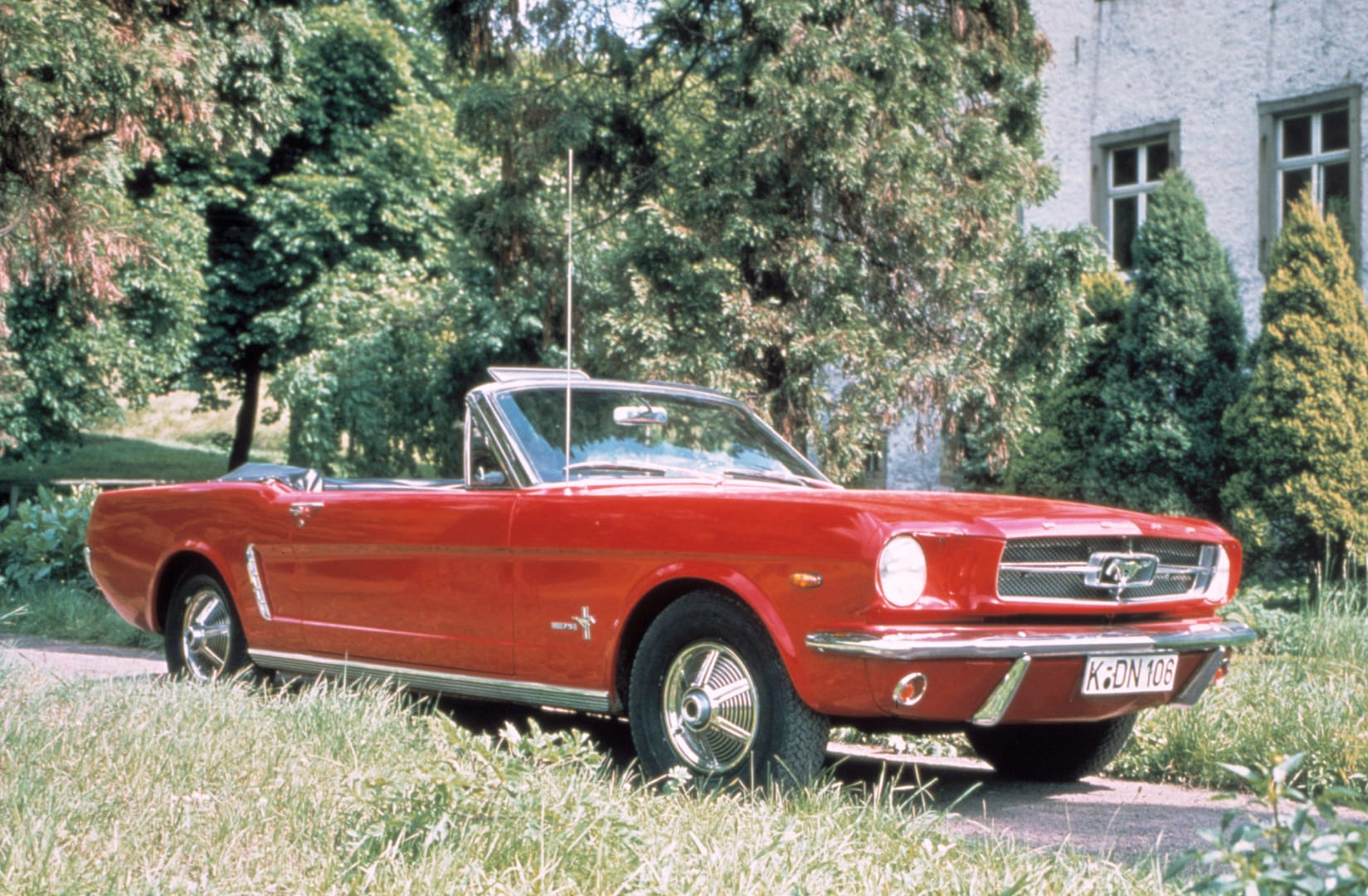
First introduced in 1964, the Ford Mustang has been an American institution ever since. And while competitors have come and gone, this car remains a Ford stalwart. The original model came with a 271-horsepower engine and could do zero to 60 in 5.9 seconds. (Not bad for $3,163.) From the get-go, this car oozed cool, quickly becoming both a pop-culture and road icon. Today, this pony can still run, although sadly, there isn’t a convertible in the current lineup.
THE ERA
1964-Present
CLASSIC VERSION
1965 convertible
TOTAL SALES
10+ million
TELLING DETAIL
The famous galloping wild horse badge
CULTURAL MOMENT
Steve McQueen’s 1968 Highland Green Mustang GT Fastback in the classic film Bullitt.
Ford Country Squire
It was the 1950s. The war was in the rearview mirror, the country rode high on optimism and everybody liked Ike. Middle-class income was on the rise; road trip culture was taking hold thanks to the president’s ambitious Interstate Highway System. Cross-country sojourns and family vacations were all the rage.
It was a time that changed how we travel in this country, right up to today. And the vehicle of that moment, more than any other, was the Ford Country Squire.
With its signature wood-grain paneling, expansive cargo space and room for eight, the Country Squire became a symbol of suburban success. This car—or one of its many imitators—found its way into countless driveways. And even when parked at a white picket fence, it hinted at the freedom of the open road. The “woodie” station wagon even played a direct role in the rise in popularity of the national parks as family destinations. During the 1950s, visitation at those iconic locations rose to over 25 million a year, on its way to 80 million just a decade later.
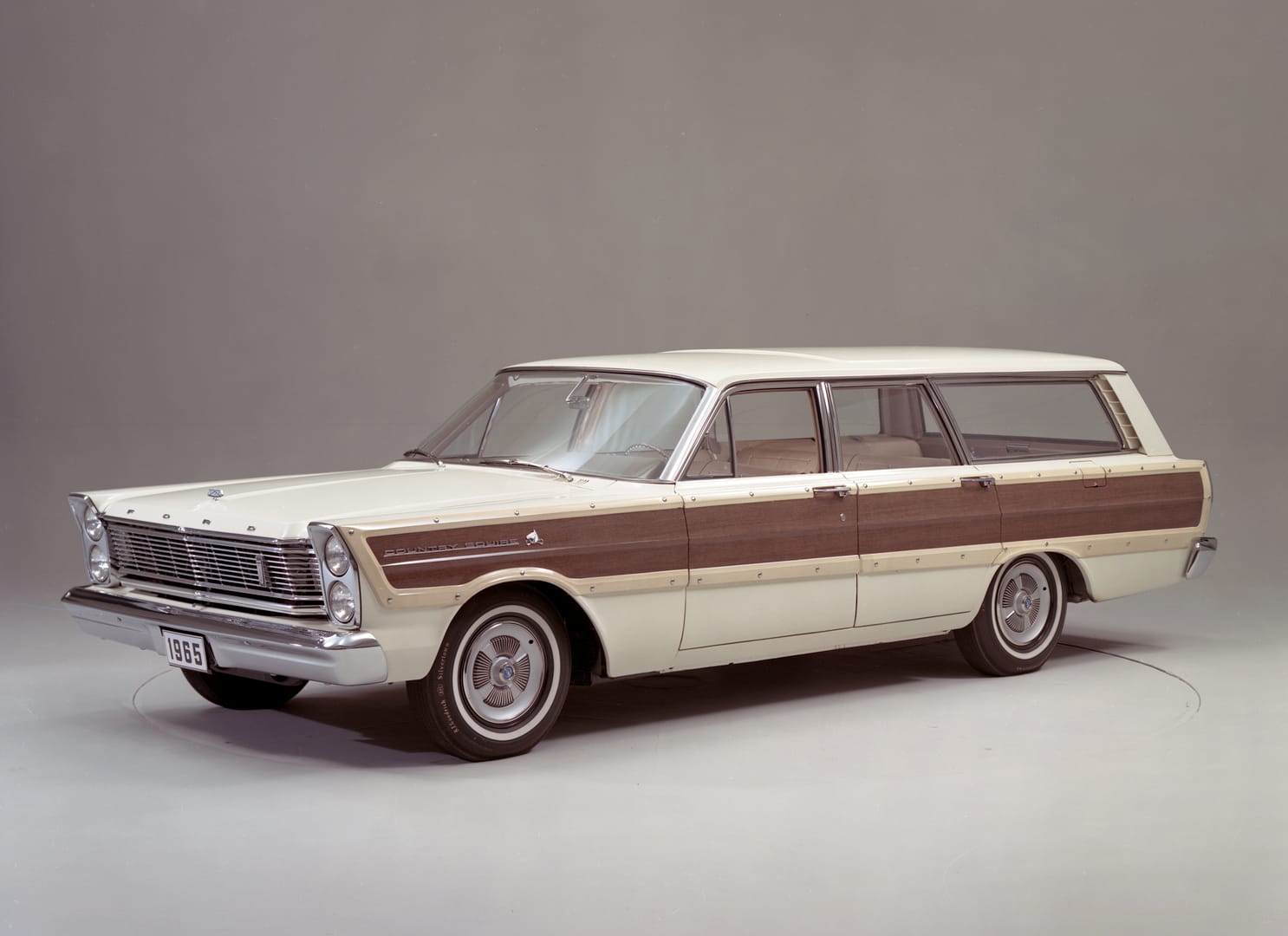
This wasn’t Ford’s first station wagon, of course, but it would become its most successful. The vehicle rst rolled off the assembly line in 1949, although it wasn’t of cially branded as the Country Squire until two years after that. By 1953, its trademark wooden side panels were replaced with simulated wood-grain metal, which remained a distinctive feature across eight generations.
By the end of the 1950s, the wagon was selling 25,000 units a year, before reaching a peak of 143,000 in 1973. By that point, it had already achieved icon status—a true piece of Americana. By the time the Country Squire was retired in 1991, it had been in production for over 40 years. By then, our appetite for station wagons had been supplanted by the ever-increasing demand for minivans and SUVs. But there is no doubt that this car left an indelible mark on American culture, becoming the most recognizable road trip vehicle to ever roam the country and creating an entire genre of road-trip rides.
For us, this Squire is the king.
THE ERA
1950-1991
CLASSIC VERSION
1966 model with Magic Doorgate
TOTAL SALES
1.8 million
TELLING DETAIL
Distinctive wood paneling
CULTURAL MOMENT
A 1979 Country Squire was the stand-in for the “Family Truckster” in National Lampoon’s Vacation.


Like What You See?
Get the latest stories, plus details (and discounts!) on Wildsam field guides, sent right to your inbox.