

Motorhome Dry Camping How-To
Lane Southern Orchards
Tips and tricks for camping off the grid in your motorhome.
There is a certain freedom that accompanies motorhome travel. You can steer your rig in any direction and, in theory, camp just about anywhere if you’re prepared. And in some cases, “anywhere” might be a place without water, electricity, and sewer hookups—a concept known as dry camping.
The ability to stay off-grid opens a world of additional opportunities and destinations. But before you commit to dry camping, there are a few important tips motorhome owners should know to avoid issues. Here, we cover the ins, outs, and what-have-yous of the no-frills motorhome experience.
Read More: 6 Motorhomes We Wish We Were Driving
Why Consider Dry Camping?
Campground reservations have been tougher to come by in recent years, with some popular locations booking up a year in advance. And while it’s exciting to see more people migrating outdoors, it can lead to booking frustrations. Plus, dry camping, (aka boondocking) locations are typically free, have fewer rules and regulations, and are usually first-come, first-served. When campgrounds are full or if you just prefer a quieter experience in nature, dispersed camping can be an idyllic solution.
There are also dry camping opportunities within campgrounds or at business locations. Most national parks, national forests, and some state park campgrounds offer individual campsites sans utilities. These camping locations are extremely popular for their scenic settings and the abundance of activities available right from the campground or within the park.
Membership programs, such as Good Sam's Overnight Stays, also allow you to camp overnight at participating businesses. While the number of hosts with electrical hookups has increased, the majority require dry camping.
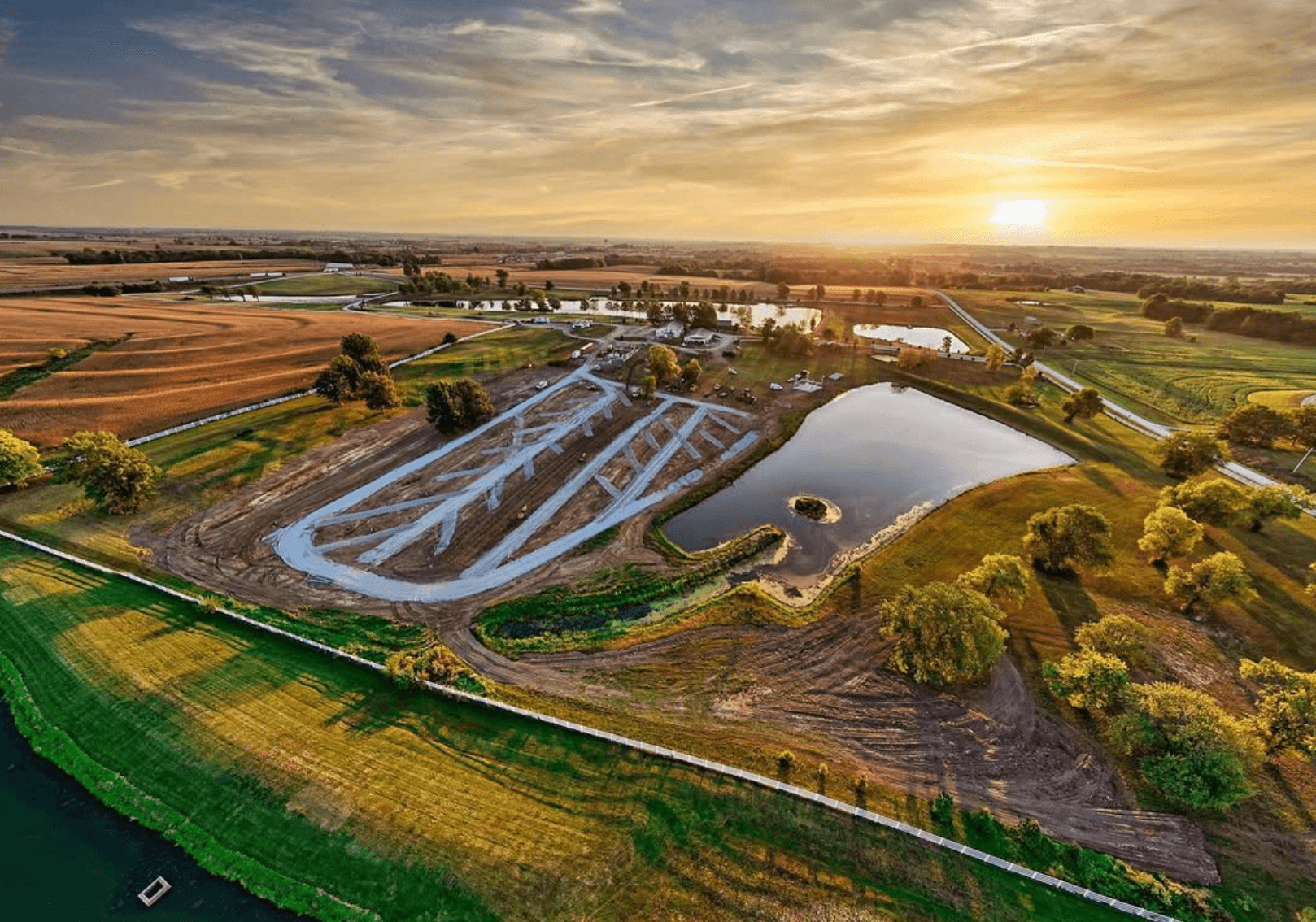
Stay at a Plush Heartland Winery
Good Sam Elite Members can book unlimited nights at select private camping destinations through the Overnight Stays portal. In this issue, we’re spotlighting Arcadian Moon, a winery and restaurant in Higginsville, Missouri, situated on 75 acres in the heart of rich agricultural country less than an hour’s drive east of Kansas City.
How to Manage Power When Dry Camping
While camping without hookups can provide additional travel freedom, it can be a struggle if you don’t have the right setup. The most important consideration in dry camping is your RV’s electrical system.
You’ll need to supply your own power for the duration of your stay via a generator or solar power with the accompanying inverter and battery setup. Even if you have a generator onboard, your stock RV batteries may not be up to the challenge of storing enough charge to meet your daily electrical needs. Consider upgrading your batteries to lithium to better utilize the power from running the generator.
Before selecting a place to stay, check the generator hours at the location you’re staying. One drawback to some national and state parks is restrictions on when you can run your generator (we do appreciate some solitude, though).
Read More Everything You Need to Know About RV Generators
How to Navigate Off-Grid
Motorhomes pose additional risks when traversing into the backcountry. If you’re considering dispersed camping on public land or in other rural locations, roads and camping areas may not be maintained. With the increased weight of motorhomes compared to towable RVs, you’ll need to take extra care to avoid getting stuck in sand or mud. It helps to read recent reviews of the area and to stop into a local field office or visitor center to learn about road conditions.
Be sure to watch the weather and avoid low-lying areas prone to flooding or dirt areas that can quickly turn to mud. Sand is the enemy of every motorhome owner—it’s best to avoid soft ground.
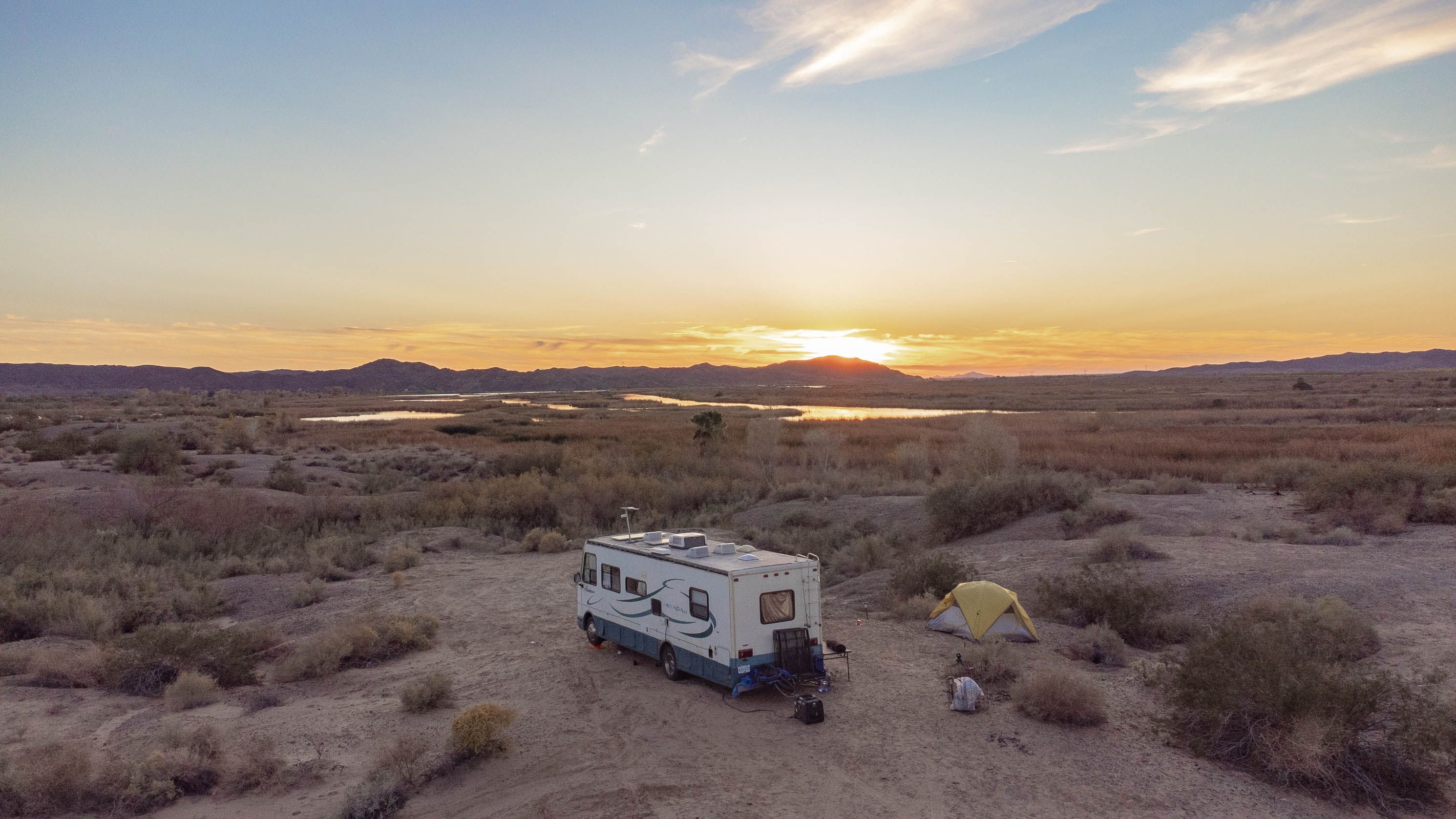
If you tow a car behind your motorhome, it’s always helpful to scout out prospective dispersed camping areas in the car before you commit to driving your RV into questionable conditions. Is it a hard-packed surface that can handle the weight of your RV? Are there any sharp dips or humps in the road that can cause you to drag? Are there any low tree branches, rocks, logs, or other obstacles?
Even the most careful motorhome owners can find themselves stuck. Before boondocking, it’s important to plan how you’ll handle what comes next. Make sure you have towing coverage, either as part of your RV insurance policy or through a separate RV-specific roadside assistance policy, such as Good Sam.
And never go dispersed camping without a recovery traction device or traction mat onboard. It helps to have a shovel, tow straps, and traction boards such as Maxtrax or a similar product. Wood, mats, rugs, or even cardboard can help create a traction surface in a pinch, but the best defense against getting stuck is, of course, to avoid questionable areas in the first place.
Dry camping can be an immensely rewarding experience—so long as you prepare accordingly.
Hit the Road: Wildsam's Guide to the Best Dispersed Campsites in the U.S.
More Summer RV Travel Stories
Check out the full June 2026 Digital Issue of Wildsam Magazine.