

Philly's Food Scene is Cooking for America
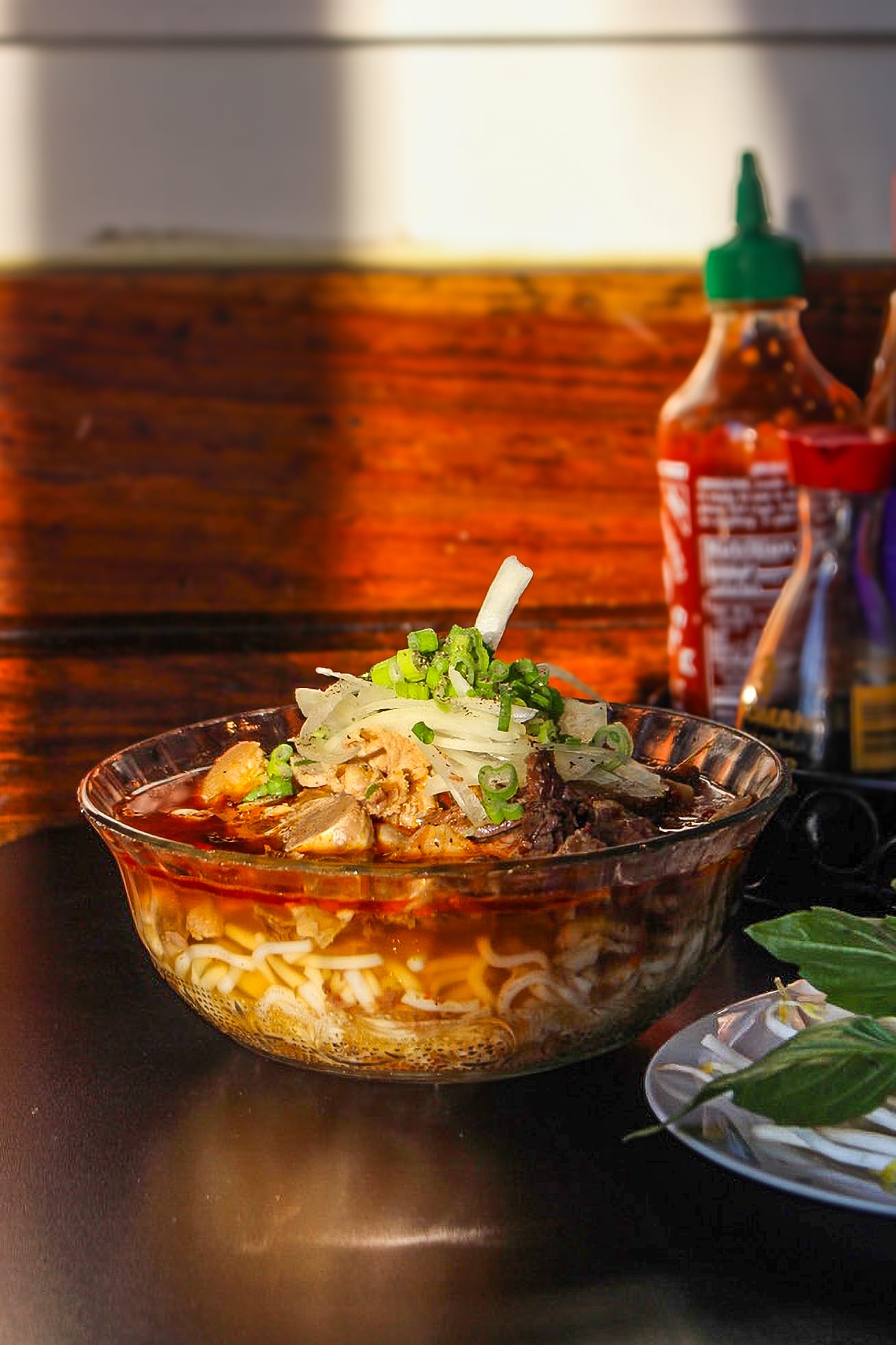
The bún bò huế is a signature at Cafe Nhan in South Philly
Wildsam Road Trip Awards 2026
The “Cradle of Liberty” is on the map as a worldly food town.
Out front of Cafe Nhan, a Vietnamese joint in South Philadelphia tucked between a Latin grocery and a bar ingeniously called Hennessy Ice Cold Beer, an animated man on the street is yelling and gesticulating at the driver of a charcoal Escalade. I’m angle-parked beside the truck, and my windows are up, so while I can only hear fragments of their exchange, a punctuating curse that rhymes with “other ducker” manages to penetrate the glass. The driver gets out of the car and rushes up to the sidewalk loudmouth.
They embrace. Welcome to Philly.
If you’re road-tripping to my hometown for America’s star-spangled 250th celebrations, you can count on authentic, often bombastic, displays of brotherly love and rampant main-character energy. (Please YouTube-search “Philly crossing guard ice cream car crash,” and get back to me.) This personality extends to the restaurant scene, where vivid flavors and confident cooking converge in dishes you’ll think about long after you’re back home. I’m talking about the turmeric-gold tofu curry lashed with sambal at Hardena, an Indonesian luncheonette that’s been in business since TGIF and SNICK ruled the weekends, and the teff-floured and fried chicken dusted with tingly, aromatic Ethiopian berbere spice at Doro Bet, planted among the flowering fruit trees and old Victorian manors of West Philly.
The city is an eager incubator where, at the age of 50, a Thai chef-turned-flight attendant (Nok Suntaranon) can hard-launch her third act, Kalaya, a shoebox BYOB serving dainty bird-shaped dumplings and hypnotic curries; win a James Beard award; and expand to a glamorous 140-seat fantasia of palms and rattan in Fishtown. And where, in Suntaranon’s original space, a South Philly kid whose parents who fled the Cambodian genocide (Phila Lorn) and his wife and partner (Rachel Lorn) can open Mawn—and win also James Beard award for their herbaceous melon salads, savory coconut crepes, and chili dogs smothered in wild boar prahok.
It doesn’t take a detective to find the through-line of immigration, a topic that deserves contemplation on the occasion of the semiquincentennial. Our mayor, Cherelle Parker, just signed six bills strengthening Philly’s status as a Sanctuary City, barring federal agents from operating on city-owned property and prohibiting discrimination based on citizenship status. “When kings, presidents, and other authorities have pursued violence and oppression, Philadelphians…have resisted,” Domenic Vitiello, an urban studies professor at the University of Pennsylvania, wrote recently in an op-ed for the Philadelphia Inquirer. “The meanings of sanctuary have changed over time, yet the moral commitments behind it have remained remarkably consistent.”
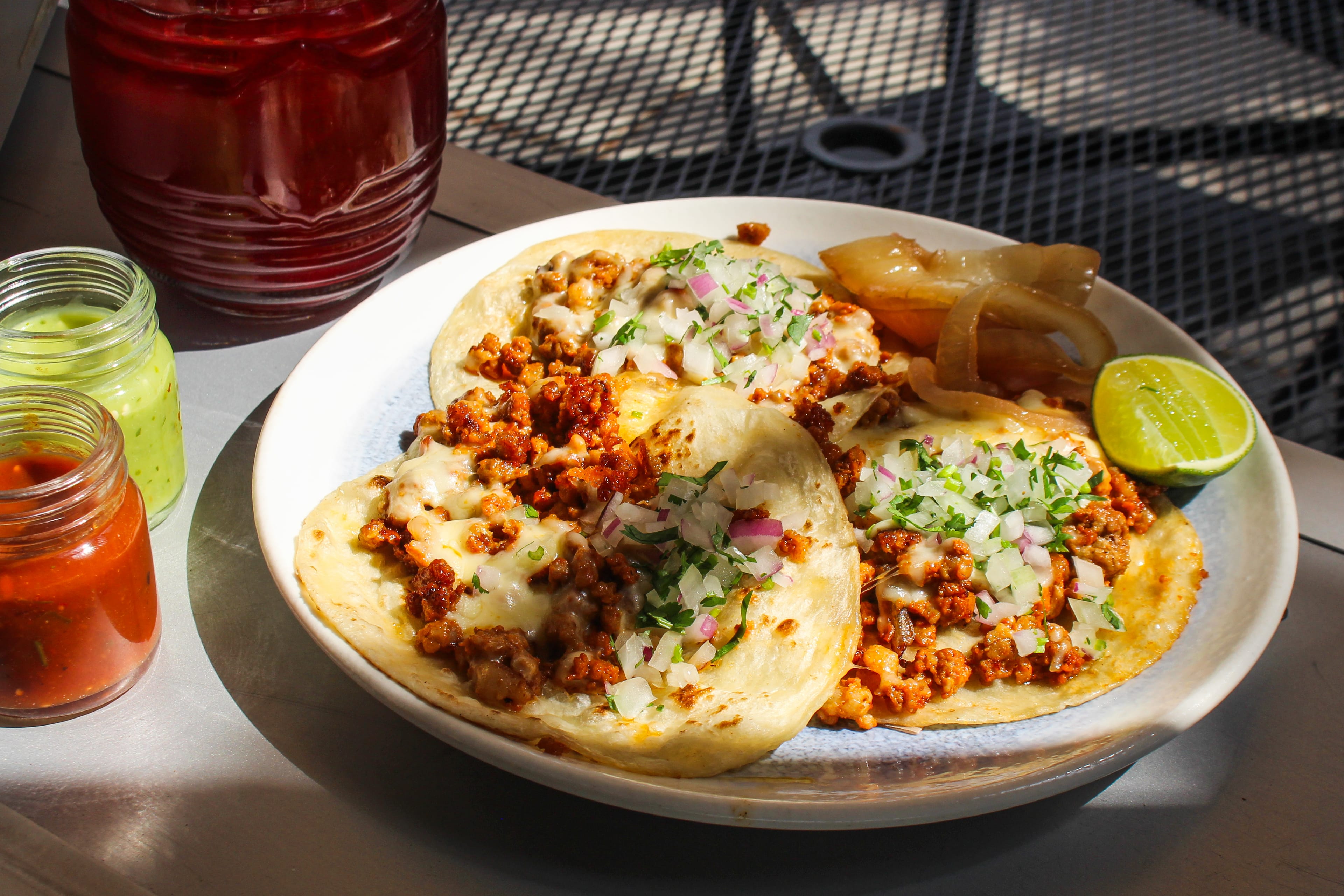
A gustatory argument complements the political one: A city open to immigrants is a city where eating is a joy. It could mean the Southern Italians who founded red-gravy stalwarts like Dante & Luigi’s and Ralph’s at the turn of the 20th century or nearly the whole Mexican village of San Mateo Ozolco, in the Mexican state of Puebla, who also chose to make South Philly their home 100 years later. Chefs like Juan Carlos Aparicio is one of those Poblanos, baking and cooking in Italian and French kitchens for 23 years before opening El Chingon, an exuberant corner with lemon-yellow lanterns on the brick facade and fluttering papel picado strung between the striped awnings. Part of his resume includes developing the excellent bread program at Steven Starr’s Parisian juggernaut Parc, which is why his Chingon cemitas feature airy sesame-speckled rolls and the flour tortillas cradling cheesy pork chorizo have the subtle tang of sourdough.
Without immigration, we wouldn’t have the crackling kielbasa and plum-buttered smoked-lamb pierogi at Little Walter’s in East Kensington. If Matt Ito had never left Kyushu, Japan, in 1976, his son, Jesse Ito, would never have become one of the most celebrated omakase practitioners in the country at Royal Sushi & Izakaya in Queen Village. Cafe Nhan, run by Nanh Vo and her American son, Andrew Dinh Vo, certainly does not exist.
I leave the sidewalk reunion and head into the dining room for bún bò Huế. The ferocious noodle soup, a specialty of Vietnam’s former imperial capital, arrives in a bowl of dimpled glass that, when the sun hits it through the storefront windows, a kaleidoscope of patterned light scatters across the table. The broth is a vermilion vortex of beef and pork bones, chiles and lemongrass that invites you, a willing sacrifice, into its spicy, fragrant, profoundly complex depths. Every time I visit Nhan, I think about ordering something else: the seafood pho, or the short rib congee. But the bún bò Huế is the main character and will not be denied. Other ducker.